Photographs at our Southwest Arizona home
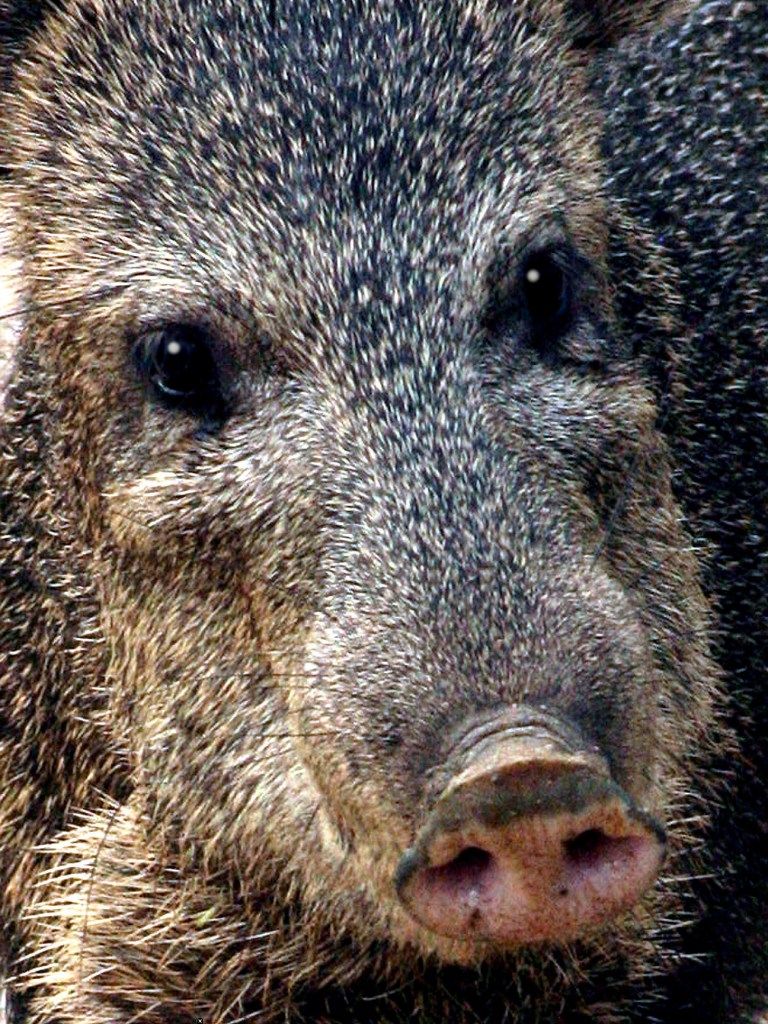
Javelinas were frequent visitors to our home in Southwest Arizona. Some people think them as wild pigs, but they are actually members of the peccary family, a group of hoofed mammals originating from South America. Javelina form herds of up to 20 animals and rely on each other to defend territory. They use dry riverbeds and areas with dense vegetation as travel corridors.
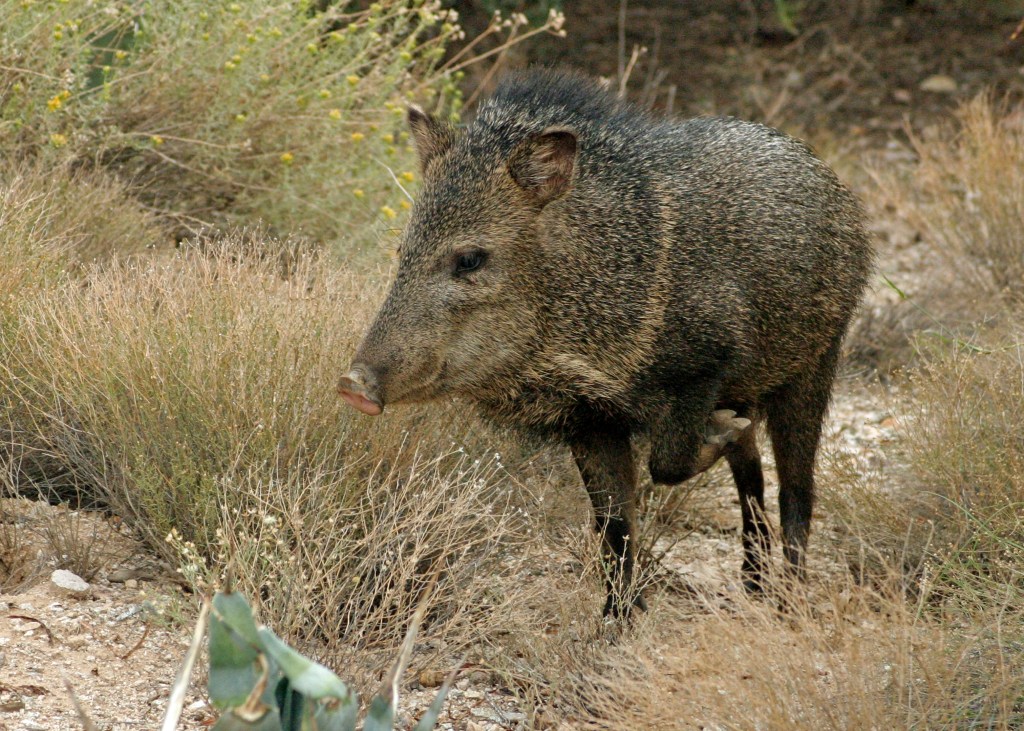
This large male is agitated, perhaps by the presence of the photographer.
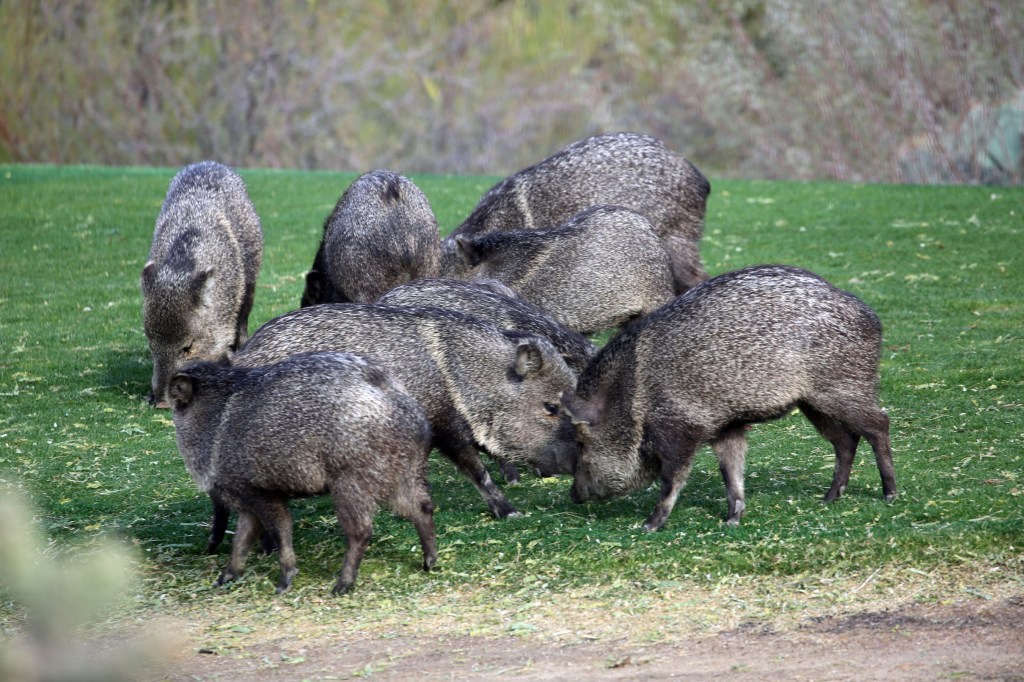
Javelina form herds of up to 20 animals and rely on each other to defend territory. They have a scent gland on their back, and animals from the same herd stand side-by-side and rub each other’s with their heads. Their scent identifies animals from their own and different herds
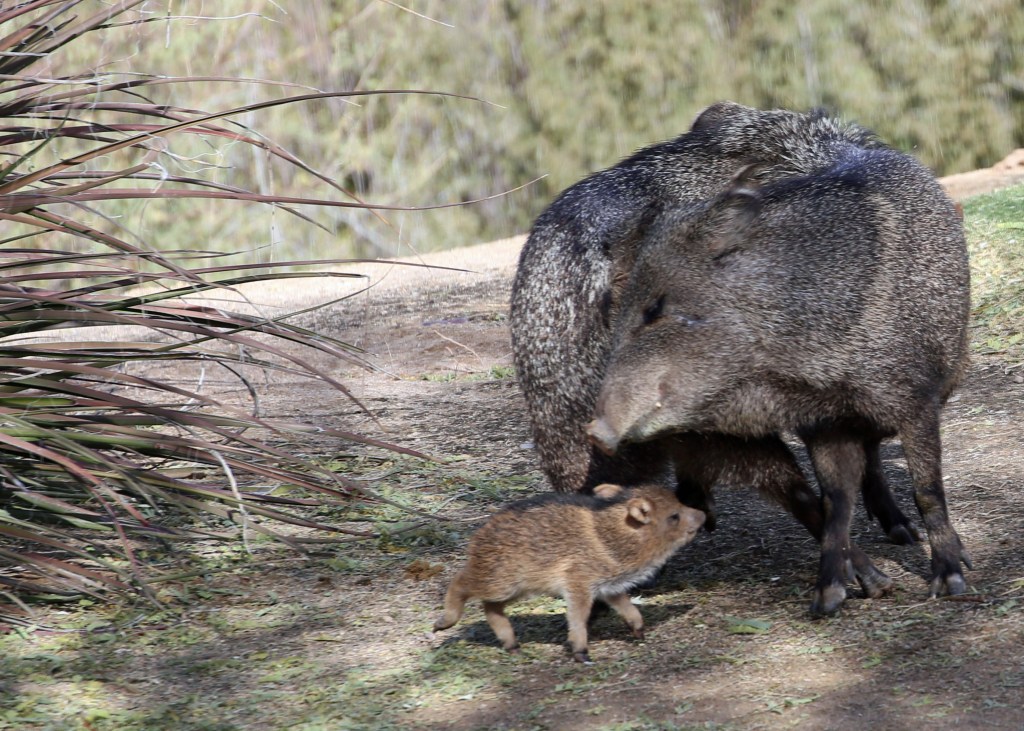
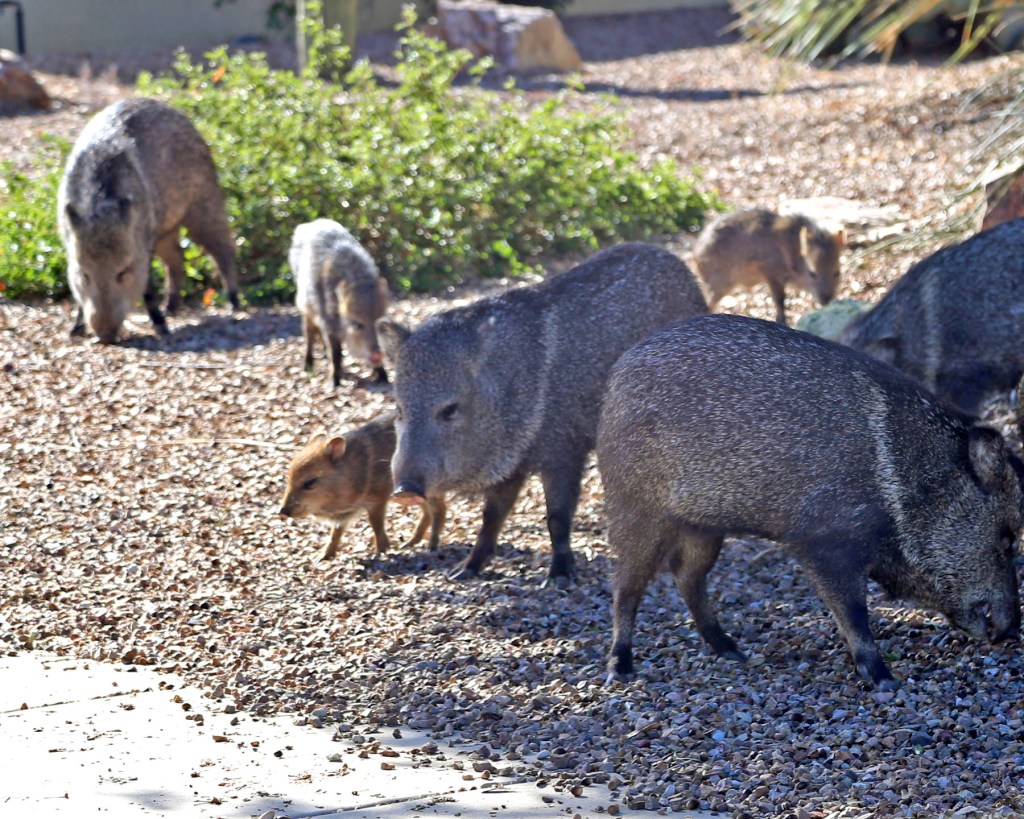
Newborns up to three months old are red-brown or tan and are called “reds”, live an average of 7.5 years. All Javelinas have very poor eyesight and may appear to be charging when actually trying to escape. They have a keen sense of smell that identifies people and pets. It’s best to keep a safe distance.
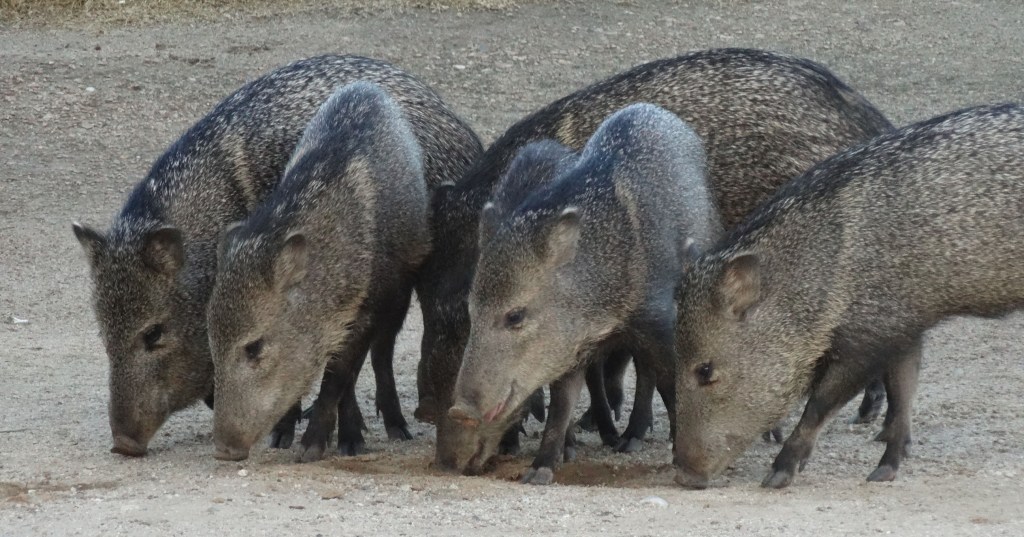
They need a water source for drinking and sometimes can be seen scratching for water in a dry river (desert wash). When available, they will roll in water and mud to cool off. During the summer months at our home, temperatures would often exceed 40 C.

Mountain Lion, Sonoran-Arizona Desert Museum
The only predator a large Javelina would fear in our neighborhood was the Mountain Lion.
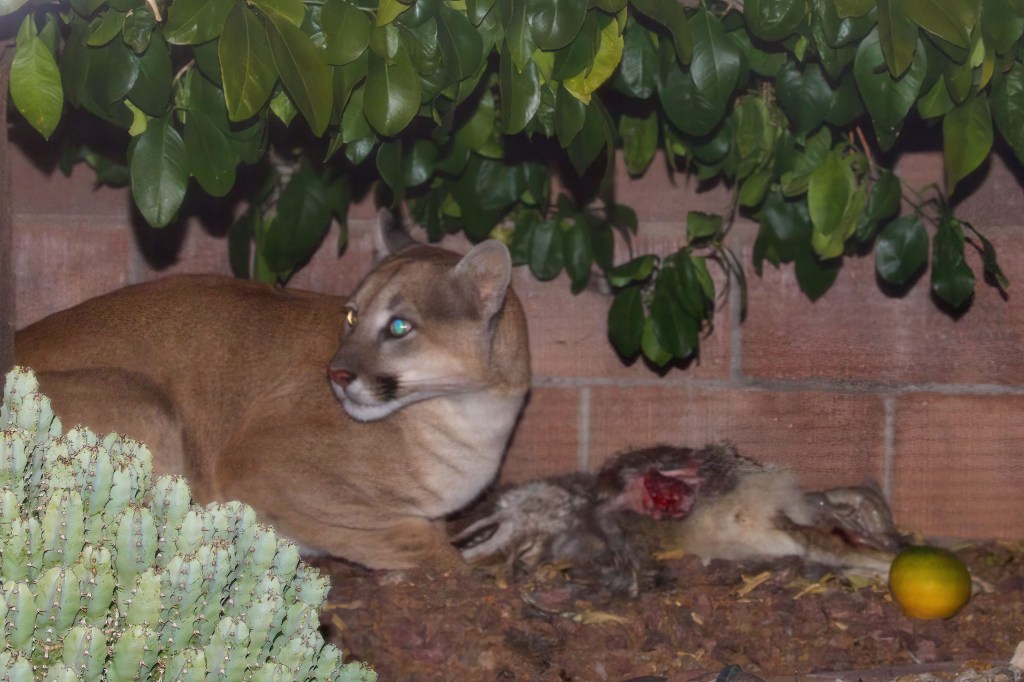
This nighttime photograph shows a young mountain lion in a neighbor’s property with its prey. In this case it is a Roadrunner.
The following images may be gruesome for some. So, be forewarned!
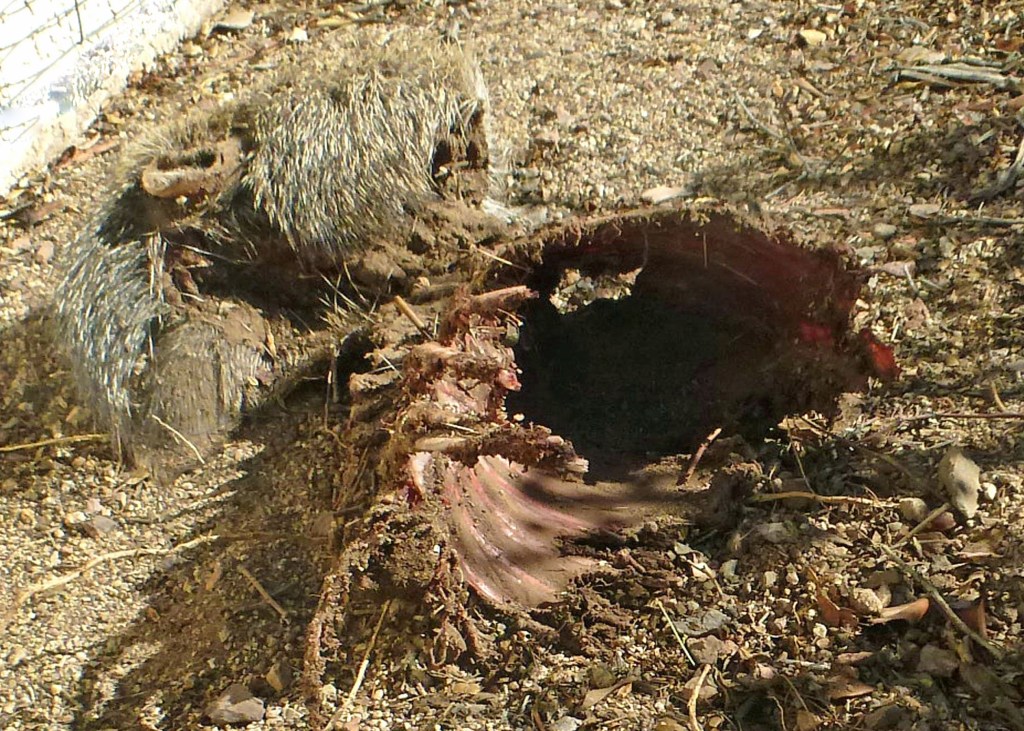
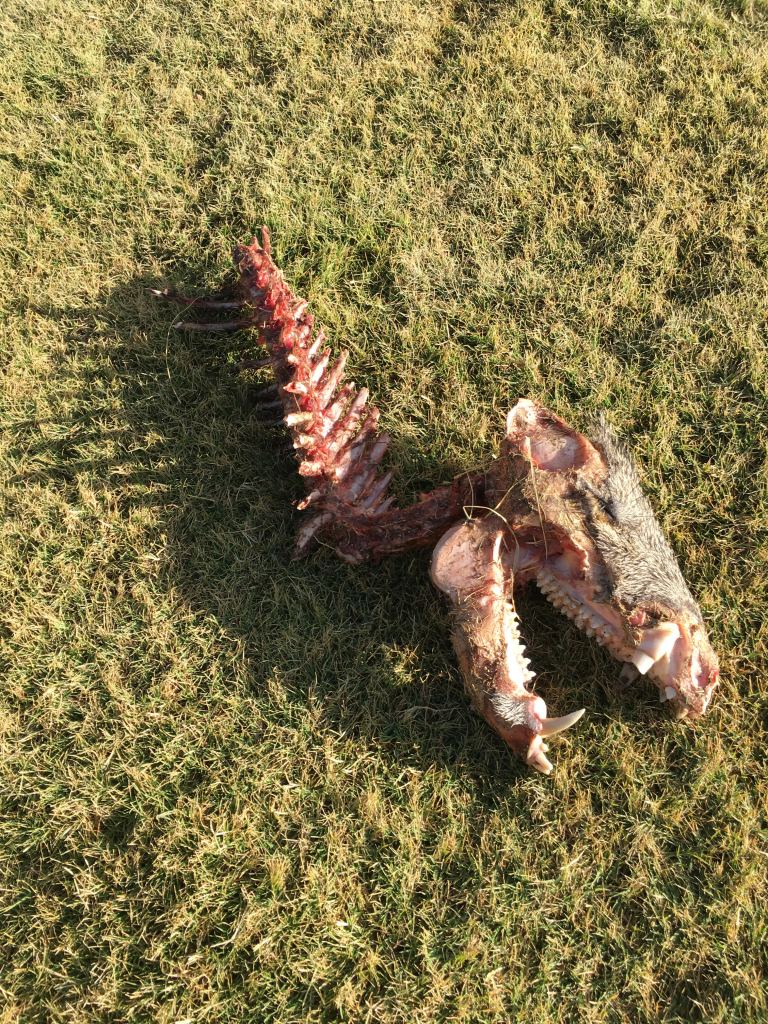
Here is the ribcage and skull of a Javelina that a mountain lion brought onto our property one night. Knowling that the lion may return the next night and fearing for our pet dog, I threw the carcass into a ravine close to our property,
The next morning, I discovered that the remains of the Javelina had been moved from the ravine to a grassy patch near our house, suggesting that some coyotes had found and finished off the creature.
To end on a more palatable note, here is part of a multi-generational herd of Javelinas on a neighbor’s property


I had read of Javalina in Spencer Quinn’s Chet and Bernie books, and three years ago saw a herd in Sedona. This being my first sighting, I was very excited and while others were admiring the beautiful landscape, housing development and golf course, I was watching the Javalina.
LikeLike
Glad to hear about your first Javelina sighting. It’s easy to lose a sense of the wild in today’s world. The Javelina, though often seen in Southwest neighborhoods, are not domesticated and provide a welcome portal into another realm.
LikeLiked by 1 person