Housebound

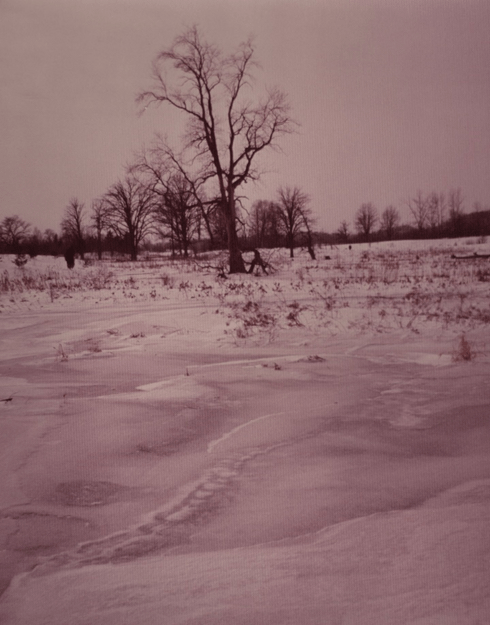
This morning it was -3 F (-20 C), unusually cold for Northen Ohio on the shores of Lake Erie and a good day for staying at home and enjoying some of the art and artifacts that we’ve collected over the years. One of the benefits of blogging about these things is that it makes one look more carefully at them and appreciate them anew.

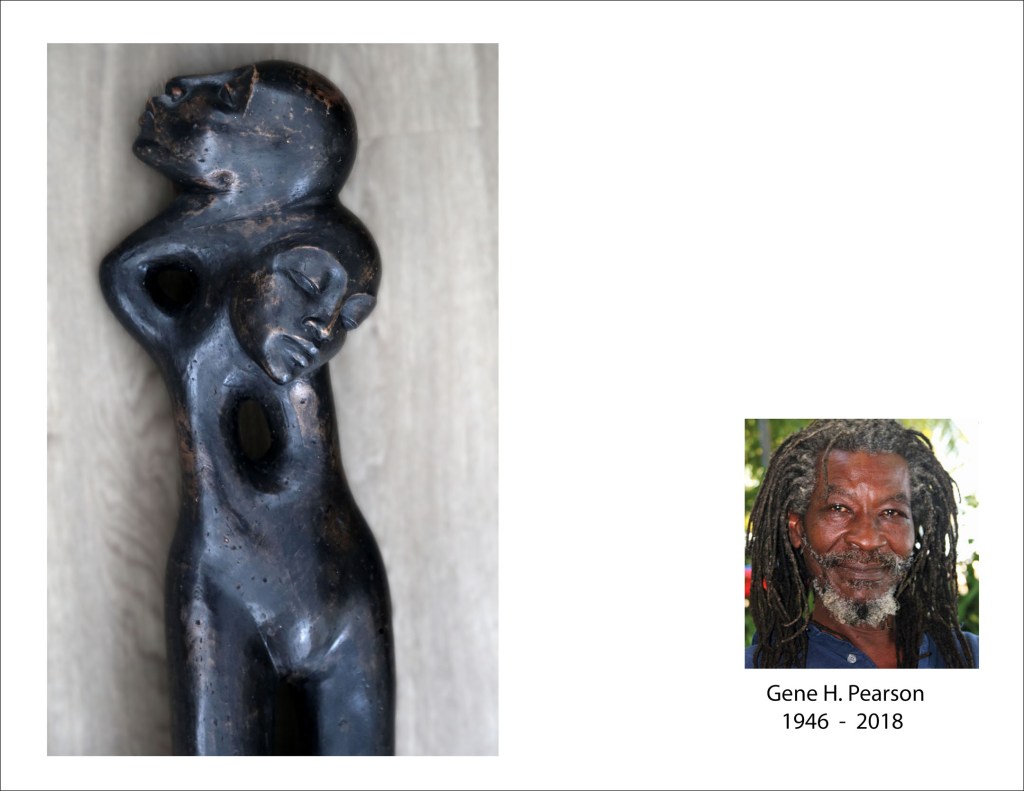
The Dancers, Gene Pearson, Harmony Hall, Jamaica, 1985

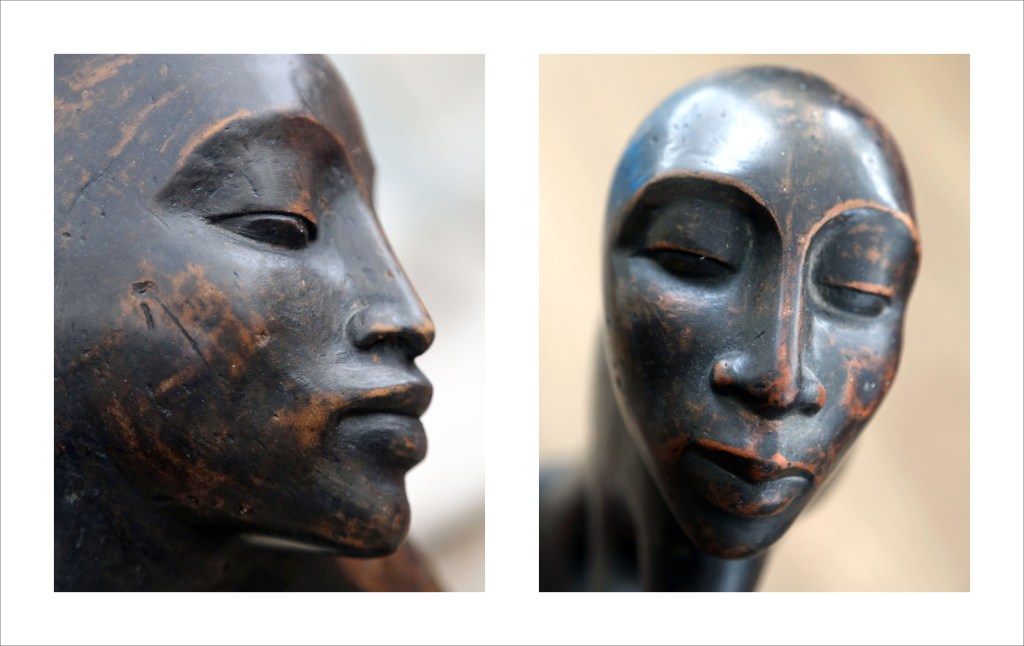
We bought this 60 cm high ceramic sculpture 40 years ago in Jamaica when we lived there. Gene Pearson was one of the earliest students at the Jamaica School of Art, returning in 1970 to teach ceramics for ten years. Based in Kingston, his work has been exhibited widely including at the Victoria and Albert Museum in London and UC Berkeley in Berkeley California. We were drawn to his signature Nubian masks and heads for which he became known internationally. We had mixed feelings about the strange superimposition of two heads one body. Yet, the individual heads were so expressive, we couldn’t resist acquiring the sculpture.
Nearly forty years later and 2.500 miles distant, we were attracted to another ceramic piece of art.

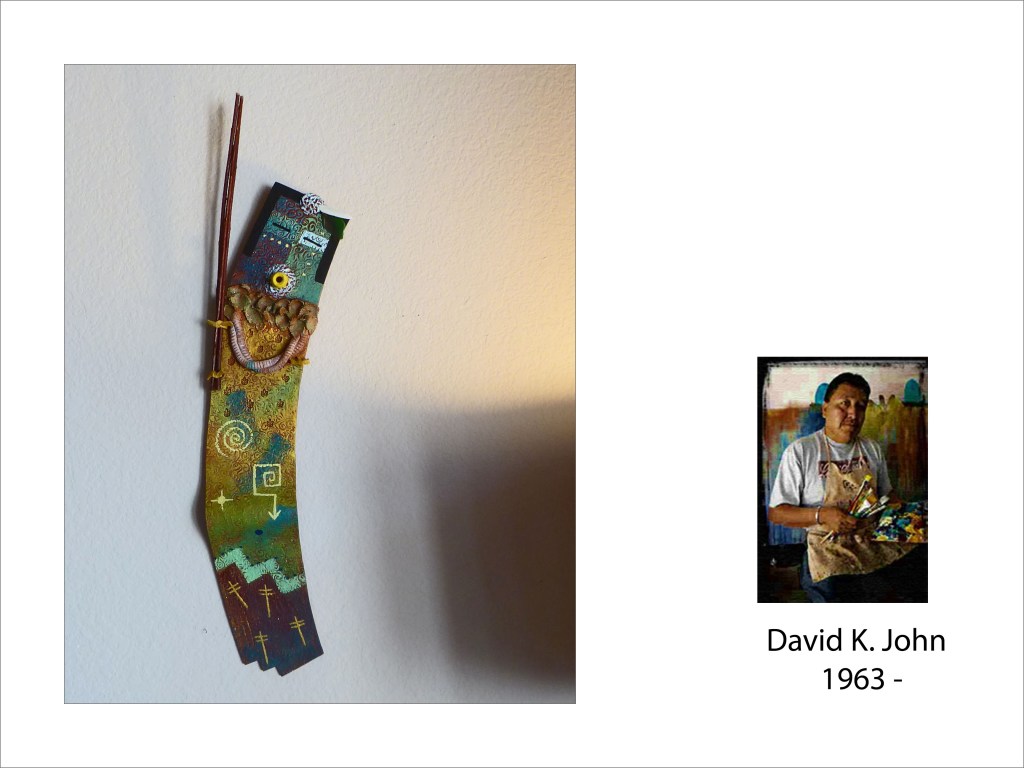
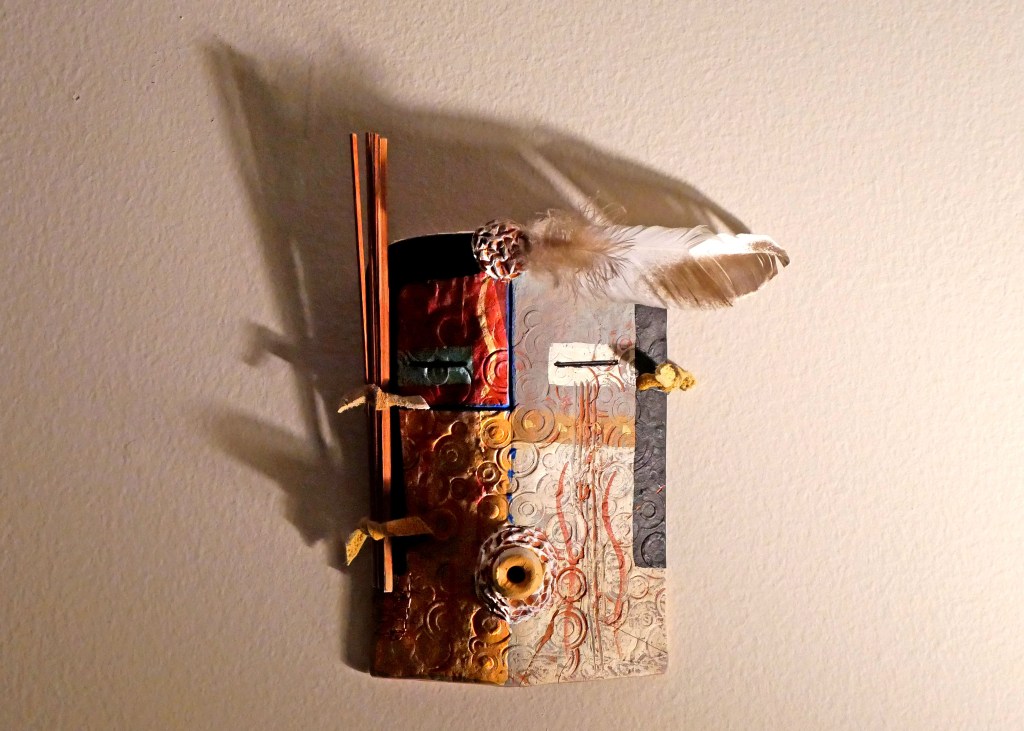
Born in 1963 in Keams Canyon in the Navajo Reservation, Arizona, David John is best known for abstract Indian symbolism painting, sculpture, and ceramics. Soft-spoken and humble, John admired his Grandfather, a medicine man who instilled profound, spiritual beliefs in the young Dine. John spent much of his childhood attending healing events-from seasonal rituals to sand painting ceremonies where he often participated and was instructed by the most revered members of his culture.

John is specific about his use of color. Like most native American tribes, the Dine (Navajo) associate particular colors with the four directions: yellow-the west, white- the east, turquoise-the south, and black- the north.

John’s characteristic messenger is the Yei Be Chei, an ethereal messenger to the Navajo. Since exact replication of the sacred icon is taboo, he modifies the image to the satisfaction of his tribe’s spiritual leaders. According to collectors, the alteration does not affect the impact of the painting’s message.

Looking around the house, we find more ceramic works but in very different genres.

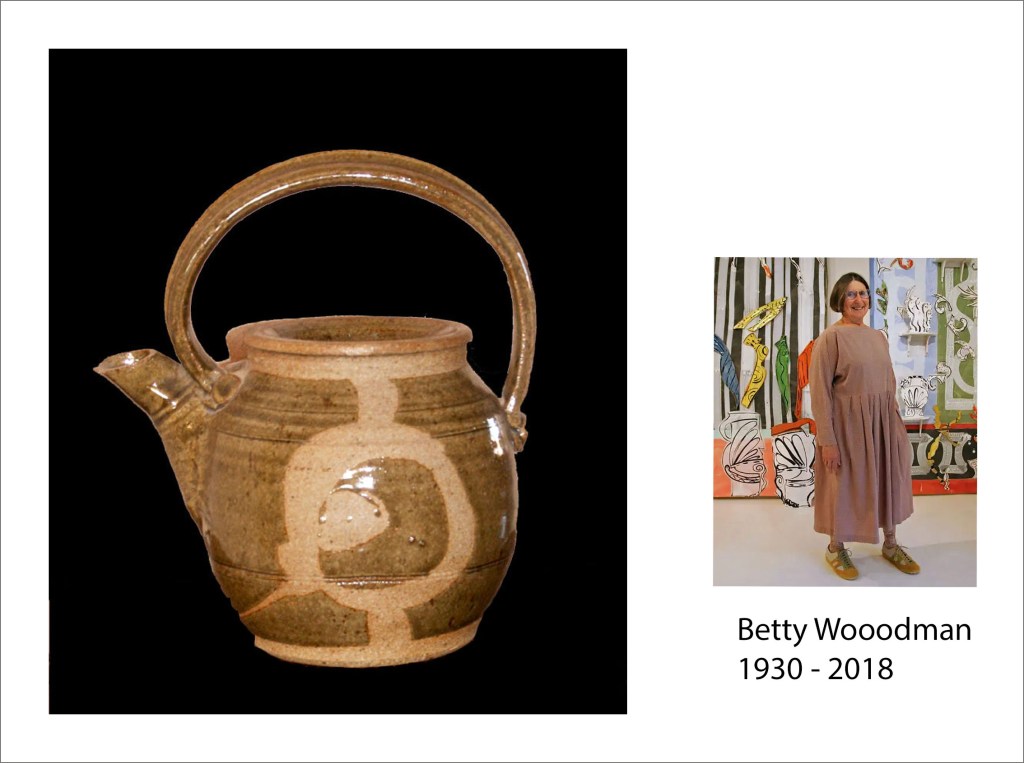
Tea Pot, a gift from Aunt Betty in 1969.

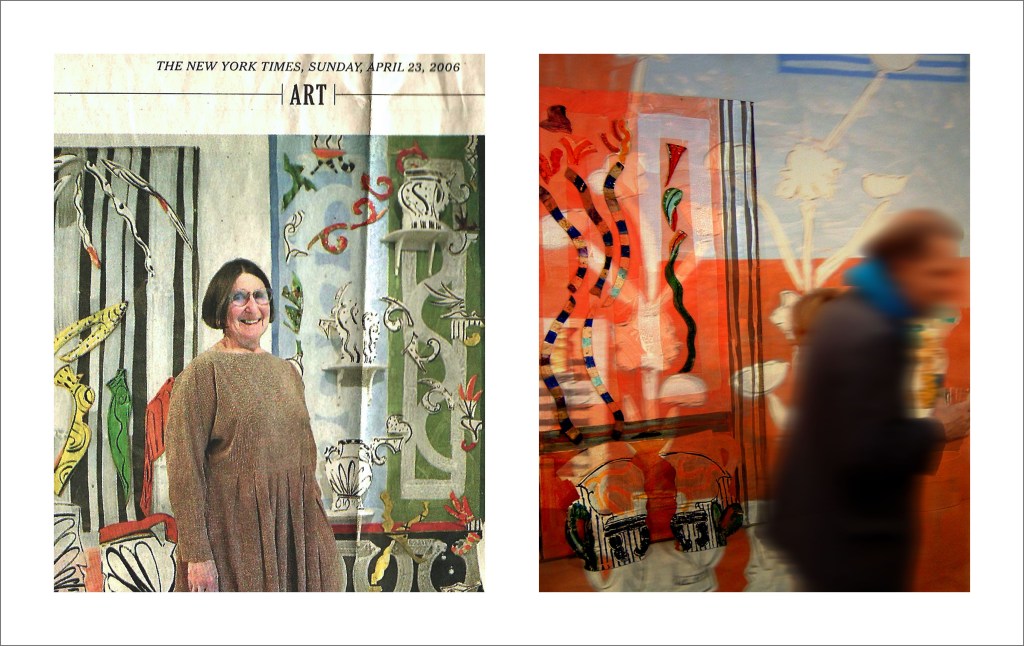
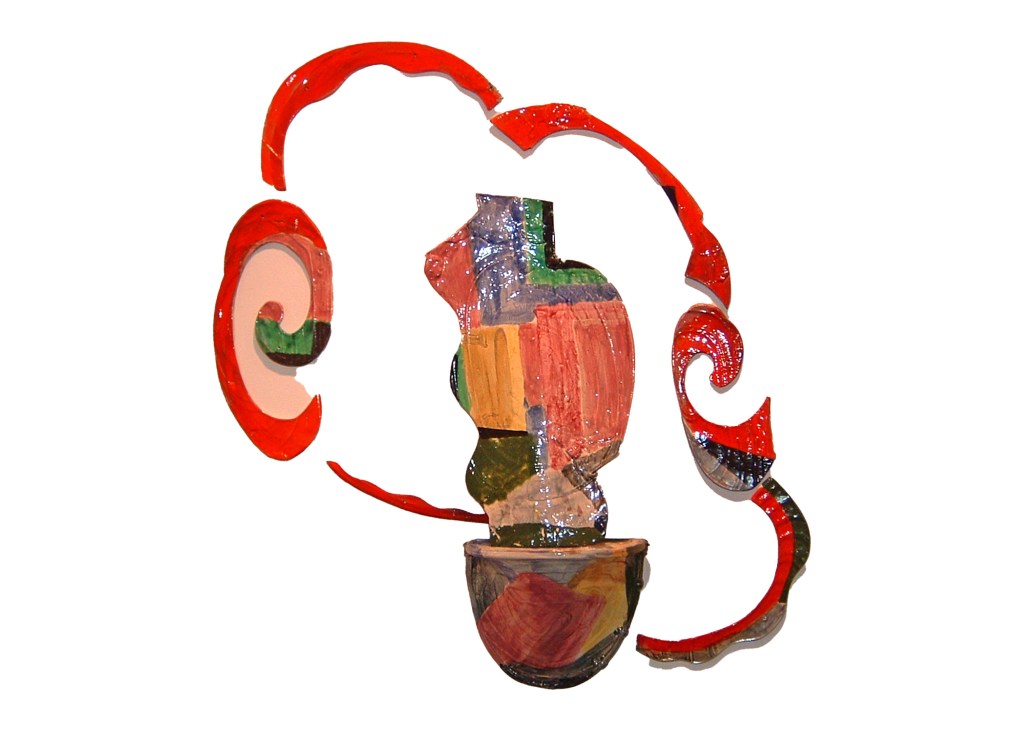
In the 1970’s, Betty’s work took a new turn as she deconstructed the traditional ceramic household vessels. “I make things that could be functional, but I really want them to be considered works of art.” And, increasingly it seemed, she moved from three-dimensional objects to flatter two-dimensional ceramic pieces.

Betty Woodman, Vermisage, MaxProtech Gallery, NY., 2006

Betty Woodman’s evolution from artisan to fine artist as illustrated in the two preceding images, culminated in a retrospective in 2006 at the Metropolitan Museum of Art, its first for a living female artist.

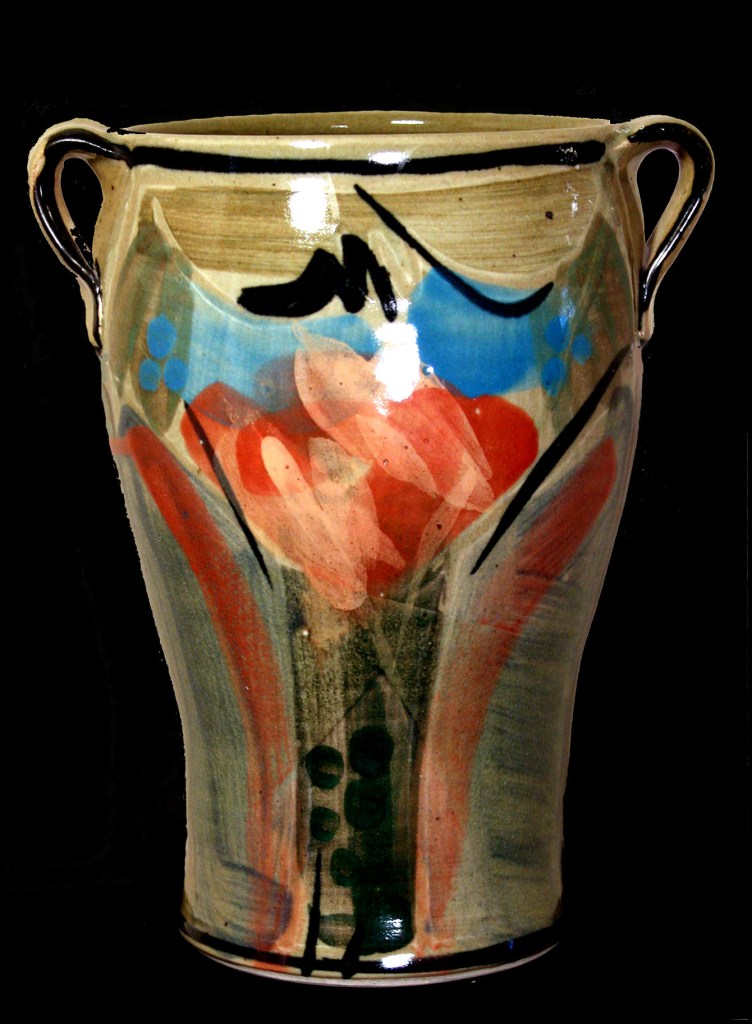
Elsewhere in the house, we find a vase, the work of a Canadian acquaintance from thirty-five years ago.

Margaret Hughes, Kingston, Ontario, 1990

Here is a good example of what Betty Woodman was talking about: The deconstruction of a household item that, while still possibly serving a functional purpose, is an expressive work of art.

And, while on the subject of ceramics, I should include another object that we have sitting on a mantlepiece.

‘Cawl” or soup bowl, Llanelli Pottery, Wales, 1839 – 1922

The bowl, a gift from a grandmother, was likely made in the early 1900’s. ‘Cawl’ was the staple diet for families in the country. It consisted of a clear soup made of boiled meat, vegetables and chopped parsley. The bowl has a pleasing form, decorated with attractive sponge imprints. The pottery made in the factory at this time was of poor quality, tending to ‘craze’ into fine cracks.

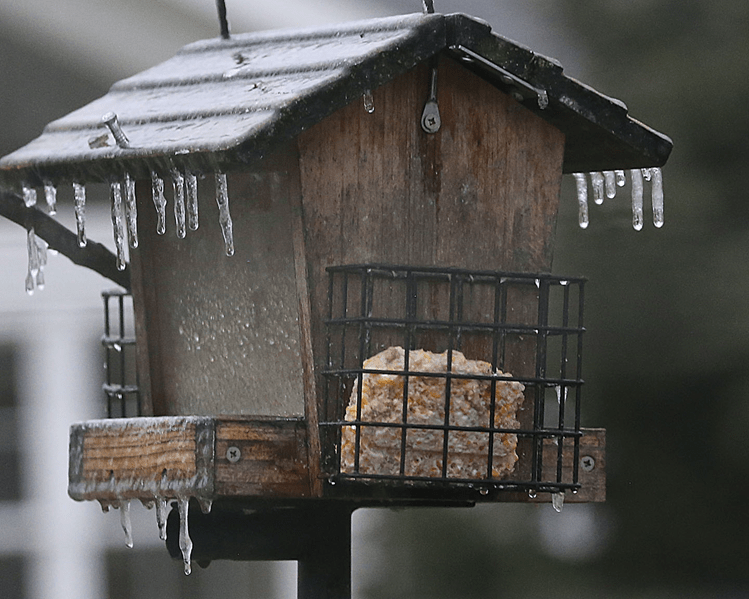
I hear the furnace turn on, reminding me of the cold outside, and looking out the window, I see starlings at the feeder, undeterred by temperatures below zero.

Art and Artifacts at Home

I noticed this little wood carving in my grandfather’s home in South Africa in the late 1940’s. He told me that it had been carved by a prisoner in a concentration camp. I didn’t know what he meant, but I thought the carving was beautiful. The figure was originally holding a long-stemmed pipe, possibly a meerschaum that, together with the apron, suggested a European artisan.

I wondered if the little figure had been carved by an Afrikaner prisoner during the Anglo-Boer War when the British interned 40,000 Boers in 45 tented camps for Afrikaners and 64 camps for Black Africans. About 25,000 detainees, mainly women and children, died of disease and malnutrition. I wondered if something as beautiful as the small carving could come from such harsh conditions.

Then I remembered that during World War I, South African troops invaded neighboring German South-West Africa where German settlers were rounded up and sent to concentration camps in Pretoria. Perhaps the carving had been done by a German settler thinking of home in Europe.

And then I remembered reading how, during World War II, the battles of North Africa resulted in about 93,000 Italian Prisoners of War being brought to South Africa. Arriving in 1942, they were employed in the local farming communities as laborers, builders, gardeners, and mechanics. Although they weren’t imprisoned and they worked collaboratively with South Africans, they were far from home and, perhaps, one of these Italians carved the little figure.

One will probably never know the truth behind the carving, but it doesn’t really matter. It is a continuing memento of a beating heart in a foreign land far from home. A memory carved in wood.

There are other carvings in our home and, only now do I see some common themes: Here are two pieces of Navajo folk art created by Dorothy V. Wilson in the style of Antonio Johnson in that part of New Mexico that was the home of the ancestral pueblo people in the seventh century. The figures are carved from cottonwood, using an axe to form a rough shape, and a pocketknife to create the detail. The surface is painted with house paint, watercolors, and a fragile white clay used by the Navajos to paint their bodies.

The Navajo people had been forcibly removed from their homes in Arizona and New Mexico in 1864 and sent on the “Long Walk”, an effort to “civilize” them and assimilate the Navajo into white American culture. The “Walk” was a series of forced marches that included the capture of thousands of Navajos and involved the destruction of crops and the killing of animals. It resulted in hundreds of deaths from exposure and starvation.

And here we have direct descendants of those persecuted people producing something beautiful claiming a long-denied respect.

Another example of recent indigenous art, but with brighter colors and certainly more whimsical designs are carvings by the Zapotec people concentrated in Oaxaca in Southern Mexico.

Known as “ Alebrije”, the carvings they are made from locally sourced copal wood. They are carved using hand tools – machetes, chisels, and knives. The works above are those of Juan Carlos Santiago of Arrazola, a small village in Oaxaca, Mexico. Most Zapotec Indians still speak their own dialect, and many don’t speak Spanish. Their life is agriculture based with some hunting, fishing, and gathering of wild foods.

In a future posting I’ll share a few ceramic, pottery and woven works of art that we’ve collected on our journey over the years.

Art and Artifacts at Home

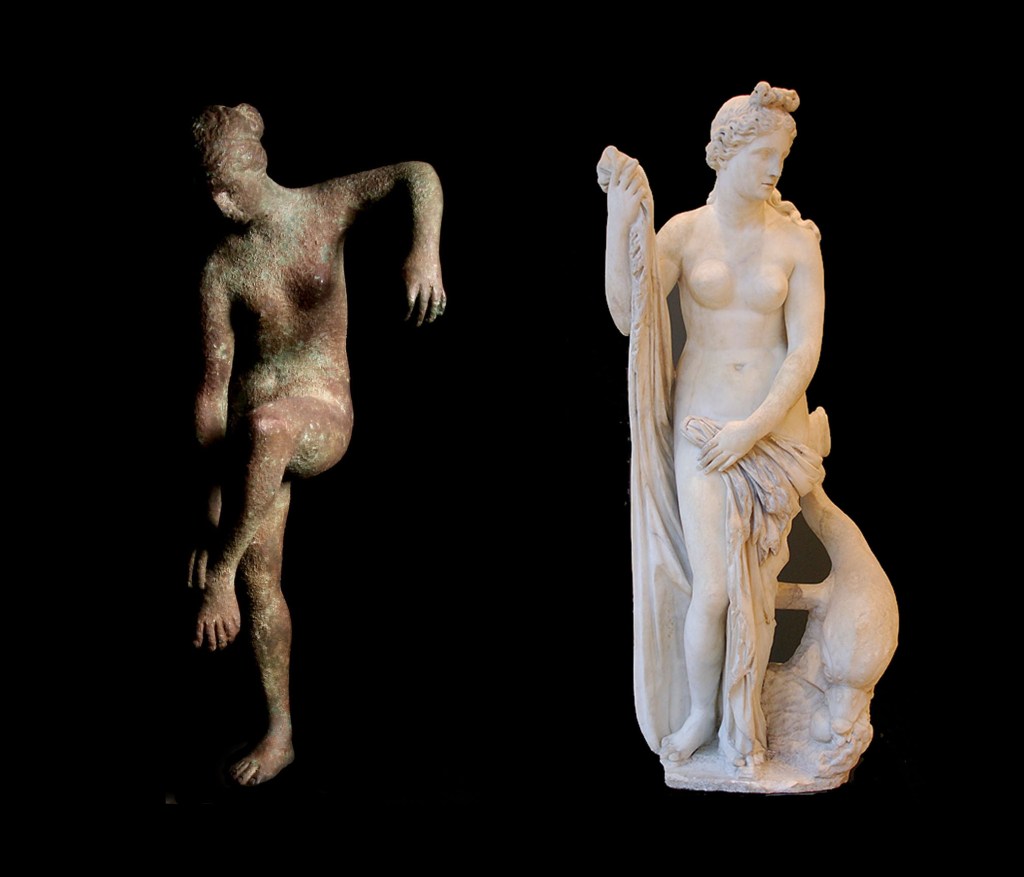
Aphrodite in our home – Venus in the Getty Museum

Aphrodite is the ancient Greek goddess of love and beauty whose Roman doppelganger is Venus.

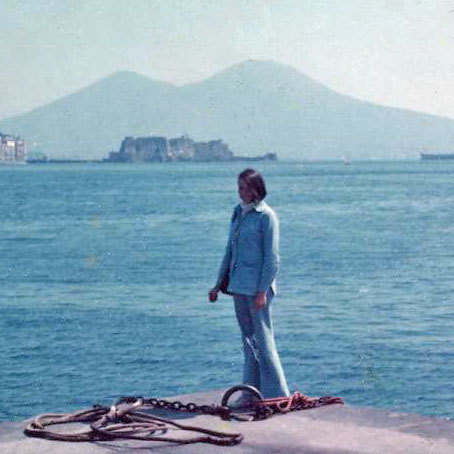
In Naples en route from South Africa to Canada in 1974

In the background of this picture is Vesuvius, and it was in Pompeii where we went without lunch to buy our little statue at the start of our married life together.

The word aphros means “foam” which, according to the Greek poet Hesiod in 700 BC, was produced by the severed genitals of Uranus after his son Cronus threw them into the ocean, and from which Aphrodite was born.

The castration of Uranus, Palazzo Vecchio, Florence, Italy

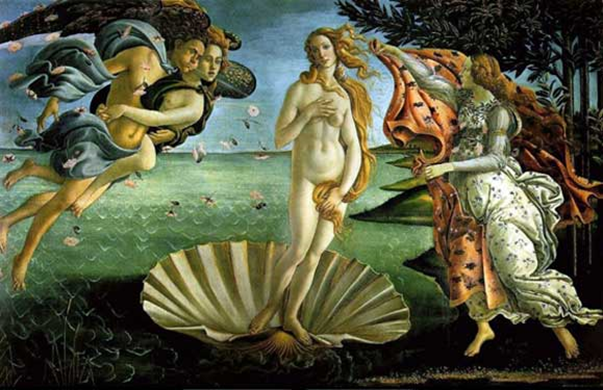
The birth of Venus, Boticelli, 1496

Ten years later, when Lil and I gazed at the well-known Birth of Venus at the Uffizi in 1984, we were oblivious of her gruesome origin and countless affairs with both gods and mortals. For us, Aphrodite (Venus) was simply the goddess of love.

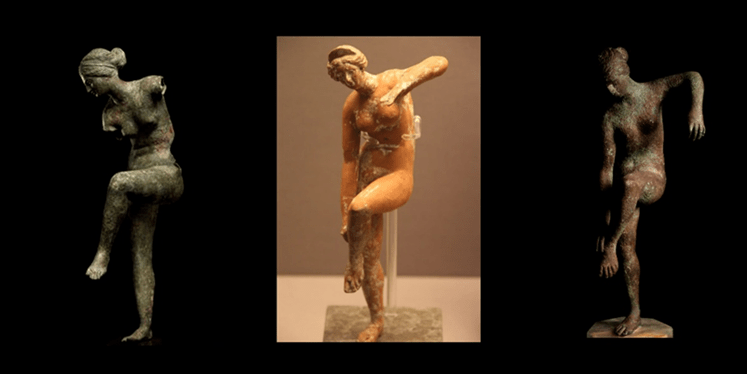
These three very similar statuettes portray Aphrodite. The original was probably the small terracotta sculpture in the center that is now in the British Museum and dates back more than 2200 years. The bronze on the left, also in the British Museum, is an equally old copy. Our little statue is a fine art reproduction and, although there must have been hundreds produced around the time we bought it, the beauty of the original is faithfully conveyed.

Aphrodite was the only beautiful presence in the scrubby little furnished apartment above a convenience store that was our first rented home upon arriving in Canada.
She was wrapped, packed, transported and unpackaged fourteen or fifteen times as we moved from apartment to house, from city to city in Canada and later to Jamaica where she watched our armed robbery but was herself left unscathed. Then to the United States to watch the children grow. Then back to Ontario followed by Quebec, only to return to Ohio followed by Arizona, then back to Ohio where Aphrodite, now fifty years old, is quite at home in our retirement community.

Is love ever out of place?

Art & Artifacts At Home

A few random photographs taken on a cold winter day within the space of about two minutes

An eighteenth century toleware tea tin from New Hampshire

A crudely carved African woman, of no great value. But we enjoy her presence in the house

A chair back. Sometimes there is beauty in simple things.

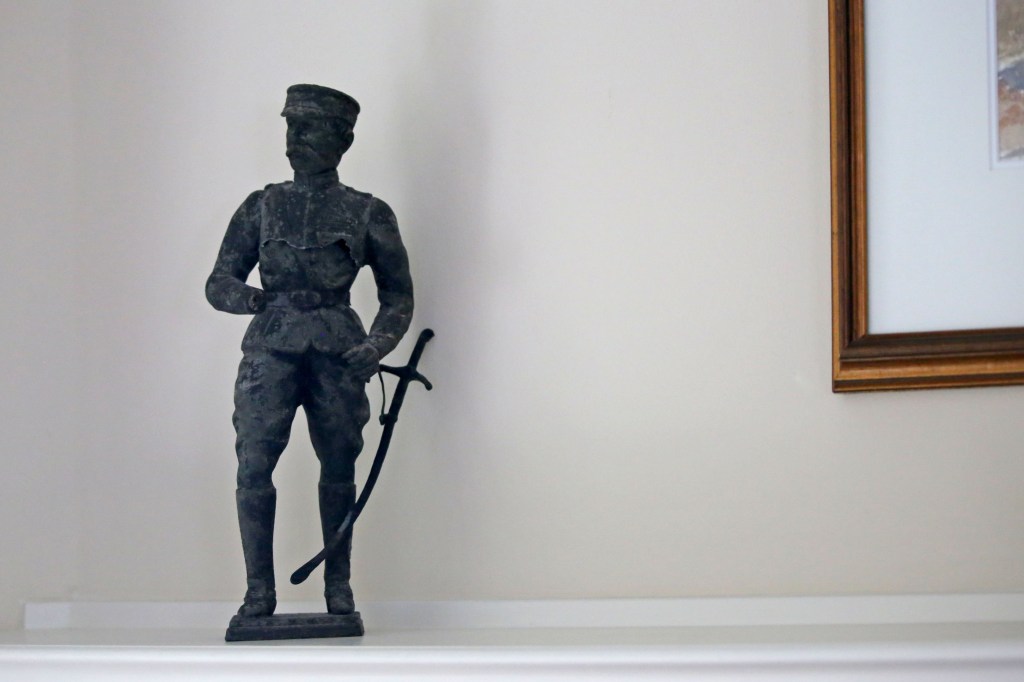
Lord Kitchener, Boer War general among other things

A Chokwe mask

A corner of the house

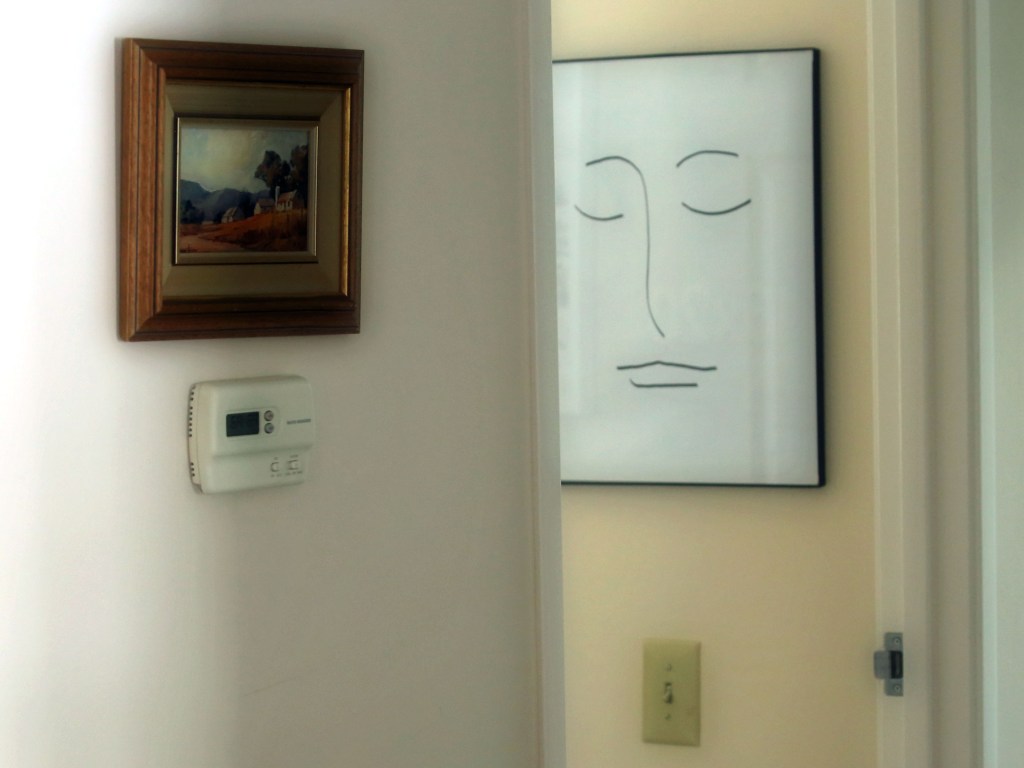
Into the bedroom

Turning towards the living room windows, I snapped a few bird photographs. The subfreezing temperatures brought many of them to our feeders.

Nuthatch

Red Shouldered Hawk

Junco in the snow

Cardinal among the oak branches

Territorial imperative

The Apartment

My girlfriend’s mother wore a yellow housecoat.
It took the place of sunlight that never found its way
into the block of concrete, they called home:
One bedroom and a porch for five, six with me,
crammed around the table in the entranceway
to talk and drink coffee.

An opening to the living room was blocked
by a velvet rope looped between brass poles
suggesting you should wait to be seated,
but the wait, you knew, would never end.
Beyond the barrier, white pile carpeting
still bore the imprint of vacuum tracks curving
under a polished coffee table decorated with doilies,
starched white to match the lampshades,
pristine in their protective cellophane.
And the sofa, its virginity intact, sat proudly
under plastic covers in which it had been delivered
six years before. Above hung two photographs,
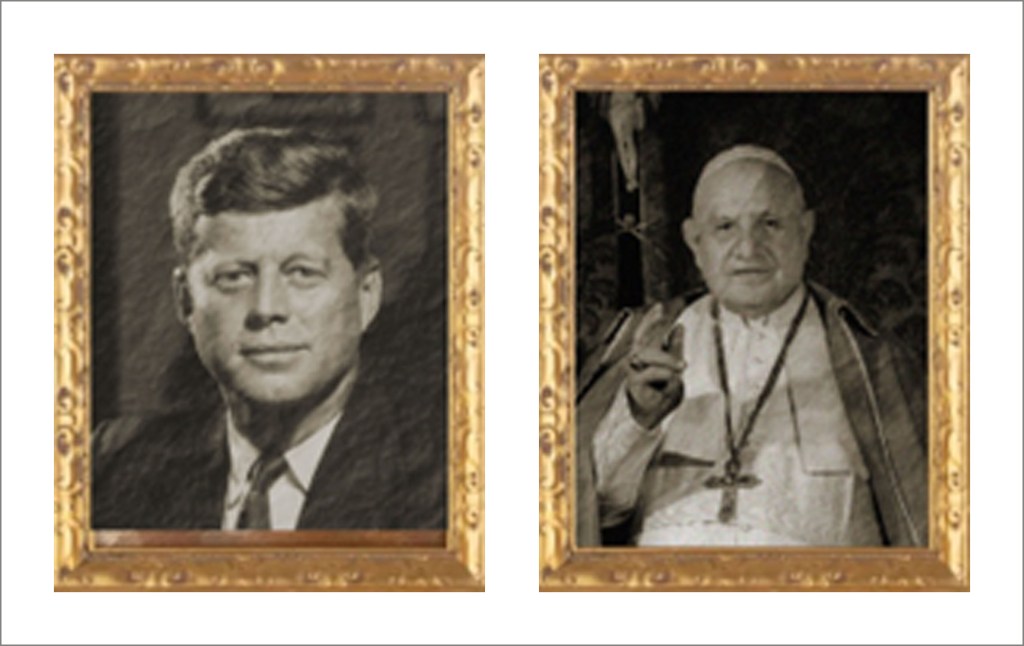
Kennedy and Roncalli, President and Pope.

“They’ll probably never visit”,
my girlfriend’s mother said, her housecoat glowing
like a priestly garment in her holy of holies.
“But if they ever did, I’d be ready.”

Art & Artifacts at Home

The fifth in a series looking around our home at the paintings, prints and objects we have picked up over the years, not because they are of any particular value other than that we enjoy them

This is a lithograph by Myles Birket Foster (1825 –1899), a British Impressionist. He was one of the most popular watercolor artists of his time, and his idealized, sepia-toned prints and paintings were reproduced on the cover of various magazines and books.
The lithograph belonged to one of our grandparents and we found it in a box of discarded items in a storeroom. Dating back to the British colonial era in South Africa, this kind of naturalistic and idealized print was very popular, evoking a sense of connection with England.
Lilian and I like it because it evokes memories of our own childhoods on South African beaches more than seventy years ago. We would spend hours wading in the rock pools at low tide, picking up shells and pieces of seaweed, scattering the very small fish that were trapped there when the tide went out, picking up a seagull feather, or chasing a crab: All the time under the watchful eye of a nearby mother. We might as well have been under the watchful eye of Birket Foster as he sketched the scene.

What is it about the ocean that makes such a strong impression on people? In the following diptych a young woman sits on the beach and immortalizes the experience by writing how she feels on the back of the photograph that was taken by her fiancé.

The woman is my mother, and the year is 1940 in Cape Town.

Thirty years later, another diptych:

This is Lilian, fifty years ago.

And now, a triptych:

A granddaughter on the beach in Barbados.

Seventy percent of the earth’s surface is ocean, yet most of us experience it in a personal way with a heightened sense of the here and now. Yet, there is a universality in which we all share. This is illustrated, perhaps, by my five-panel polyptych:

The photographs comprising this polyptych include images of the Pacific, North Atlantic and Indian oceans, as well as the Ionian and Caribbean seas.

Continuing with the ocean theme, I created the following image using separate images of hands and the ocean that appeared in a single issue of the New York Times. The viewer is naturally free to find any personal meaning that it may evoke:

But to return to the more tranquil experience of the ocean, here are two images. The first, a photograph I took and manipulated, not by the ocean but on the shore of Lake Erie, one of the Great Lakes.

Finally, a drawing by Edvard Munsch of his younger sister, Inger, seated on a rock beside the ocean, an 1889 scene conveying the gentle, contemplative sensibility that we saw in the Miles Foster Birket lithograph with which we started this posting.

As Summer Ends

The Monarch Butterfly has laid its eggs, a caterpillar has emerged and has feasted on the Butterfly Weed in the garden. Then it cloaked itself in a green chrysalis out of which a new butterfly emerged two weeks later.

The new butterfly is called ‘imago’ and now has left our garden to join the long migration south.

And the job of the Butterfly Weed (Asclepias tuberosa) is over. All that remains are brown stalks and seed pods that burst open to release their seeds to the wind, seeds that will take root next spring to continue the cycle.

And we pick the last of our tomatoes

There have been so many we’ve had to be creative

And so, we say goodbye to summer with our tomato pie. We are grateful for what nature has given and what it promises for next year, acutely conscious of the human tragedies in which these simple joys and hopes are out of reach.

Art and Artifacts at Home

The fourth in a series looking around our home at the paintings, prints and objects we have picked up over the years, not because they are of any particular value other than that we enjoy them

This print is of a work by the Renaissance painter Antonello da Messina and was sent to me in a box of discarded items after the death of a distant relative. So, in 1978 we found a place to hang it in our home. There is a story here that I may share in a future posting. But, for the present, I should mention only that I was surprised to see a similar though different painting in the Arts Section of the New York Times last December.

This is Saint Augustine in his study, painted by Vittore Carpaccio through a fifteenth century lens depicting a fifth century scene.

Augustine is writing a letter to fellow theologian, Jerome. Augustine is unaware that Jerome had just died, and later tells us that he was bathed in a visionary light and heard the voice of Jerome chastising him for his intellectual pride. It was a surprise for me to learn about the connection between the two theologians and to recognize the similarity between the da Messina print in our home and the Carpaccio image in the New York Times.

As I continued reading the newspaper, another painting by de Messina generates a new stream-of-consciousness reflection:

Here we have Carpaccio’s Flight into Egypt painted in 1550. The sense of danger and urgency is subordinated, as often is the case in renaissance painting, to enhance the incidental detail. But it wasn’t the virgin’s intricate brocade nor the finely executed landscape that drew my attention. Rather, I noticed the donkey humbly doing its job. I was reminded of another painting.

Jesus is now an adult and there is the donkey doing its job. The triumphal entry into Jerusalem days before the Last Supper is described in the four Gospels and this painting by a close friend is his rendition of that event.

Geoff was a priest and a mystic and, at the time he painted the entry into Jerusalem, he lived in radical poverty in a single room attached to a small church in a slum outside Port Elizabeth, South Africa. The walls of the little church and part of the ceiling were filled with his murals, including the image shown above. Geoff, who stayed and ministered at the parish for eight years until his death in 1987, once said: “If this had been a smart church, I wouldn’t have started painting on the walls.”

And, for some unknown reason, I’m reminded of Don Quixote

I’m reminded of Don Quixote and his squire, Sancho Panza, whose donkey’s name was Dapple. Although the subject of the painting above by artist friend Susan Weiner isn’t Dapple, nor even a donkey, it somehow reminds me of Don Quixote.

Here is Picasso’s rendition of Dapple on the left above.

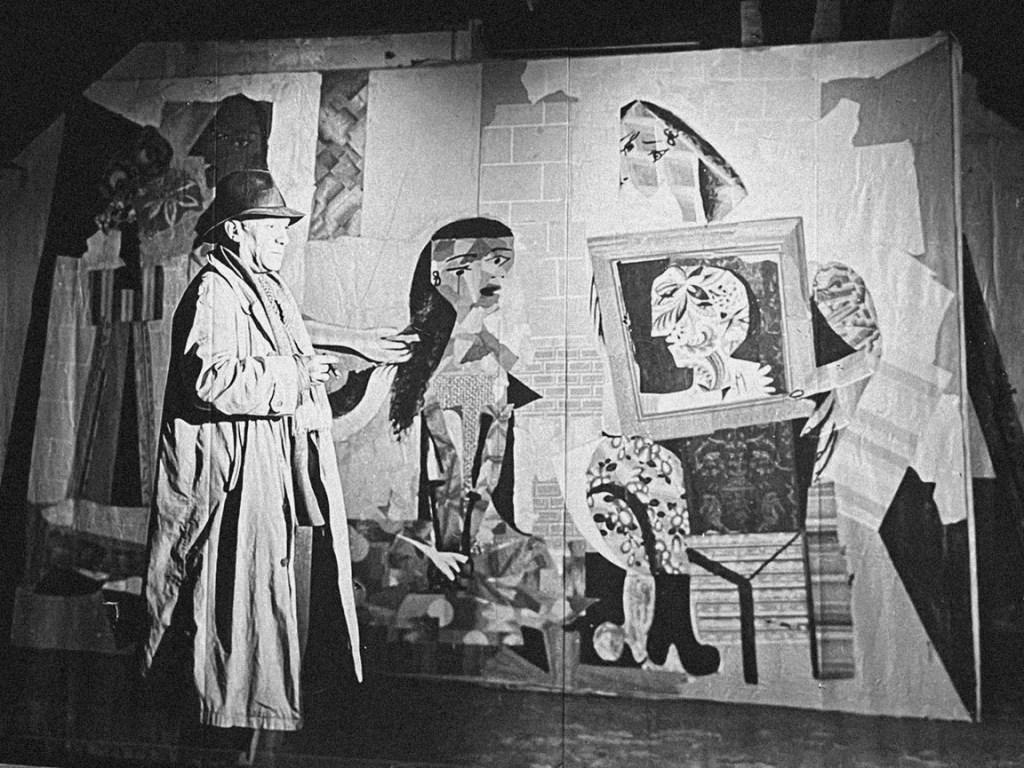
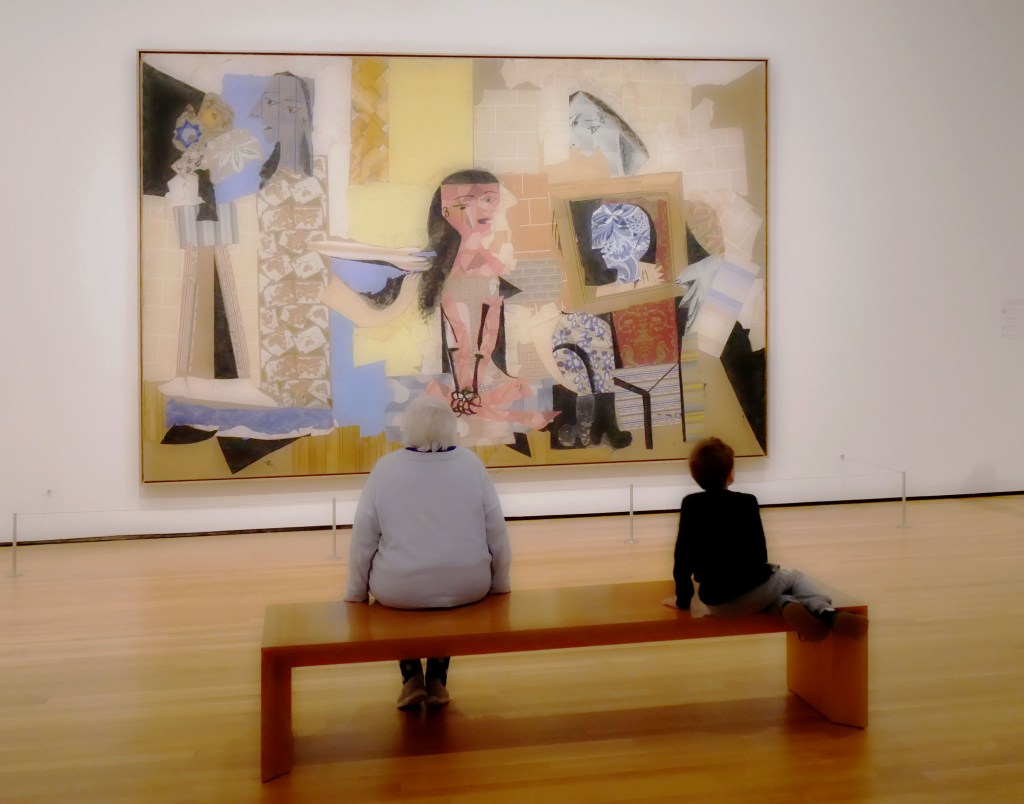
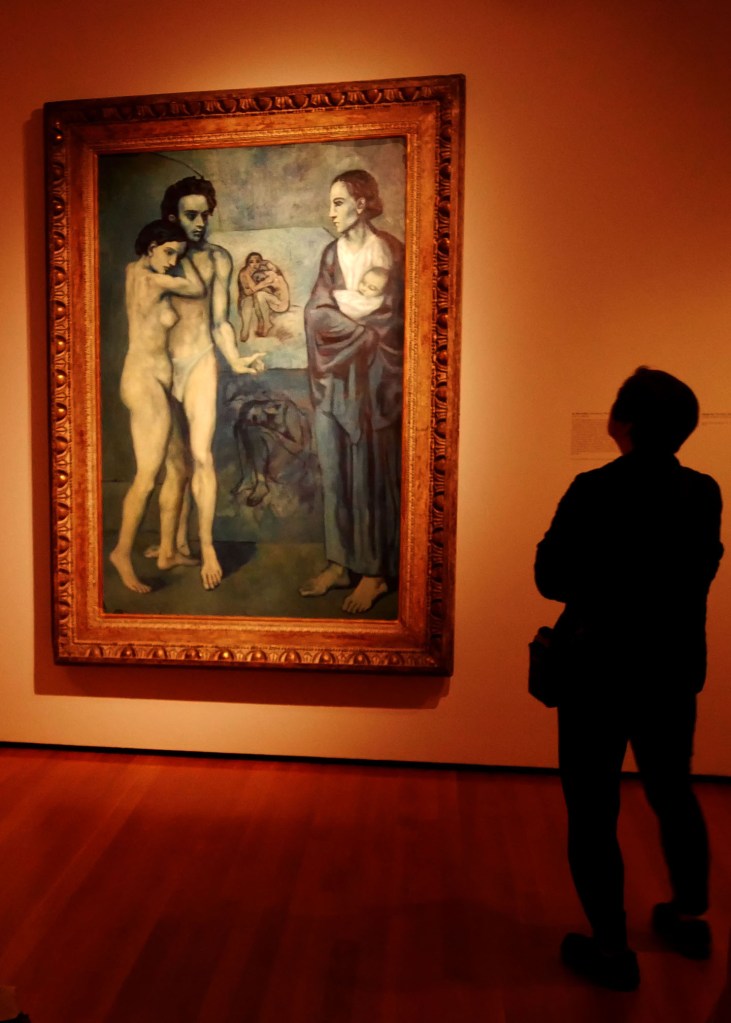
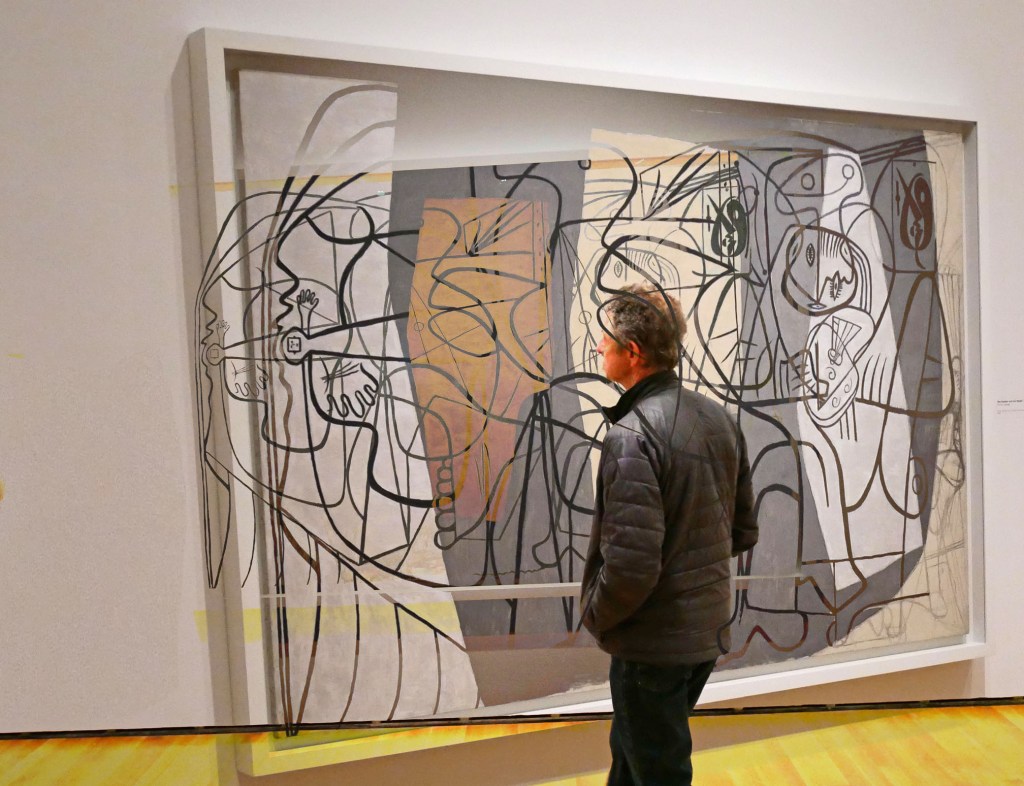
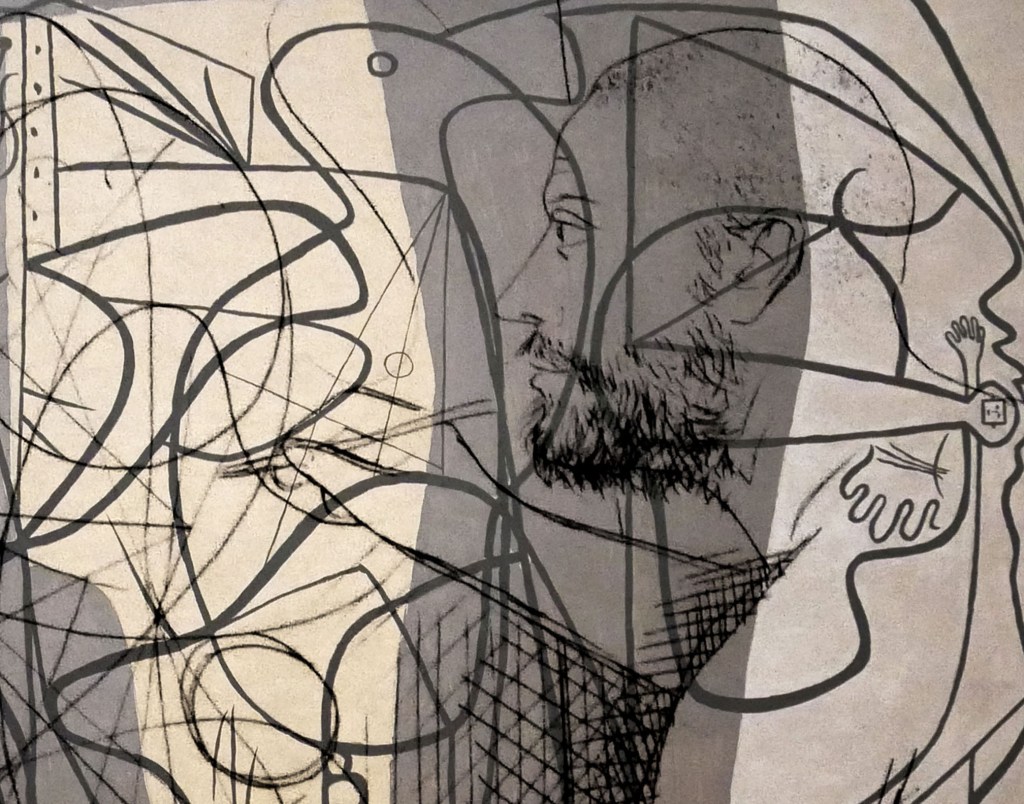
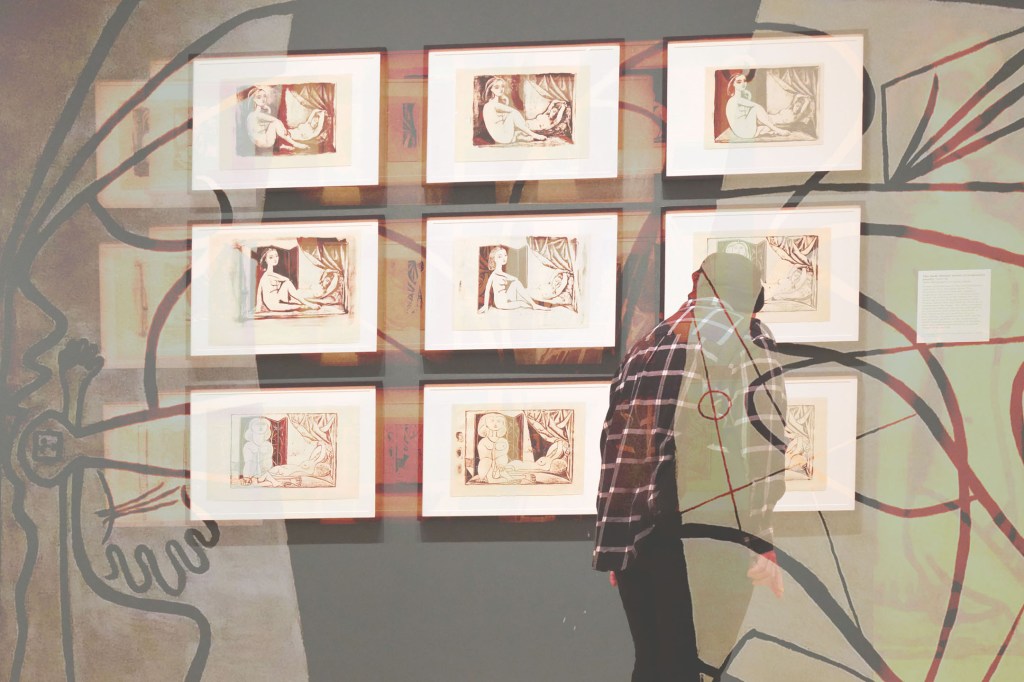
And as we think about my friend Geoff and his church murals and as we think about Picasso and Dapple, we are reminded of Guernica and the Middle East, perhaps.

A child admiring Guernica by Pablo Picasso at the Reina Sofia Museum

Painted in 1937 in response to the Nazi’s devastating bombing on the Basque town of Guernica during the Spanish Civil War, the mural shows the tragedies of war and the suffering it inflicts upon individuals. It is regarded as Picasso’s most famous work.

I can’t help contrasting Picasso’s image with the mystic’s mural.

They portray polar opposites, horror and joy, even in their equine characterizations. And so it is today, perhaps.

It’s interesting where a casual glance at the Art Section of the New York Times can take one.

Five artists. Four men and a woman who were gifted, not only in applying a medium to a base, but in telling a story about themselves and their environment.

Present though Absent

There was a sense of presence in his room in the nursing unit. He was that kind of person. A big man. His sister and niece were there, agitated. He was awake and partially elevated in his hospital bed. I took his hand and bent over him so he could hear me. We made eye contact. There was recognition in his watery bright blue eyes. “Lil sends her love,” I said. “Be strong, Gene.” He squeezed my hand firmly and held it. After a while, I released my hand and patted his shoulder saying, “I’ll see you tomorrow, Gene.”

The next day, I went back to the nursing unit expecting to see his family in his room. They had been there all the time over the past few days. I looked in. There was no-one there. The bed was empty. It had been stripped. An empty wheelchair was on the other side of the bed. Someone had opened the window.

Art and Artifacts at Home

The third in a series looking around our home at the paintings and objects we have picked up over the years, not because they are of any particular value other than that we enjoy them.

This is the inside of a Japanese made demitasse revealing the image of a geisha. The effect is achieved by different thicknesses of porcelain That allow different amounts of light to pass through the base. The process was invented in France in the 1820s. Lithophanes soon became very popular, and were used for decorative purposes on lampshades, or as panels that were hung on windows.

In Germany, many beer steins were made with lithophanes in the base and, as one finished drinking, lovely images would appear in the bottom of the mug. Later, twentieth- century Japanese potteries began to produce lavishly decorated tea sets using lithophanes. Molds were used to create the different thickness levels and the process of removing the thin moist panels from the molds required a high degree of skill to avoid damaging the intricate details in the image. In addition, any slight impurity in the porcelain clay body showed up when light shone through the material. The number of acceptable finished pieces to come out of the kilns has always been far less than the number that went in. Sometimes, only about 40 percent of the panels survived this process. Production of these teacups which peaked after World War II in Occupied Japan, tapered off in the 1950’s, and few are still being made today.

Today, one can buy vintage lithophane tea sets for less than the price of a bottle of mediocre wine. Yet, we have always valued ours. It was a gift from a patient in the neurological ward of a hospital in South Africa, a gift to Lilian when she worked there in the mid nineteen-sixties. Here’s a photo of her from that time.

Sixty years later, a tea set like this has no monetary value, is not rare, and certainly is no longer in fashion. But it reminds Lilian of a hospital patient, and it reminds me of a time when this set was the most beautiful thing we owned. Although now out of date, it has an intrinsic beauty waiting to be appreciated by someone in the next generation.

In the early 1970’s when, as newly-weds, we arrived in America, my grandmother welcomed her new granddaughter-in-law with another porcelain tea-set, this one made in Germany. And here is the end of her note to Lilian:

“Will you have a cup of tea with me? Love Grandma”.