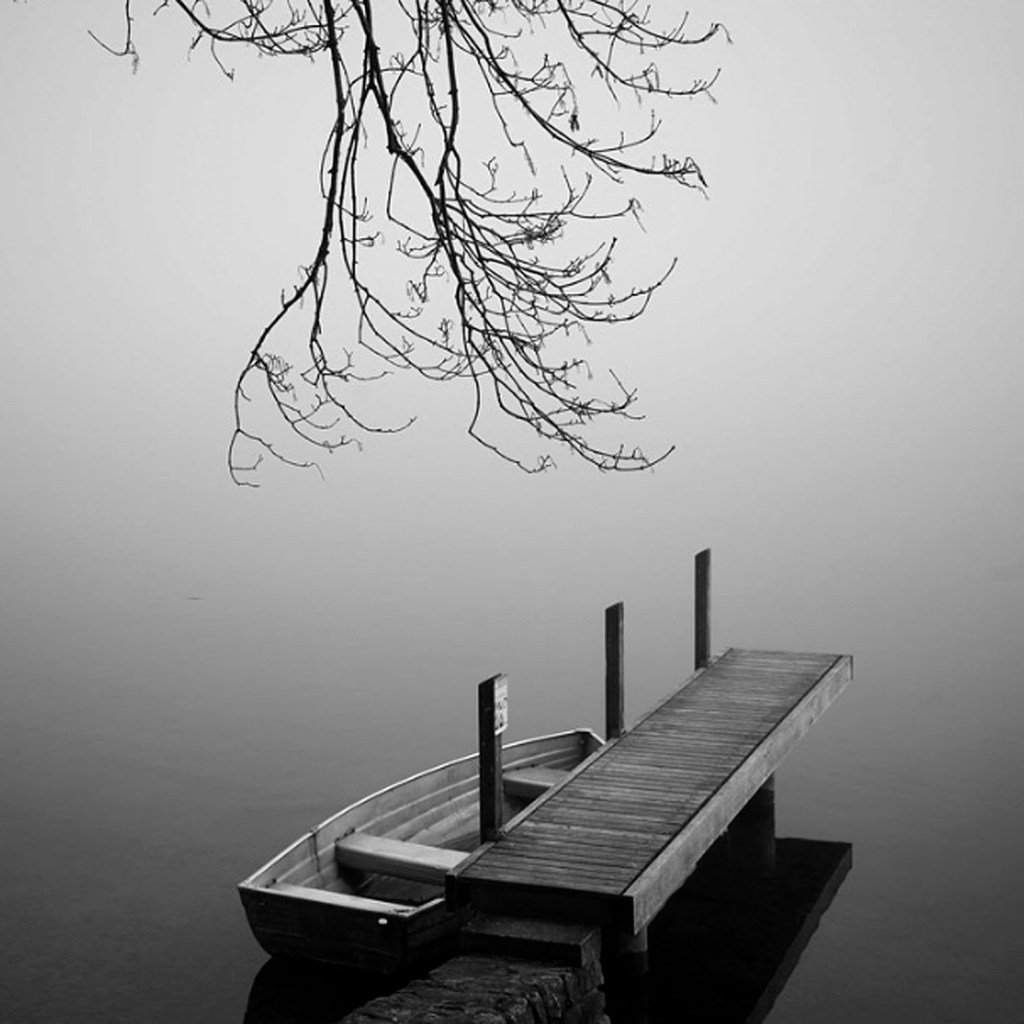
Step into the boat. No, you don’t need to bring anything with you. You can leave your things behind. Your pictures, books, clothes; Even your phone. Your shoes. The plastic glass of apple juice with a bent straw. You don’t need to bring anything with you, Not the sun warming your face, Nor the rain, softly falling on your hair, Nor dreams of the ocean, And your special places. You don’t need to bring any of that with you, Nor anyone. Not your children. Nor even your wife. Let the memories and the music Of days when you were young Disappear into the nothingness, Like the sigh and sudden emptiness In the bed where you no longer lie. Leave them weeping there. Come, hold my hand. Step into the boat.
She shuffled slowly up the path
clinging to her walker
as a winter-ravaged Alberta pine
clutches a rocky outcrop by the lake.
Her name was Joyce.

Only scoliosis twists a person
into a gnarled old conifer
bent by countless winter storms.
She seemed old, silent, expressionless,
as if there was nothing left to say,

Her sideways glance seemed almost sly,
her head bobbing to an inner beat
that only she could hear.
She drooled a little, the way one might
when dementia loosens self-control.

Our paths crossed that sunny day
and I politely commented on the weather.
Then she told me she had been a teacher,
a musical composer, nurse,
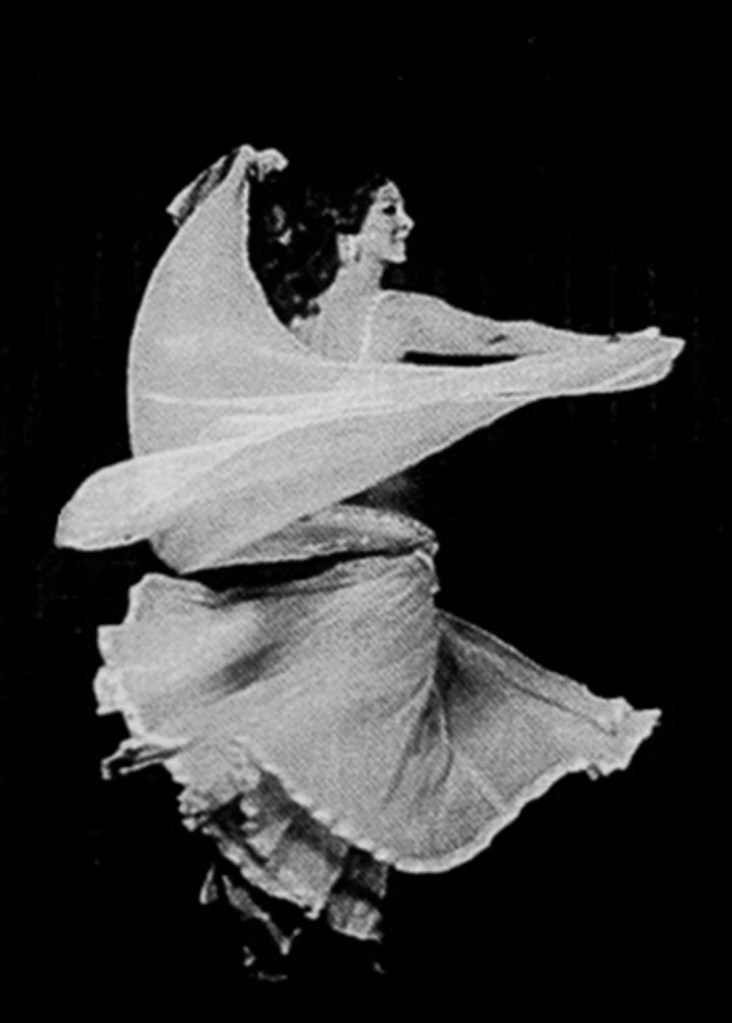
published poet, and a belly dancer.

I listened patiently to her delusional story,
punctuated by tremors and twitches,
until she apologetically told me
that she couldn’t linger, or she’d be late
for her Parkinson’s support group.

As she shuffled off,
I listened to the swish of her skirt,
noticed the tilt of her hips,
and, from some distant place,
heard the mesmerizing music
of the danse du ventre.
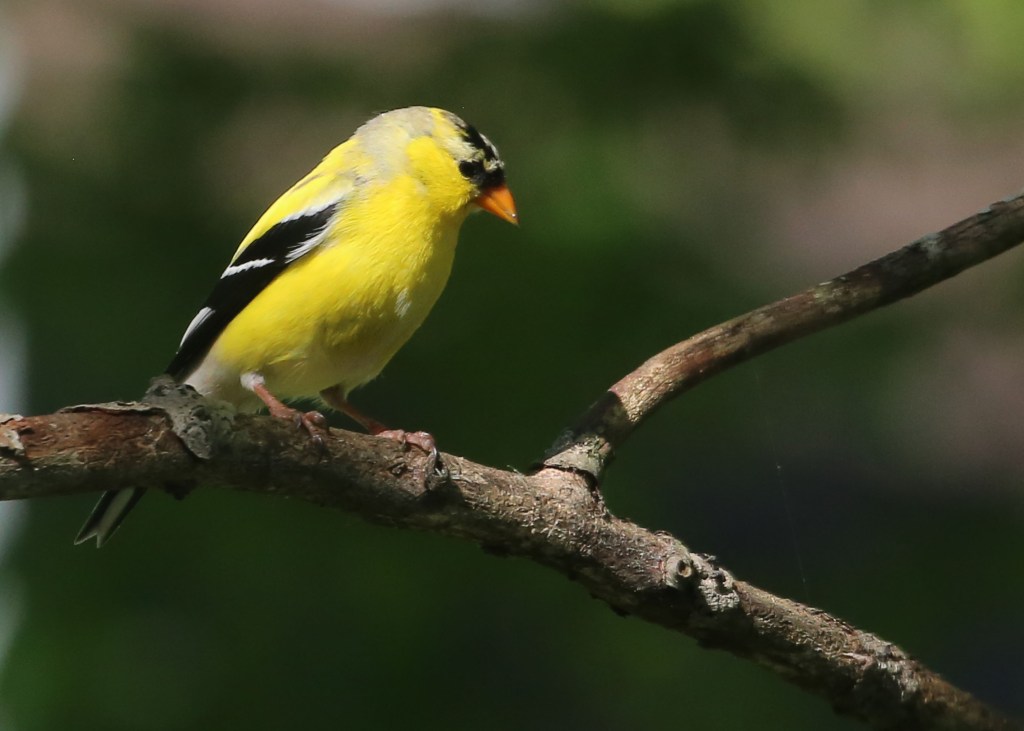
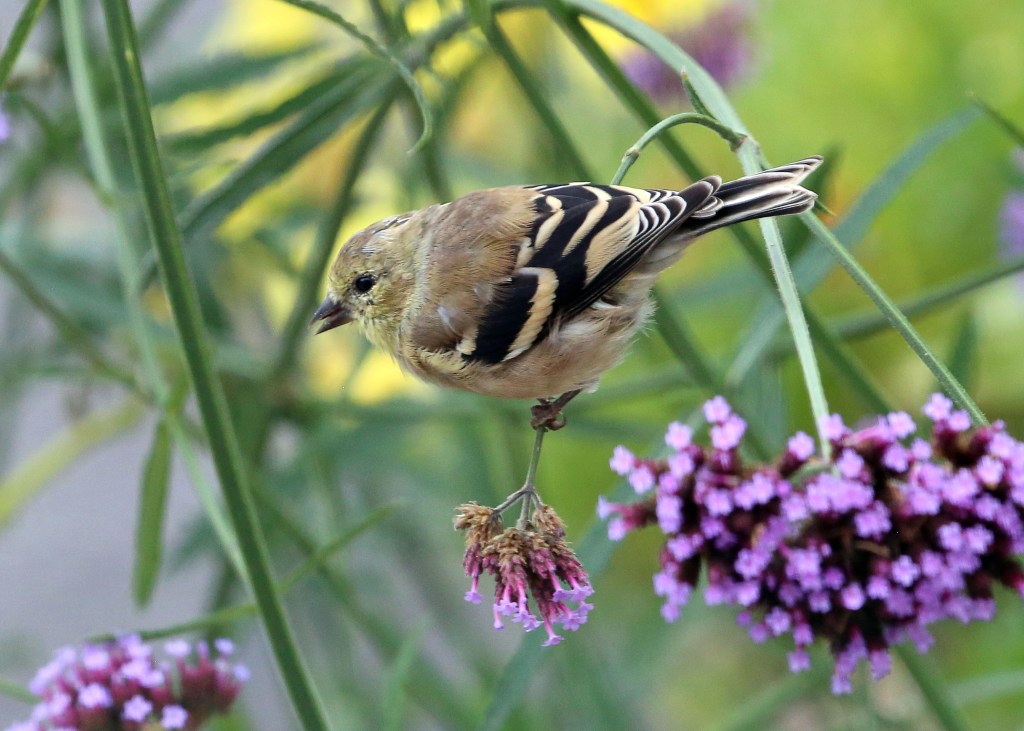
The American goldfinch (Spinus tristis) is a small North American bird in the finch family.
If one lives in a place long enough, one begins to recognize seasonal cycles among some of the bird species that visit the garden each year. Many of us associate the goldfinch with the brightly colored male, the yellow bird that shows up in the spring.
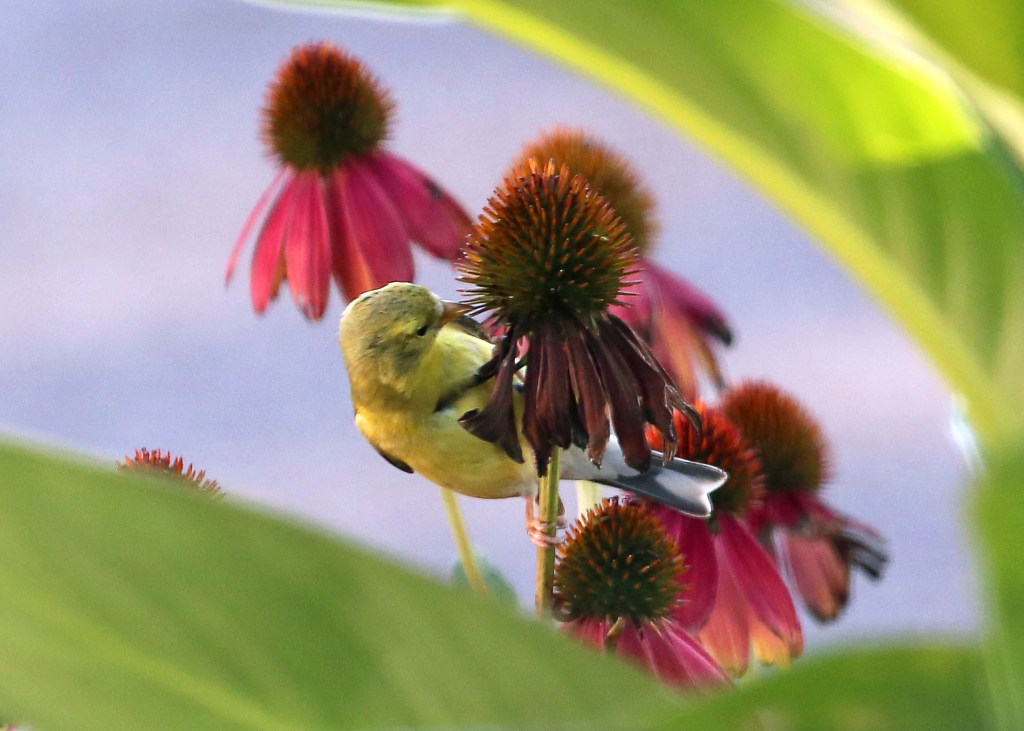
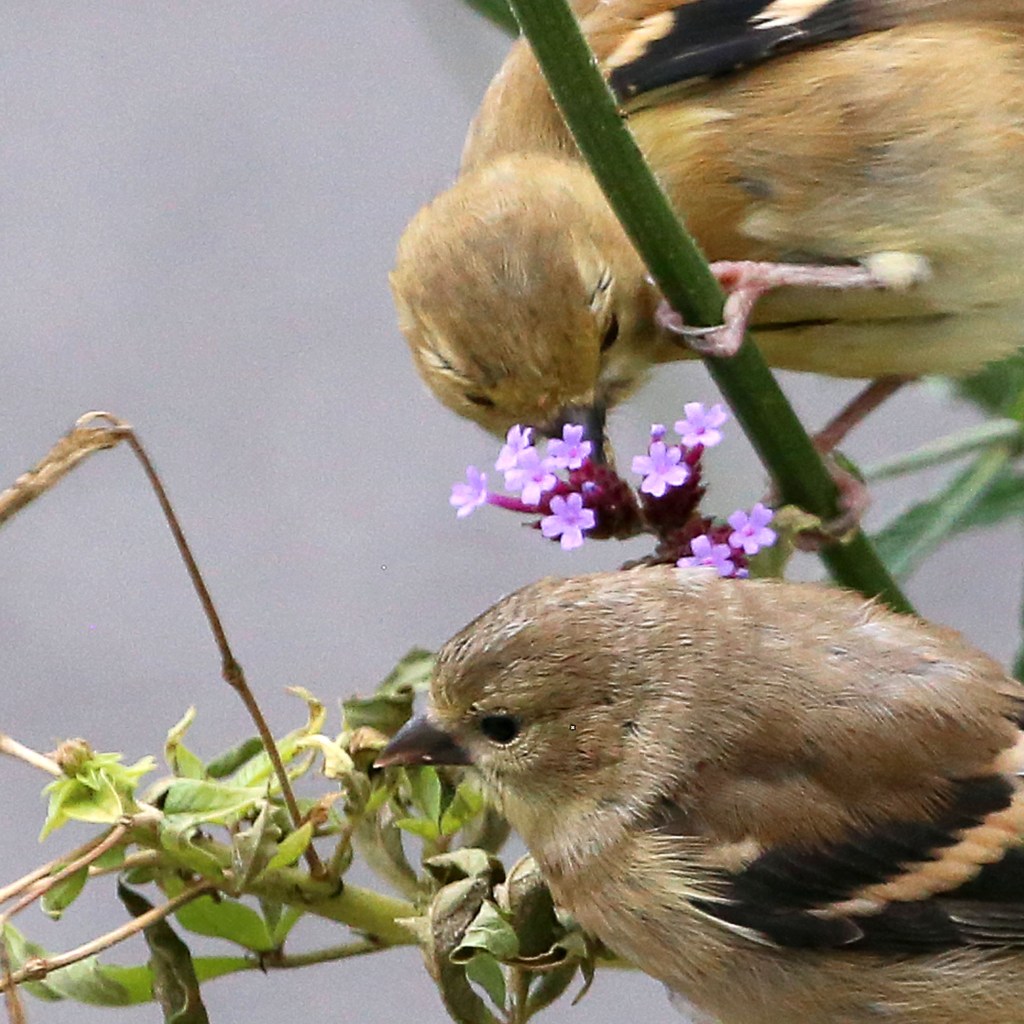
For me, I think of the paler birds feeding on seeds in our flower garden before they leave for the winter. The image above evokes a feeling of anticipated nostalgia because, as we observe it, we remember it will not last.
But we remember the goldfinch clinging to plant stems in our garden last year.
And we remember their acrobatic movements, sometimes hanging upside-down to reach the seed in the remains of a flower, sometimes pulling off the petals to reach the ovary of the flower exposing the seed. Often sharing their activity with other goldfinch.
And, as I watch the birds swaying on a flower stalk, I remember a circus performance at a book fair in Tucson, Arizona, more than ten years ago. And now I recognize the acrobat as a goldfinch.
And I look across the room and see the cushion that Lilian made, and I again recognize the bird.
And I remember a short poem I wrote:
The Scientist
I heard a scientist so teach, We crawled from slime onto the beach, Our home the grey soup sea: But not content to stay that way, By Darwin we were led astray, Reborn as chimpanzees.
On this the scientist holds fast: Its back to dust in the great At Last; No trumpet will be heard. Why is it then that we look higher With such absurd ingrained desire To fly as if a bird?
And I remember watching a lesser goldfinch flying down to a bird bath in our Arizona garden.
Poetry at times gives way to science, In almost speechless awe At the sheer computing capability That directs this bird, this drone, to fly. Sensors seamlessly streaming Ten thousand bits of data To its blazing CPU that is Something less than thimble size. Data processed in an instant, Firing commands that guide The flight in swooping arcs, Never for one moment pausing In that speed of light tango Of messages received and sent; Searching for the shimmer Of two hydrogen atoms Covalently bonded To a single oxygen atom That, in its pre-programmed DNA-lodged algorithm, Spells water: And this, more than all The galaxies in night’s dark sky, Takes my breath away: The nervous birdbath landing Of a Lesser Finch.
When summer joy has been in short supply and cloudy days outnumber all the rest, is it some lingering loss, a love denied, or sun’s sad absence puts us to the test? Perhaps no longer have we a claim on bliss, our once new loves since lost with passing time and youth’s achievements hidden in the mist of long-forgotten days like last year’s wine. But something sadder still is cause of pain if joy of those we love is our joy’s measure: It’s love itself our loved one cannot find that makes us settle for more modest pleasure: A cup of tea, some melody, a gentle frame of mind, a prayer our love by love one day is found.
Ten years later, an answer to prayer. And the sun still shines.
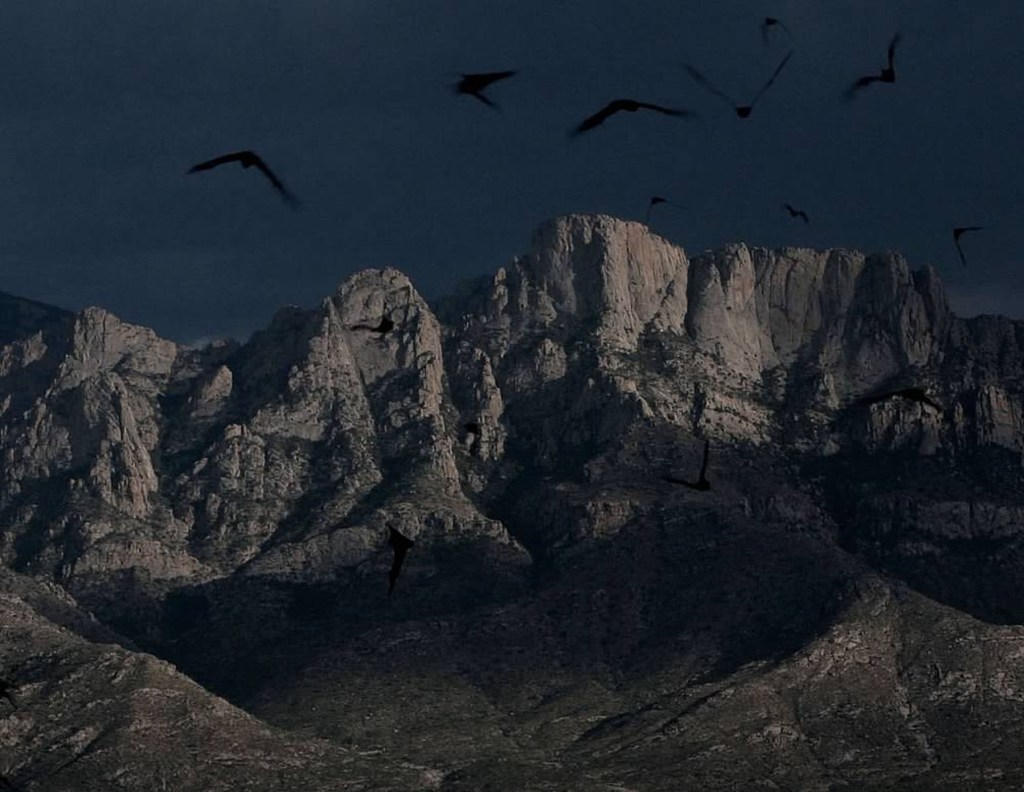
This is the thin time in desert’s diaphanous dusk when blackened shapes stand stark against a liquid sky faintly marked by the early evening star pinning night’s silk shroud over a dying day.
This is the thin time in twilight’s warp when bats come out to fly. Like shuttles weaving frantically, they stitch up vespers veil and pick at threads of memories embroidered long ago in the fraying fabric of a slowly fading mind.
This is the thin time between the chatter of the quail and the coyote’s fearful cry when our gilded mountains turn their greasy grey and I slip quietly into darkness at the dying of the day.
She broke away from our table in Piraeus to dance to the Bouzouki at the café on the bay.
She was drawn by the music, by the taught metallic beat, of the Kalamatianos with its diastolic flow, the flywheel of a watch, moving clockwise, anticlockwise to the heartbeat of the dance. Arms entwined, all were one like a crab from the Aegean scuttling, scuttling to the pulse. And I loved her as she laughed in white cottons bought in Naxos as her scarf from Santorini scattered colors in the air, and she danced the Syrtaki as if no-one else was there. And I watched as if forever, loving voyeur lost in time, like a painter freezing motion in an icon byzantine.
And though the music’s ended, my Athena is still dancing, dancing, dancing, dancing across the canvass of my mind.
There was a sadness in the cadence of her voice. Her name was ‘Beauty’ and she calmly explained to the radio interviewer that in her line of business, risks are very real, but she had children, five to feed and hungry, and there wasn’t any money, or food for that matter, in beautiful Zimbabwe.
I changed channels, to the music station where Robert Schumann’s dreamy piano piece, Kinderszenen, Scenes from Childhood, brought his Moscow audience to tears. I thought of Beauty.
Back in the interview, she talked softly about her desperate business. It was booming across the border where migrant men settled by the hundreds in squamous squatter camps, their despair only deferred by a futile hope for something better.
But for many, the only comfort was in Beauty’s one-woman house-of-joy where, in the sadness of it all, they shared a longing for home and families across the sluggish, silt-filled Limpopo.
I changed channels again. Horowitz was still playing Schumann the seventh piece now, the gentle Traumerei. It can make you weep.
Beauty’s interview pulled me back as if with clutching fingers refusing to let go. The matter-of-fact exchange masked something deeper as she sustained a self-possessed dignity, unexpected in a prostitute-come-lately.
The interviewer politely probed: What were her hopes and dreams? The question hung unanswered, suspended in breathless air like some dark cloud heavy before rain.
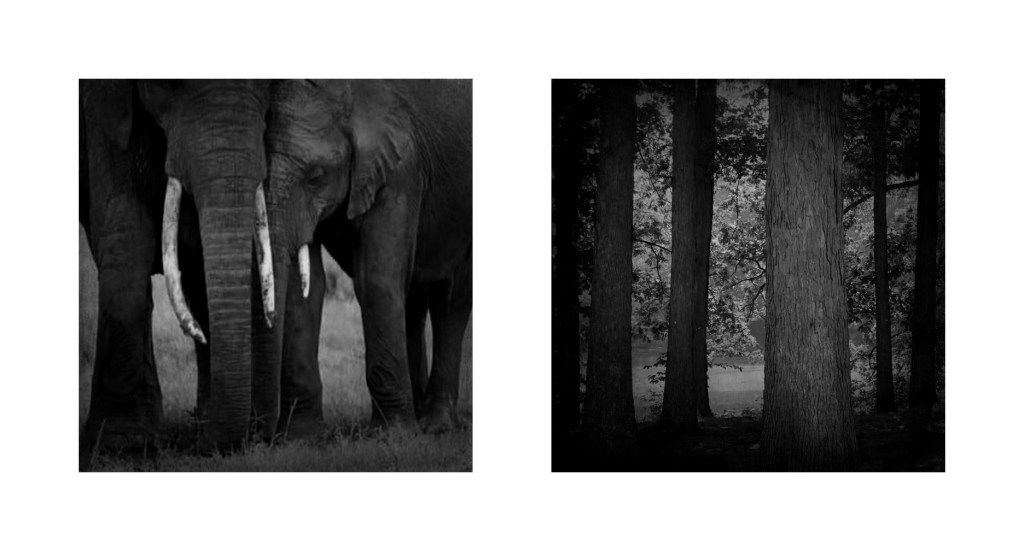
In a recent New York Times opinion piece, ‘In the Shelter of a Weeping Beech,’ Jesse Wegman wrote about his mother who “loved all trees, but this weeping beech was her favorite. It’s hard to describe the experience of being in its presence, but she tried. In the journal she kept while she was sick, she wrote that the tree appeared to her ‘as a herd of elephants huddled together, pressing their massive bodies together, with their trunks entwined.’
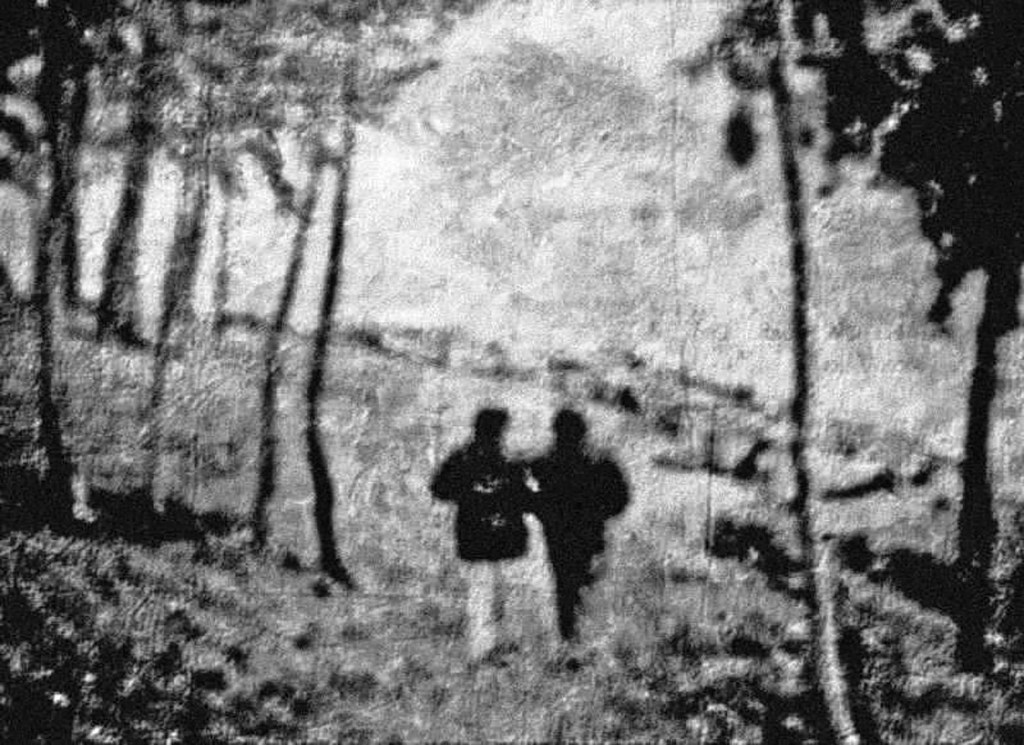
Only a few months earlier, I had a similar experience standing in a grove of oak trees and tried to capture it by creating the photographic diptych displayed above. I then wrote some poetic narrative to accompany the image. Here it is:




 The Final Stretch