To be interested in the changing seasons is a happier state of mind than to be hopelessly in love with spring.George Santayana
Cleared for takeoff. Farewell Autumn
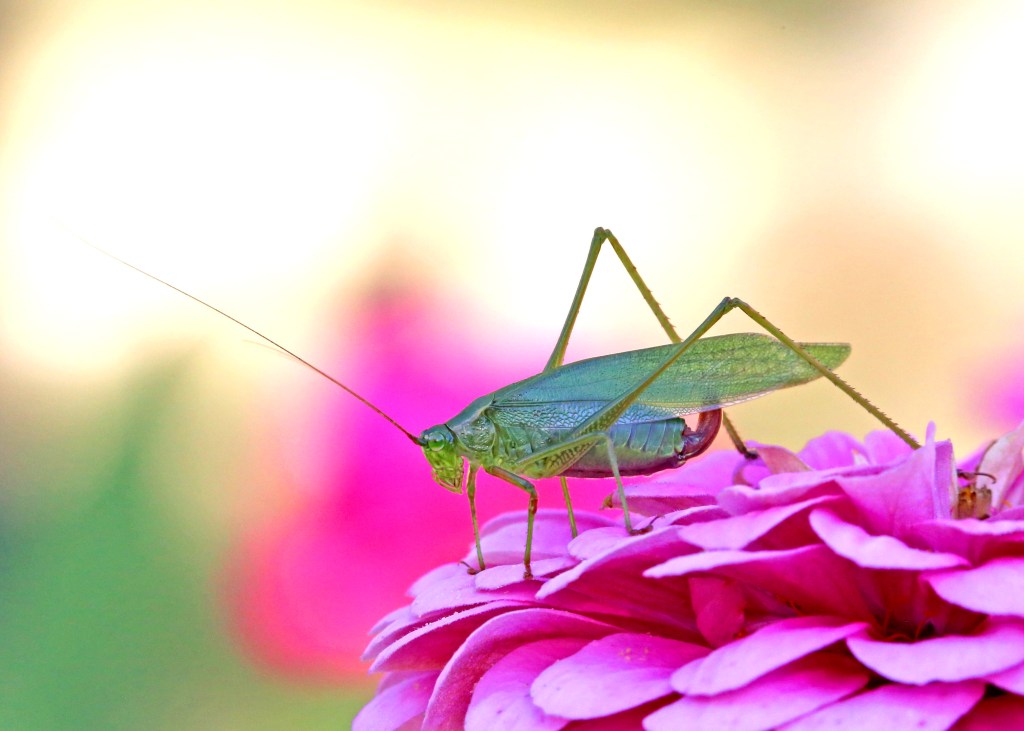
It seems as if all the flying things are leaving our garden, including this Cabbage White Butterfly
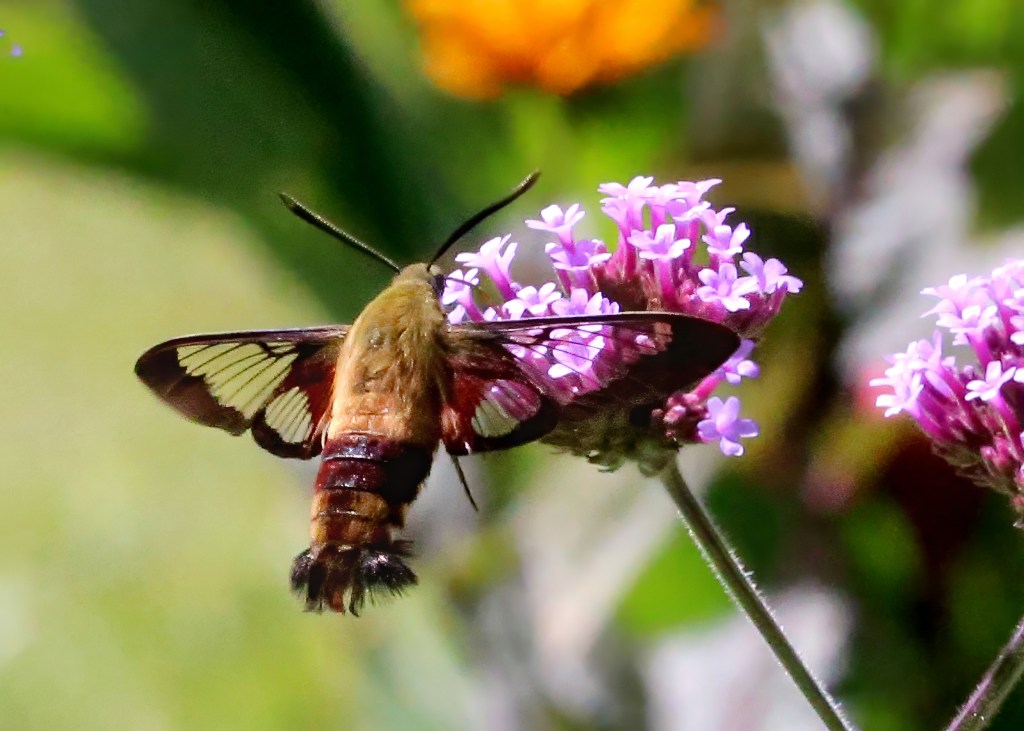
And the Bumblebee Moth disappeared a few weeks ago.
Over the summer we watched the Monarch Caterpillar feeding in our Butterfly Bush:
And then, after pupating, returning as a beautiful Monarch Butterfly
Not all the Monarchs survive. In the following image, a yellow garden spider, the Argiope aurantia, has captured a butterfly and wrapped it in a silk sheath.
Ten days ago, the last few Monarchs visited our garden. They had just flown south from Canada over Lake Erie and settle on our zinnia flowers to build up energy for their long flight to Mexico.
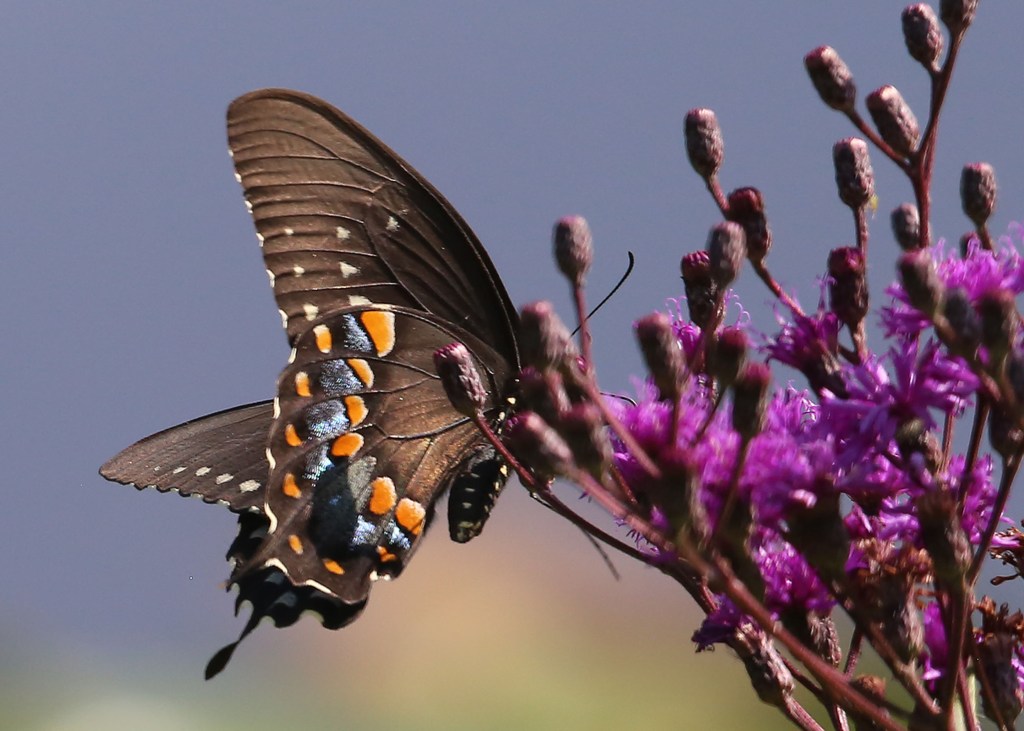
The Swallowtail butterflies have also left
The Spicebush Swallowtail
And the Yellow Swallowtail sharing a viburnum blossom with a Bumblebee.
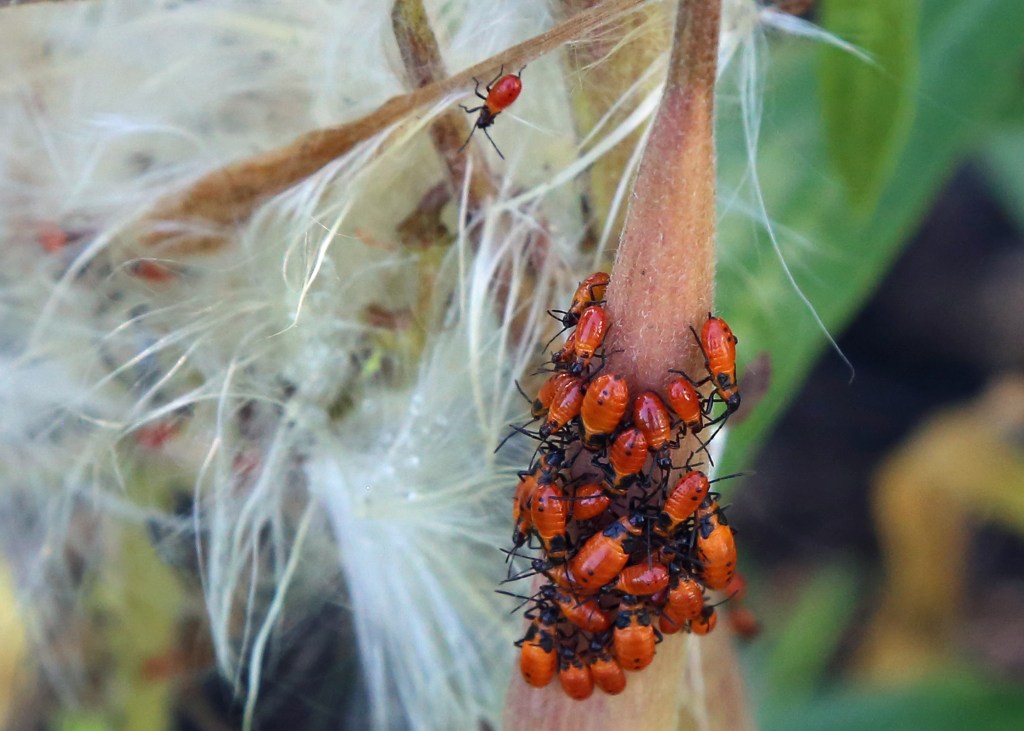
As the butterfly bushes start going to seed, we noticed Milkweed bugs (Oncopeltus fasciatus) on the pods. They are part of the milkweed ecosystem, we left them alone.
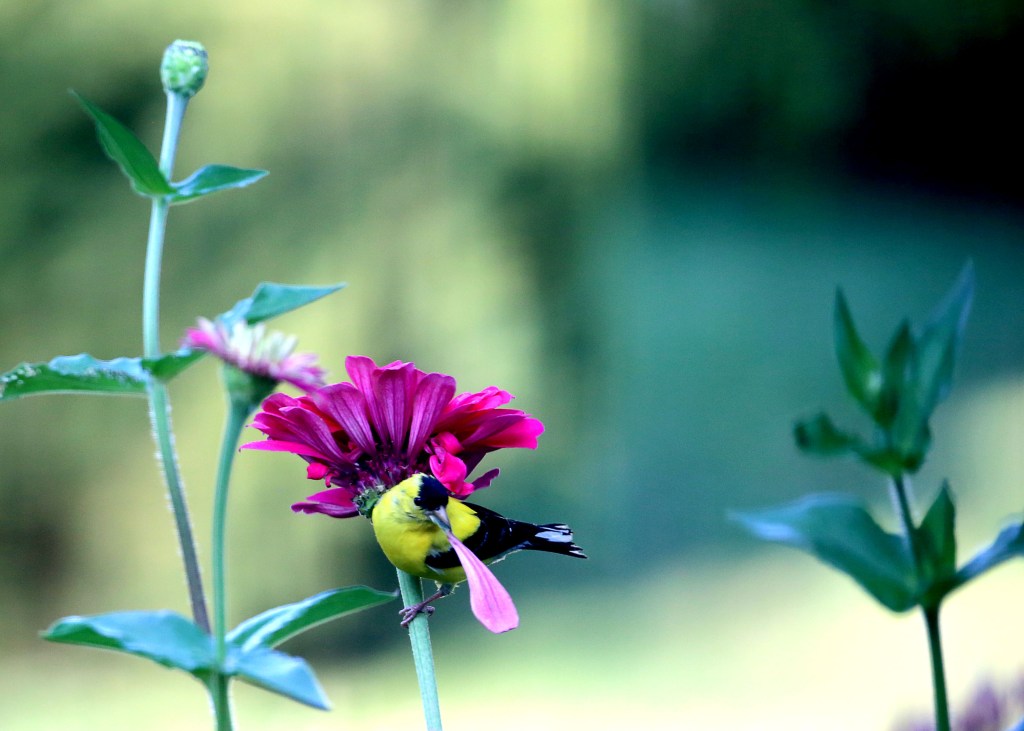
As summer slid into autumn, we watched the goldfinch plucking petals off the zinnia flowers to access the seeds.
We had bid farewell to the Ruby-throated Hummingbird that was with us all summer, and a few weeks ago a juvenile hummingbird passing through on its migration to Southern Mexico and Central America.
We still see Dragonflies, but they too will soon be gone.
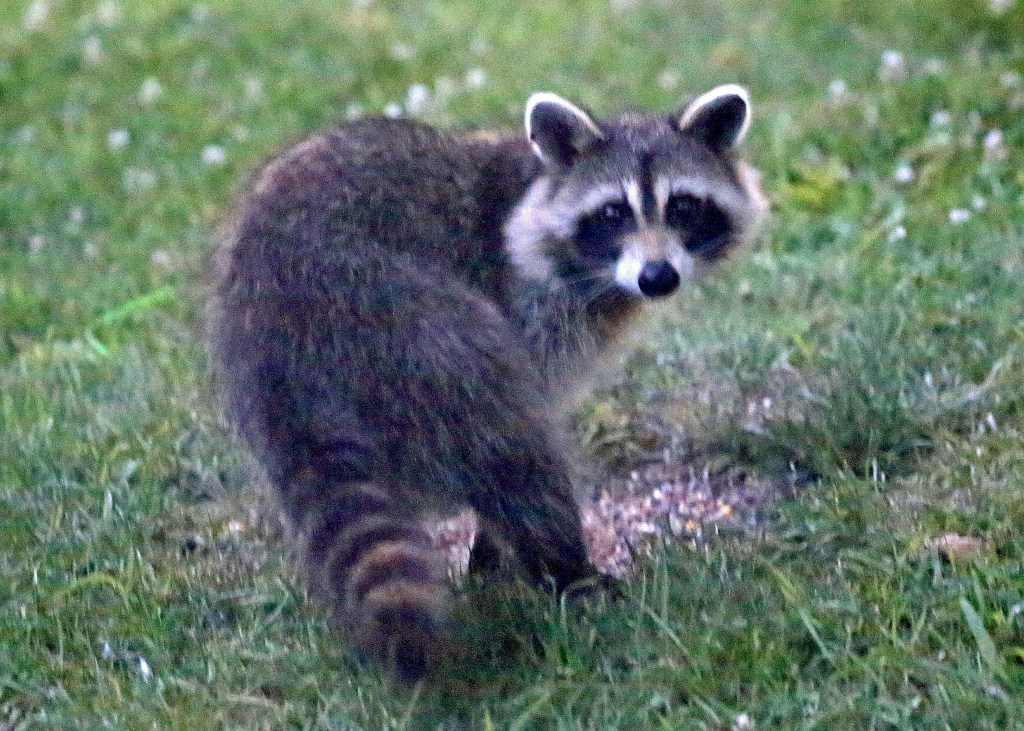
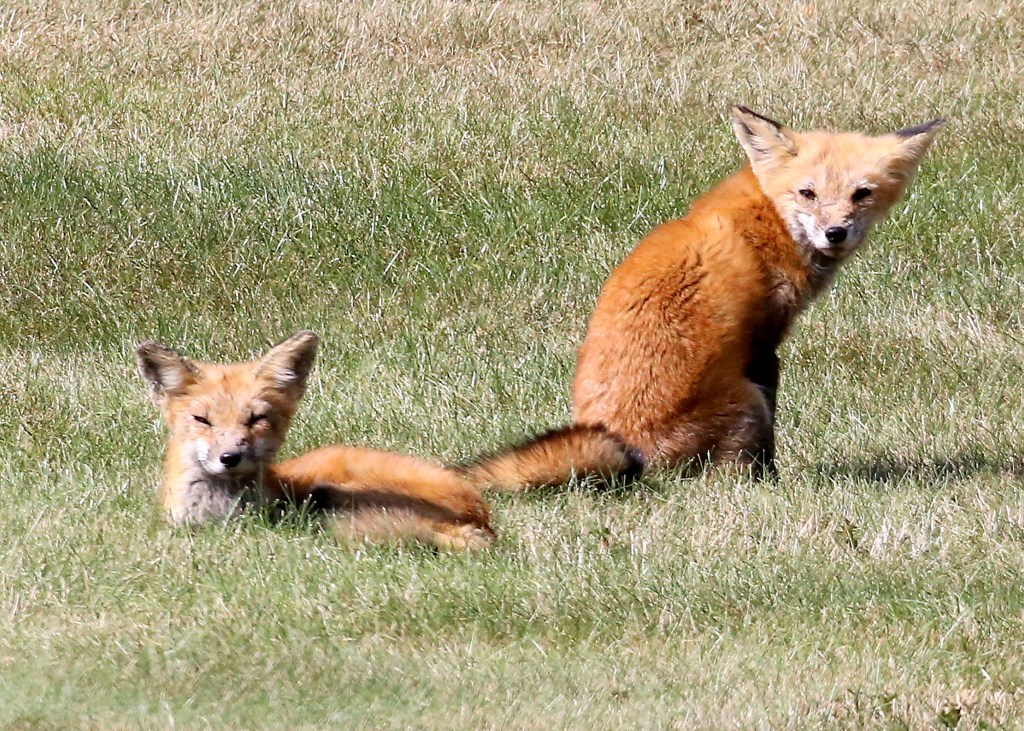
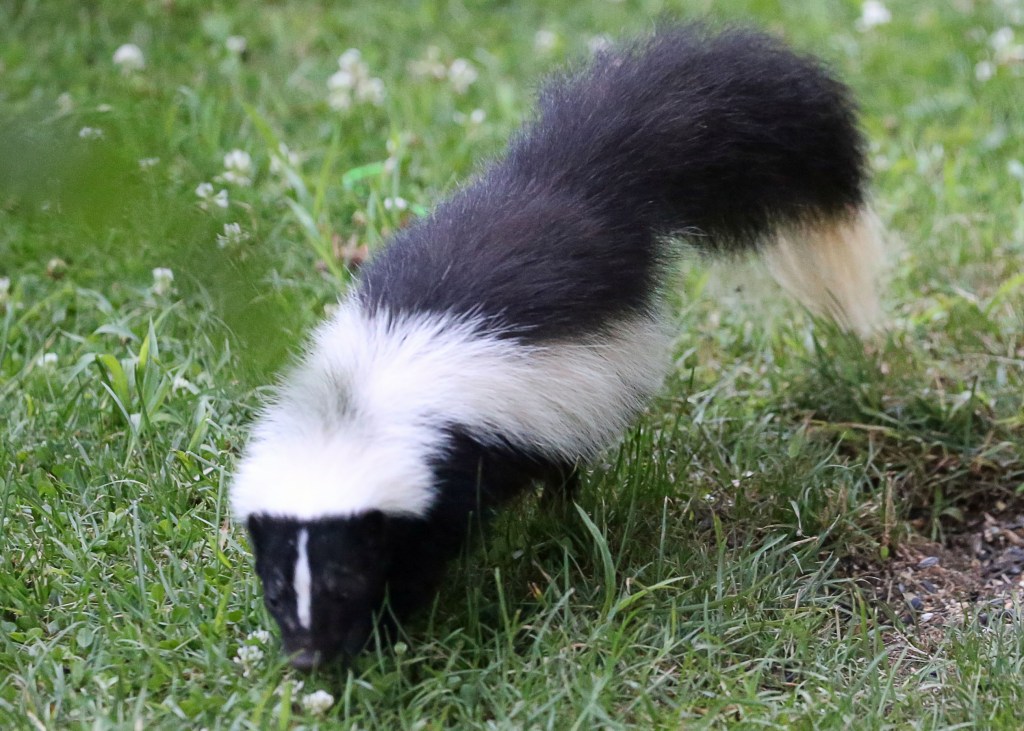
We were fortunate to be able to retire in the country and align ourselves with the changing seasons. At our advanced age we have learned to say goodbye, which we must do every autumn. But we haven’t been completely abandoned. Here are some of our friends who will remain with us over winter
Racoon
Red fox
Skunk
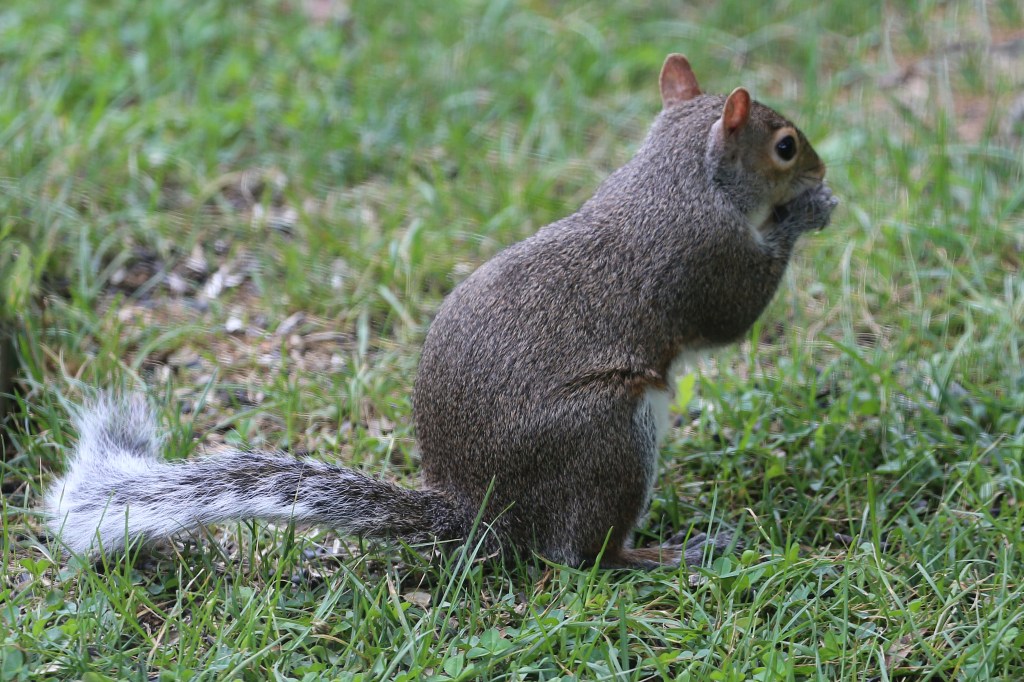
Eastern Grey Squirrel
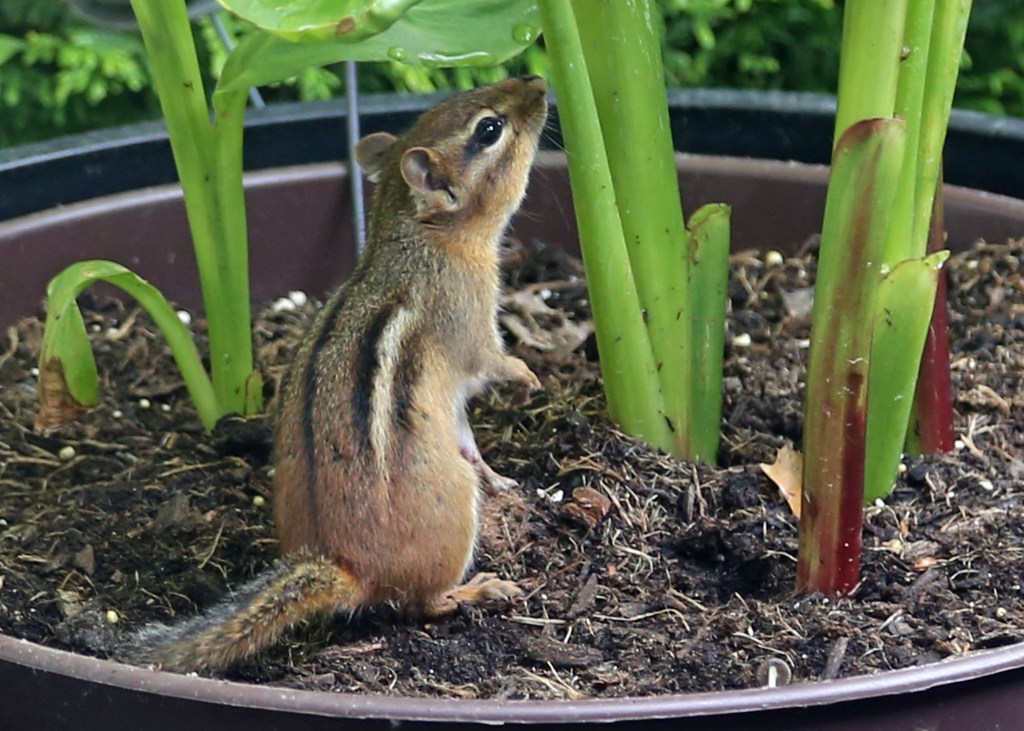
Chipmunk
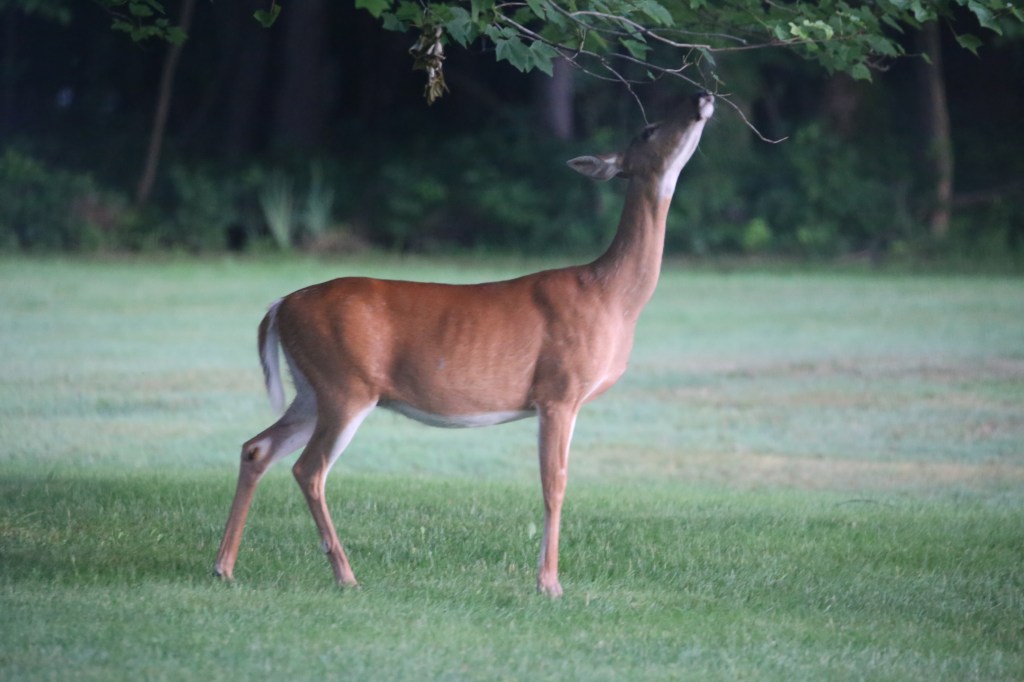
White-tailed deer
The Possums and Groundhogs will be nearby, but underground. We’ll see them in the Spring.
Despite the heat and humidity of the last weeks of summer, we look out at a blaze of color in the gardens surrounding our little sunroom.
Yesterday afternoon, sitting with my camera for less than an hour and, without leaving my chair, I took the following photographs. The quality isn’t great: There were reflections in the windows and several of the pictures were taken through window screens. But I wanted to share the sensibility of being surrounded by nature’s beauty on a hot, muggy day.
There are over twenty species of this perennial. In this blurry image seen through the screen window we have a Heliopsis, Tuscan Sun.
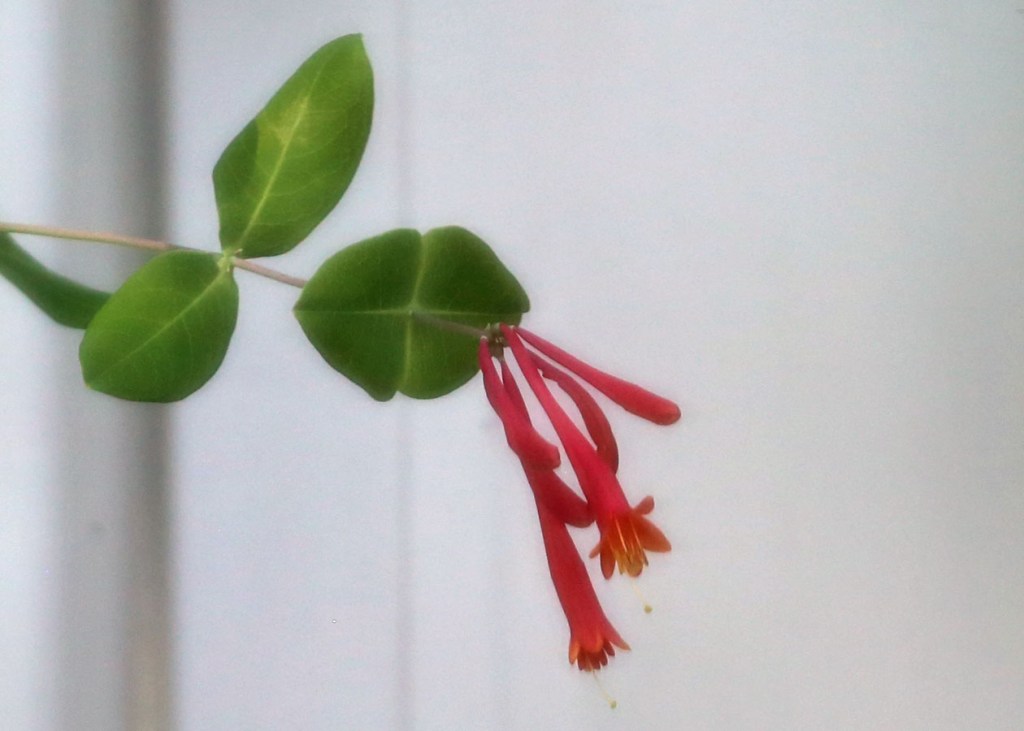
Turning in my chair and looking behind me, I see the Honeysuckle vine against a white wall. Sometimes I may see hummingbirds feasting on the flower’s nectar, but not this afternoon.
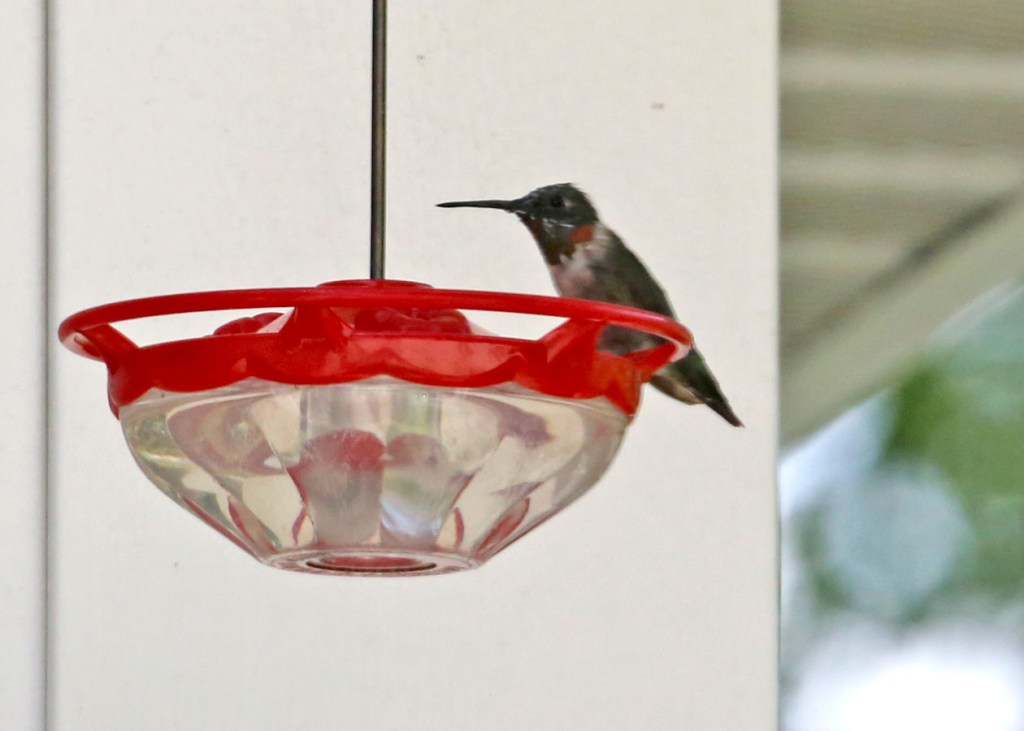
As I look to the front again, I catch a glimpse of the Ruby-throated Hummingbird at our feeder. Even though our garden has honeysuckle, verbena and monarda, our summer visitor will often take the line of least resistance by taking nectar from our feeder. In fact, if the feeder runs low on sugar-water, the hummingbird will sometimes hover just outside the window to remind us to fill it. Like the butterflies, the hummingbirds will soon be flying south.
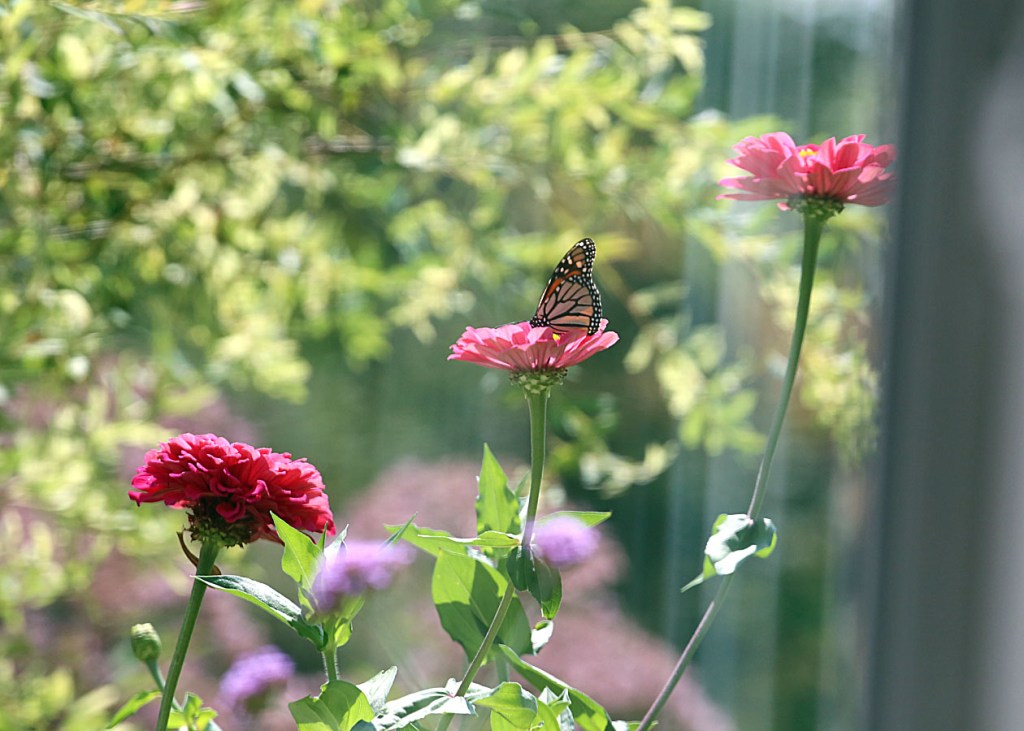
Speaking of butterflies, here is a Monarch settled on a Zinnia flower. Over the past few days, we have noticed lots of activity as the fourth generation of butterflies prepare for their long migration to Mexico.
We planted Zinnia seeds in the house in April, transplanting them to pots in May and taking them out to the patio when the danger of frost had passed. They are a tall-stemmed plant known for their twelve petal flowers.
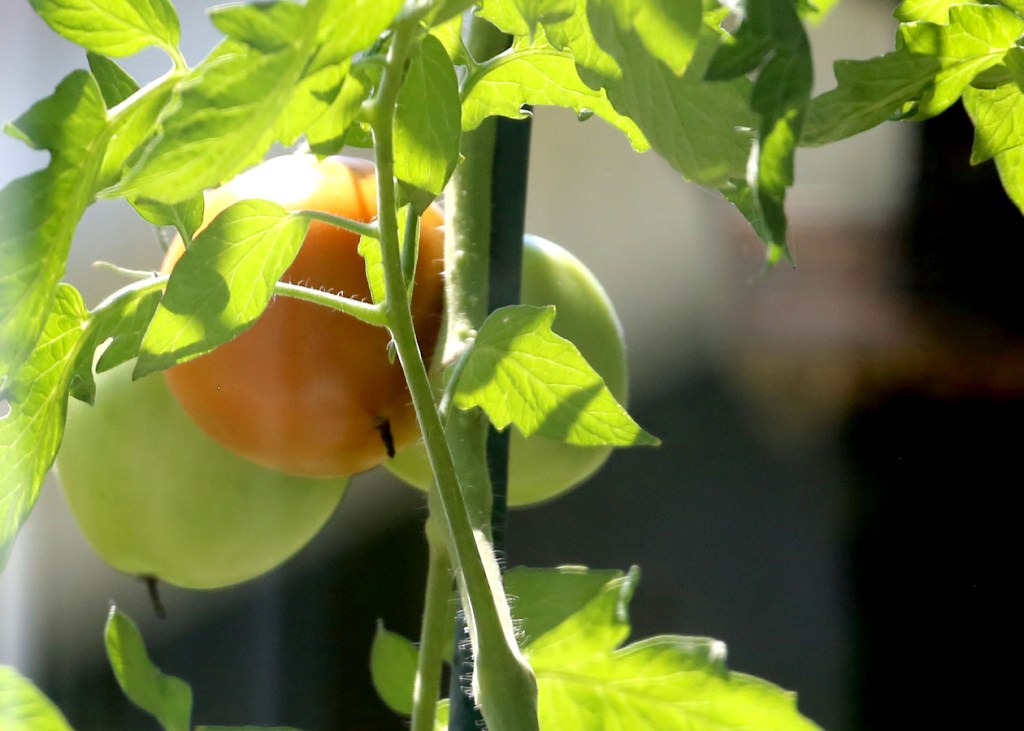
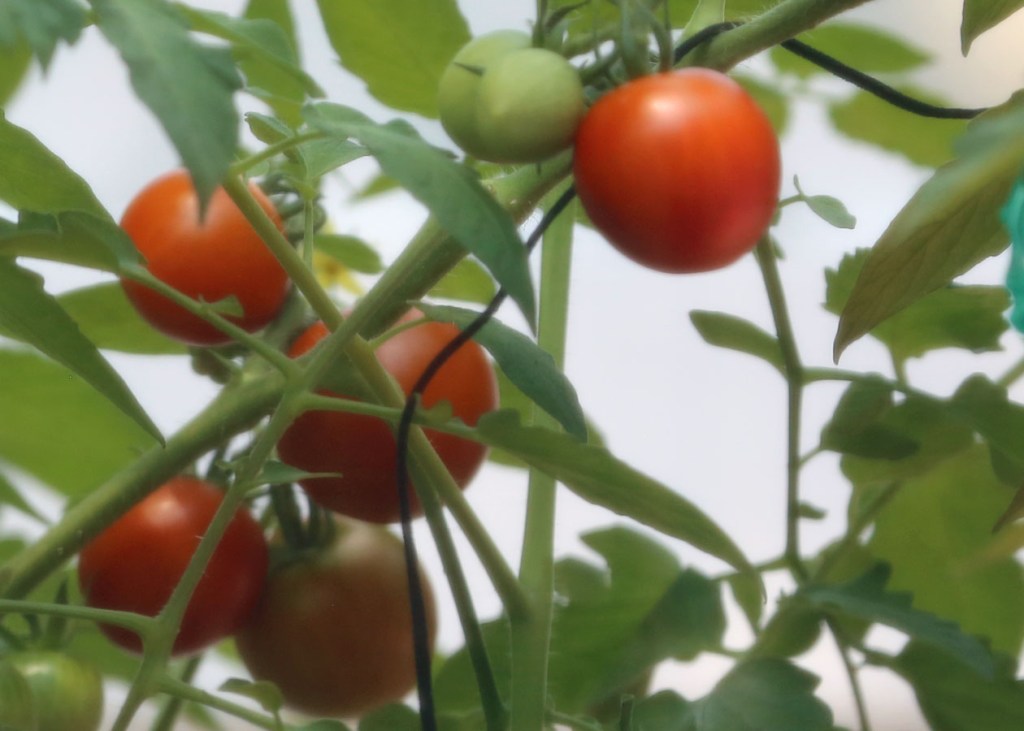
Close up to one of the windows is a tall tomato vine. We planted this several months ago and its fruit is only now ripening. This is the large ‘Beefsteak” tomato, a delicious, juicy, variety that we use for salads and sandwiches.
Turning around in the chair, I look out at another tomato vine. This one produces smaller slicing varieties in abundance
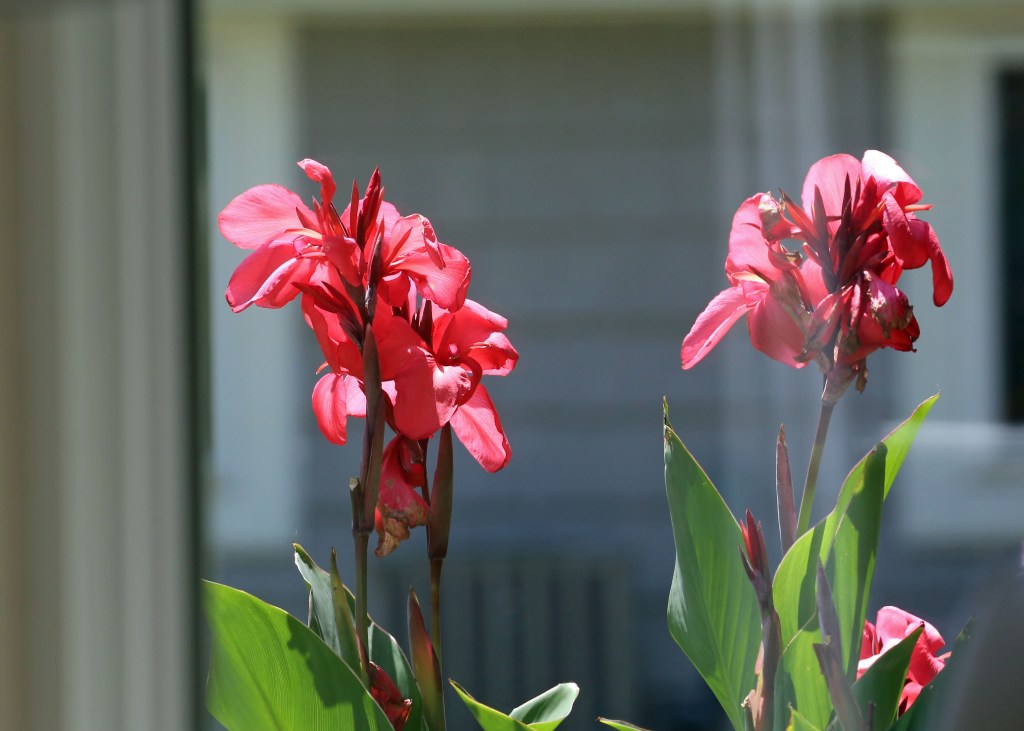
This Cana plant isn’t in the flower bed but in its own pot next to a tomato vine. We planted it in spring and expect it to continue enjoying its tropical-like green foliage and brilliant flowers until the first frost of autumn. Like the tomato vine, the Cana is so close to one of the windows of the sunroom, it could almost be in the room.
There is some shade under the old oak tree behind me where Hosta plants do well. But by this time of year, the flowers begin to wilt, and the leaves are losing their vibrancy. Earlier in the summer the several varieties in our garden created a luxuriant display of different textures, sizes and shades of green.
A variety of miniature Hostas in a blue pot keeps color in the garden.
The birdfeeder to my right attracts several species: chickadees, nuthatches, cardinals, bluejays, sparrows, finch, grossbeak, starlings, blackbirds, tufted titmouse, a variety of woodpeckers, doves, and goldfinch. This afternoon, only a male house finch makes an appearance.
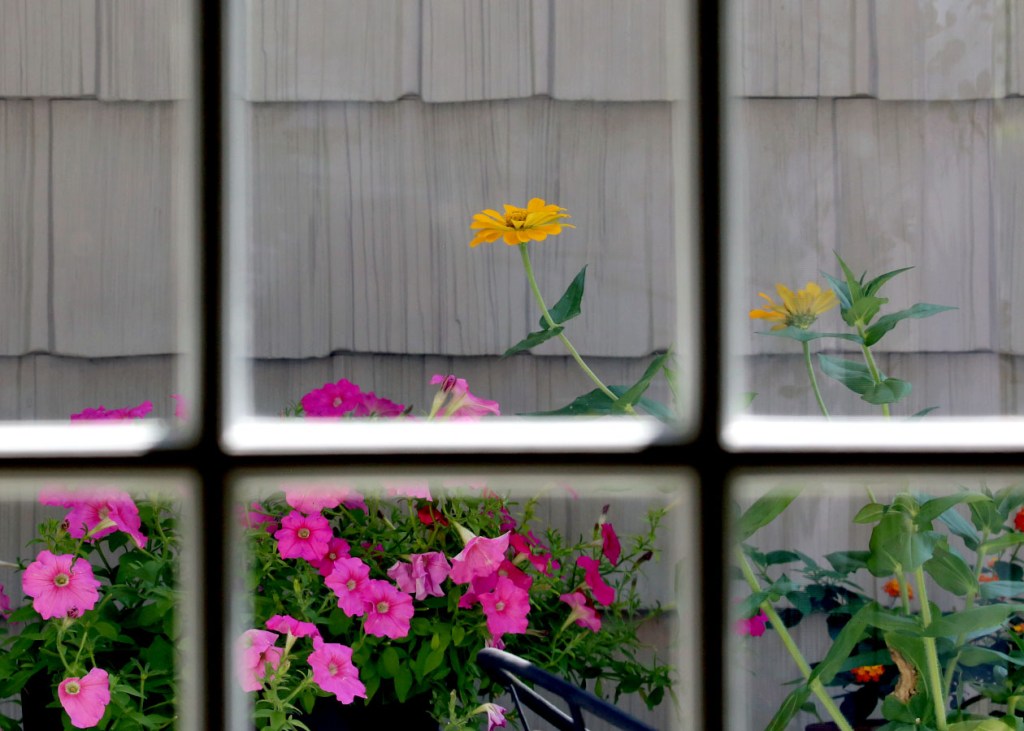
Looking through the glass door, one is struck by the bright yellows and pinks of a Zinnia and a pot of Petunias.
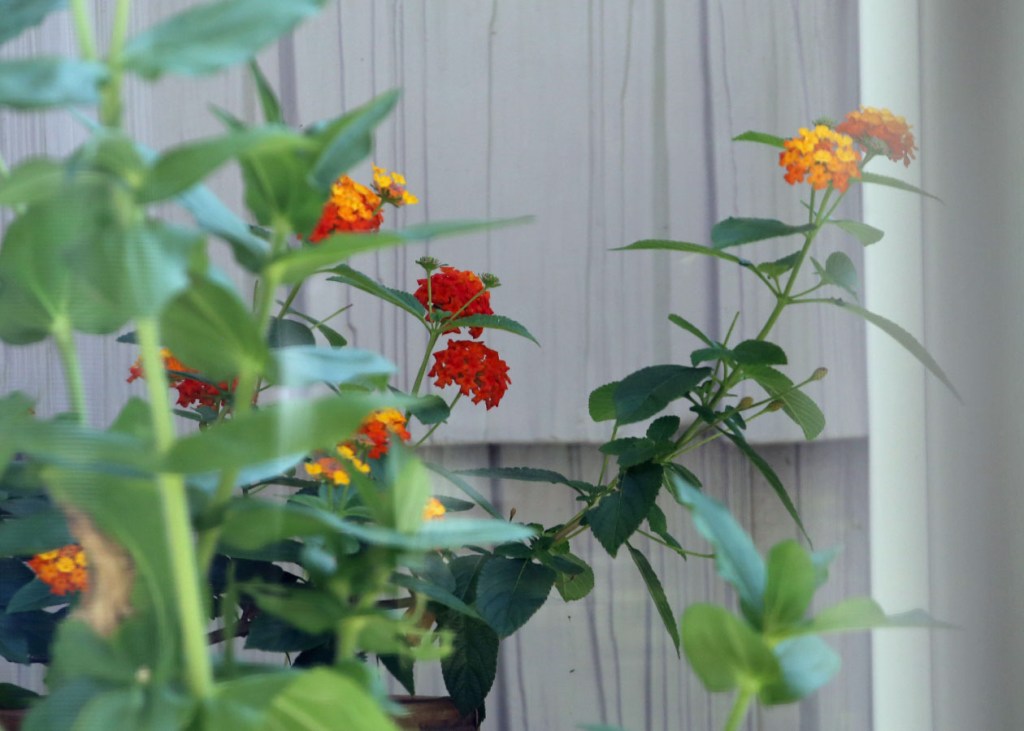
This Lantana plant is a nice addition to our pollinator garden. The species proliferated in our Arizona garden when we lived there but now are confined to a pot for their summer appearance in Ohio.
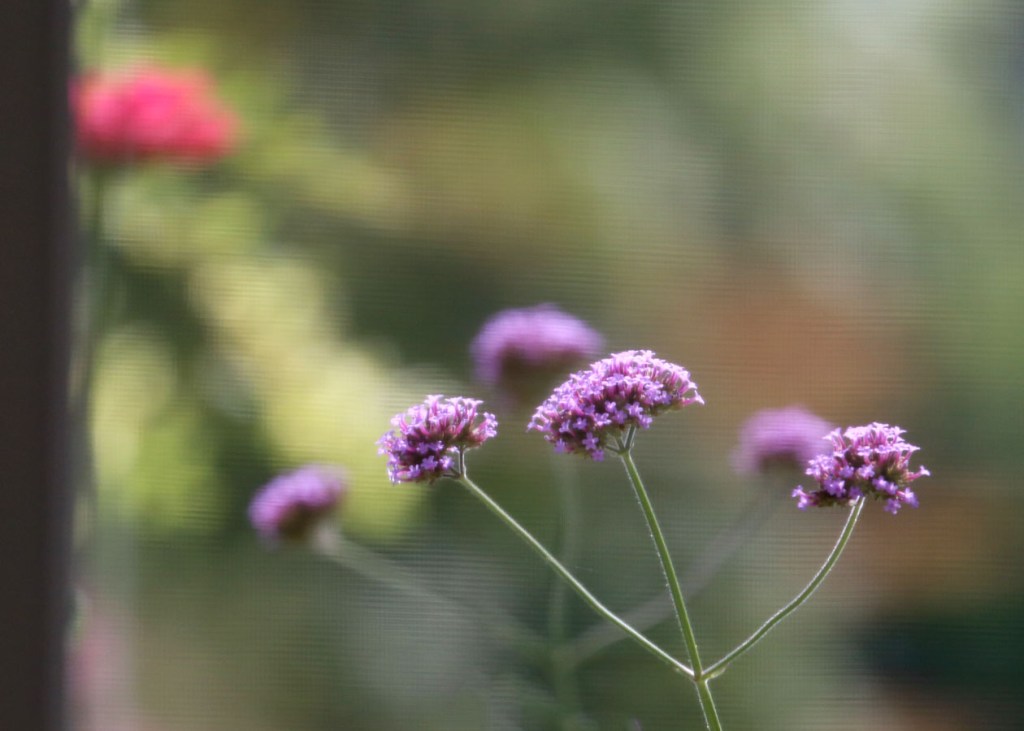
A blurry image through the window-screen of the tall, slender, stems of a Verbena with its cluster of purple flowers. It is a nectar source for butterflies and hummingbirds. A late-summer bloomer, it brings some nice color to the garden as other earlier blooming flowers begin to fade.
The Mandevilla is a subtropical vine native to the Southwestern United States, Mexico, Central America, the West Indies, and South America. We buy a small potted vine each spring and plant it next to an old lattice frame that it quickly covers, producing bright pink flowers. We can see one of its flowers sharing space with a Zinnia
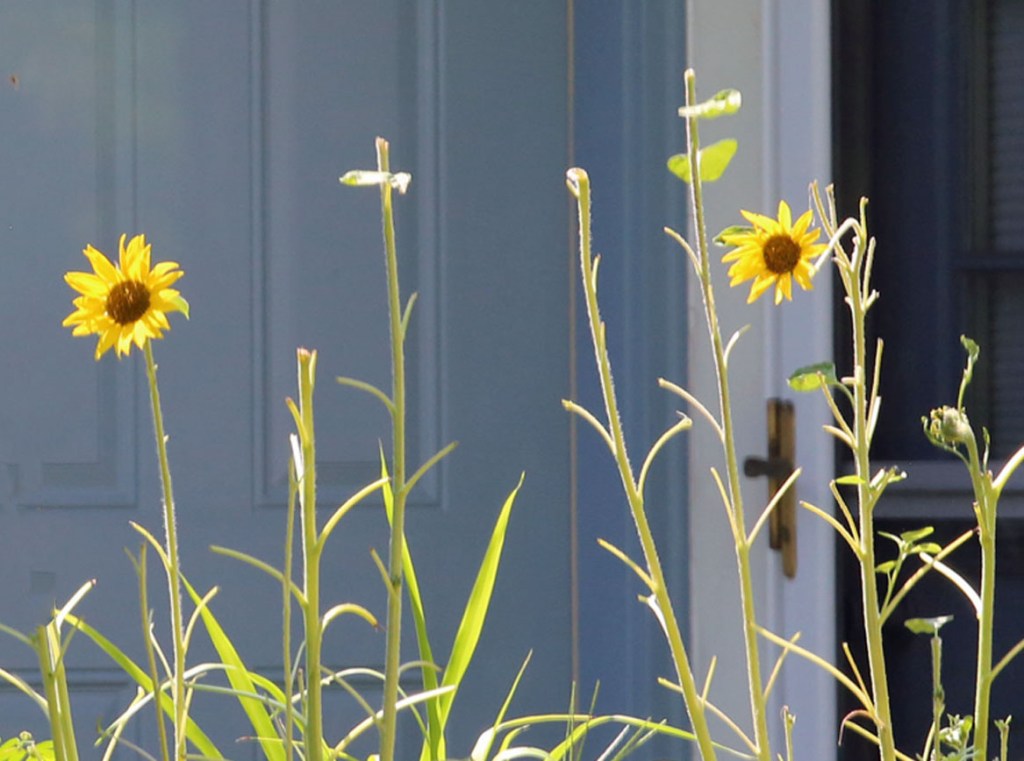
Beyond our own flower garden, a few sunflowers that our neighbor planted in her vegetable bed adds to the color of our surroundings.
This the chair from which all the photographs were taken during an hour on a hot, muggy end-of-summer afternoon












 The Final Stretch