Yellow is a vibrant color associated with sunshine and happiness. So, don’t let this close-up of a Yellow Spiny Lizard frighten you.
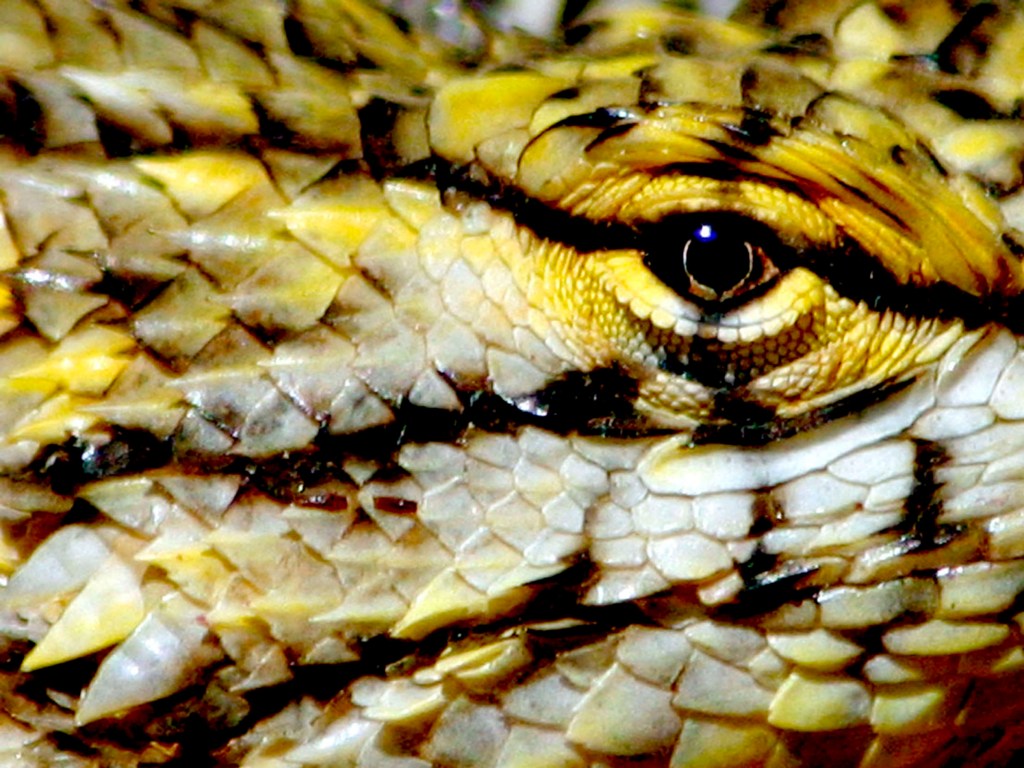
Its scaly skin mirrors the colors of the desert, making it almost invisible against the sandy and rocky terrain and safe from predators. And its sharp scales provide additional physical protection. Yellow spiny lizards are not dangerous to humans. They are non-aggressive, do not possess venom, and rarely bite unless provoked. This one didn’t seem to mind being photographed at eye level from three feet away. So yes, despite its appearance, sunshine and happiness is what this creature offers to us humans.
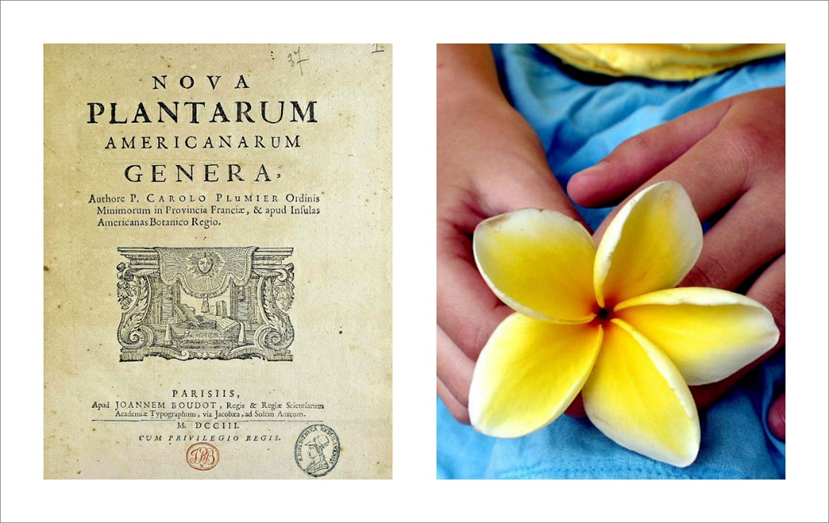
Granddaughter Brynna, holds a yellow Frangipani in Barbados. Native to the Caribbean, the genus Plumeria is named in honor of 17th-century French botanist and Catholic monk Charles Plumier (1646 – 1704) who traveled to the New World documenting plant and animal species. Perhaps he also smelled its sweet perfume as he held a similar blossom in this region three-hundred years ago.
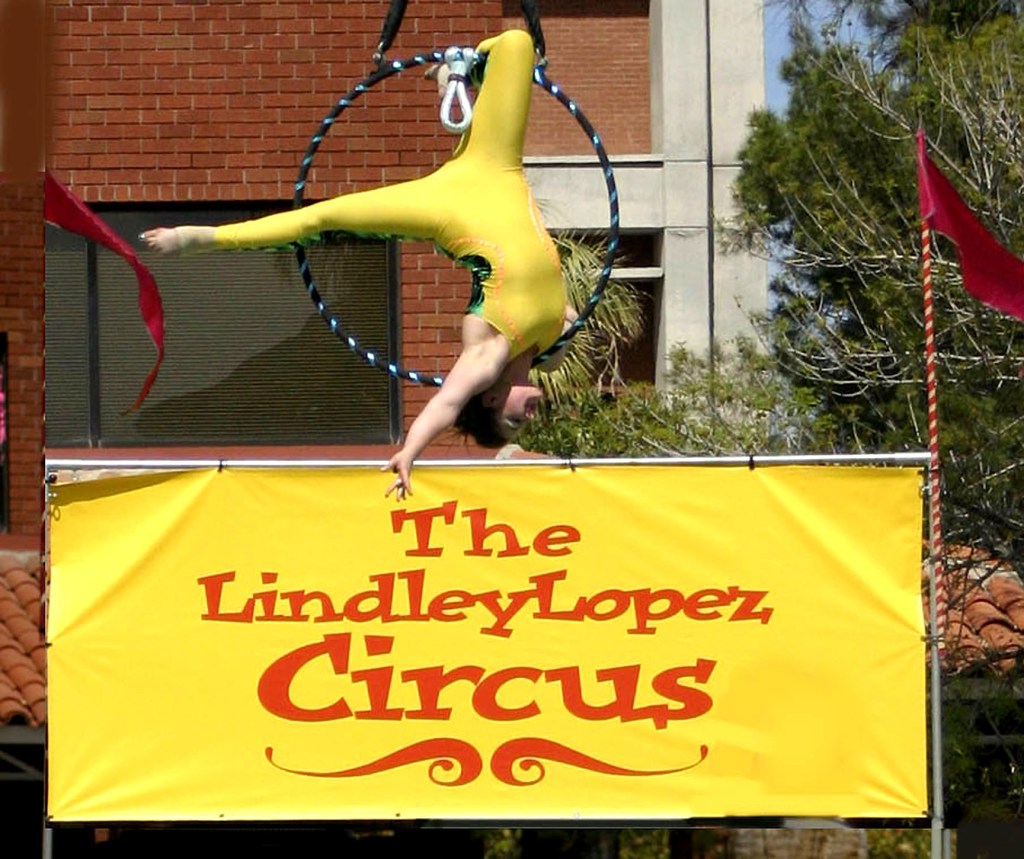
If yellow is the color of sunshine and happiness, this was a good choice for an outdoor circus performance I watched fifteen years ago. It featured acrobatics, aerial acts and live music. What most appeals to me is its low-tech traditional approach to family entertainment. No AI nor sophisticated stage-setting, no animals, no complex engineered structures. In some sad way, a lost innocence.
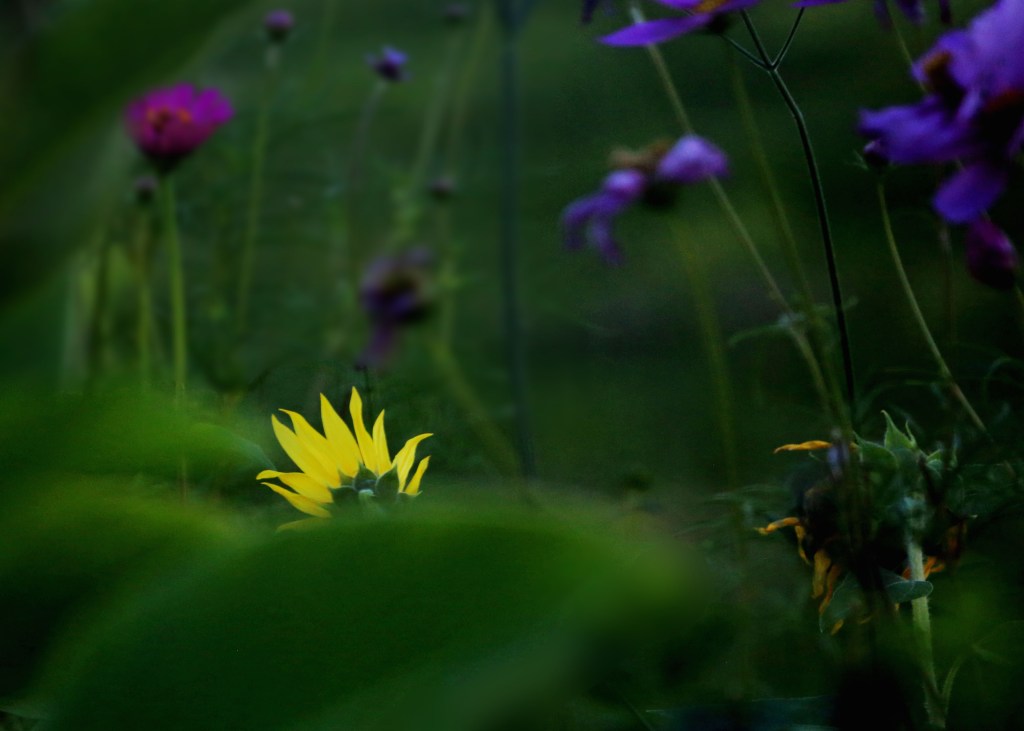
A sunflower in our garden. It catches our attention as much as it inspired William Blake in 1794
Ah! Sun-flower, weary of time,
Who countest the steps of the sun;
Seeking after that sweet golden clime
Where the traveler’s journey is done;
Where the Youth pined away with desire,
And the pale virgin shrouded in snow,
Arise from their graves, and aspire
And even earlier, in 1530, Thomas More would perhaps look out from his prison cell in the Tower of London and write about the sunflower. (Portrait: Hans Holbein the Younger)
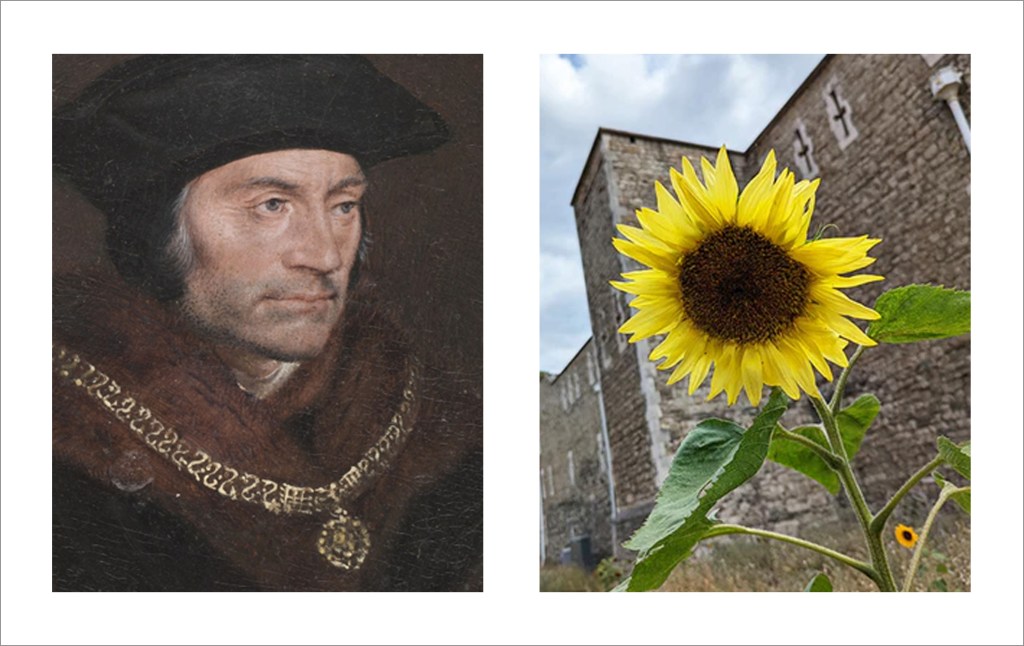
The sunflower turns on her god when he sets,
The same look which she turned when he rose
Like William Blake and Thomas More, Charles Darwin also wrote about the way in which the sunflower follows the sun. The phenomenon is known as heliotropism and allows plants to track the sun’s motion throughout the day, optimizing light capture for growth and reproduction.
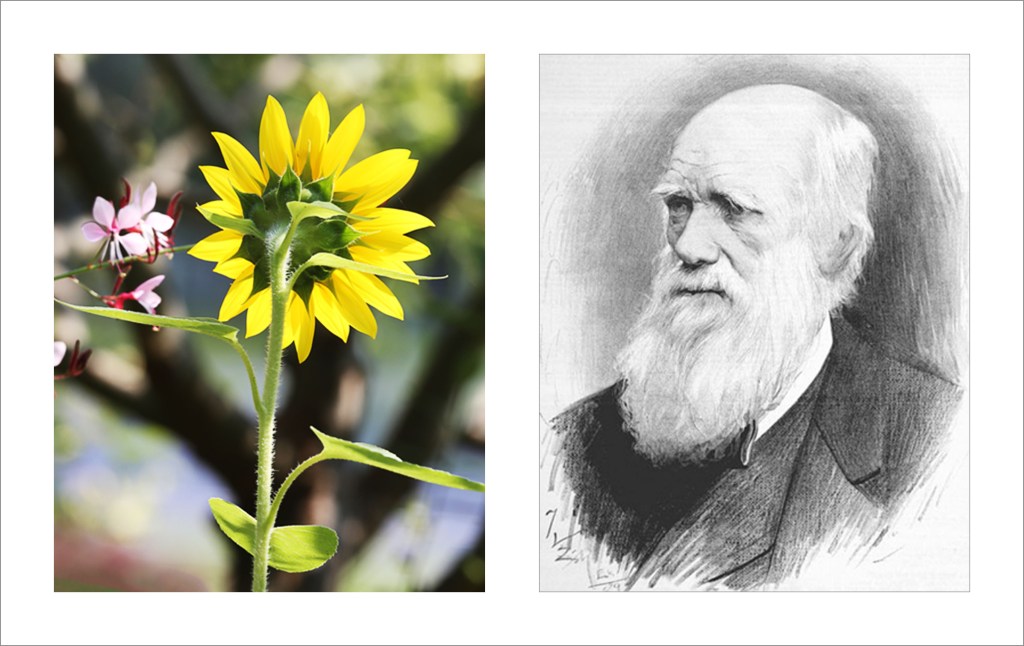
He bows in homage to the rising dawn;
Imbibes with eagle eye the golden ray,
And watches as it moves the orb of day.
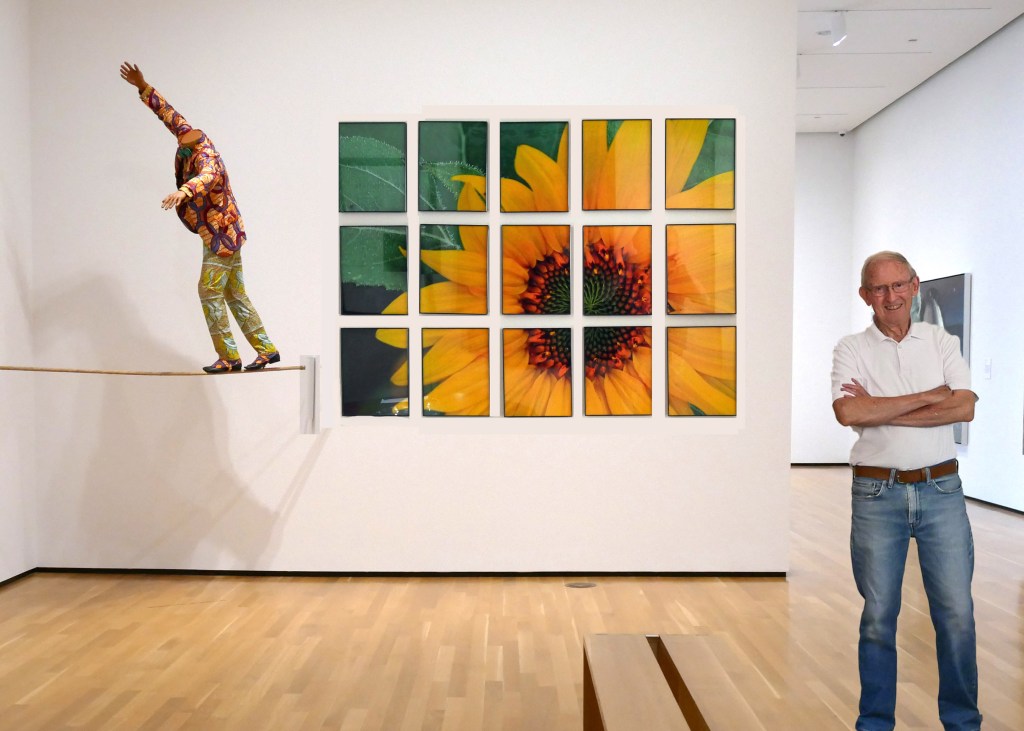
Equally inspired by the sunflower, I took a photograph and cropped it into twelve 8×10 images then mounted them in cheap plastic frames and hung them on a wall. Voila!
But, Mama,
What does heliotropic mean?
It means that you are special, dear,
among all the flowers.
It means you look on the bright side
And never look back,
It means you turn your face to the sun
And avoid looking down.
It means you keep your eyes on the heavens
And your feet on the ground.




 The Final Stretch