To be interested in the changing seasons is a happier state of mind than to be hopelessly in love with spring.George Santayana
Cleared for takeoff. Farewell Autumn
It seems as if all the flying things are leaving our garden, including this Cabbage White Butterfly
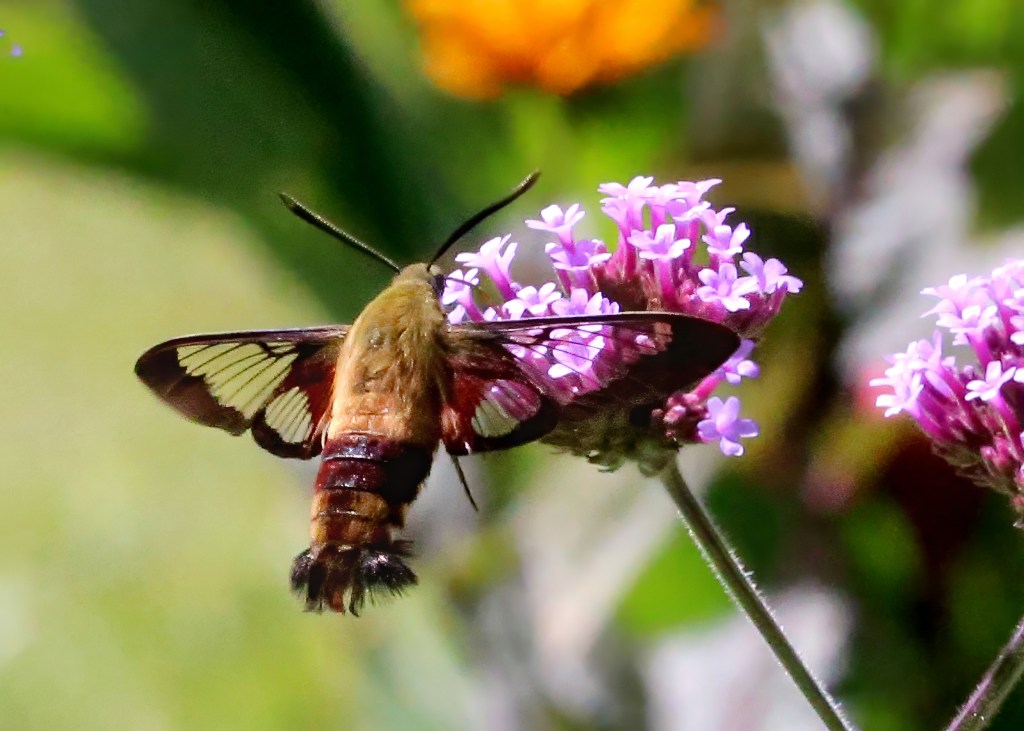
And the Bumblebee Moth disappeared a few weeks ago.
Over the summer we watched the Monarch Caterpillar feeding in our Butterfly Bush:
And then, after pupating, returning as a beautiful Monarch Butterfly
Not all the Monarchs survive. In the following image, a yellow garden spider, the Argiope aurantia, has captured a butterfly and wrapped it in a silk sheath.
Ten days ago, the last few Monarchs visited our garden. They had just flown south from Canada over Lake Erie and settle on our zinnia flowers to build up energy for their long flight to Mexico.
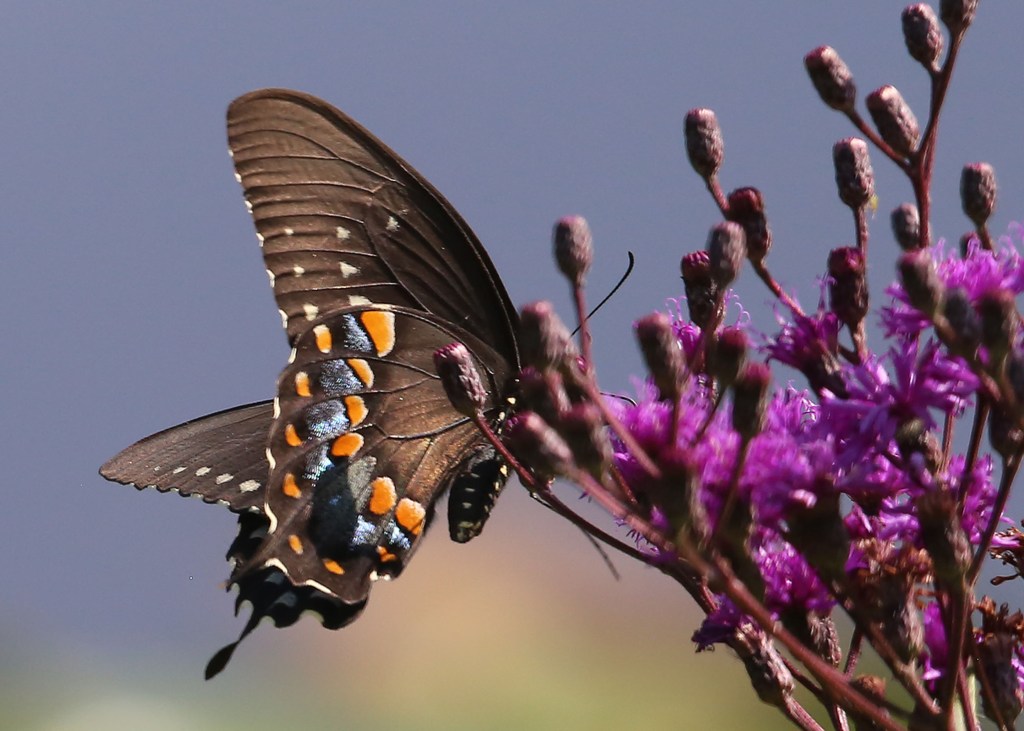
The Swallowtail butterflies have also left
The Spicebush Swallowtail
And the Yellow Swallowtail sharing a viburnum blossom with a Bumblebee.
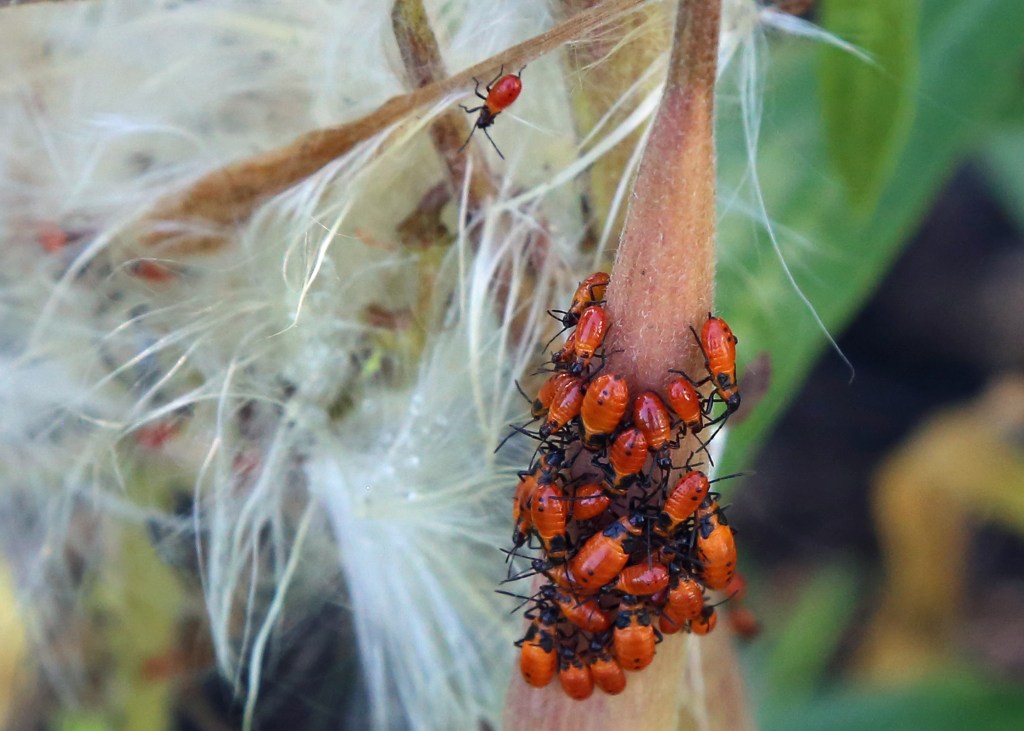
As the butterfly bushes start going to seed, we noticed Milkweed bugs (Oncopeltus fasciatus) on the pods. They are part of the milkweed ecosystem, we left them alone.
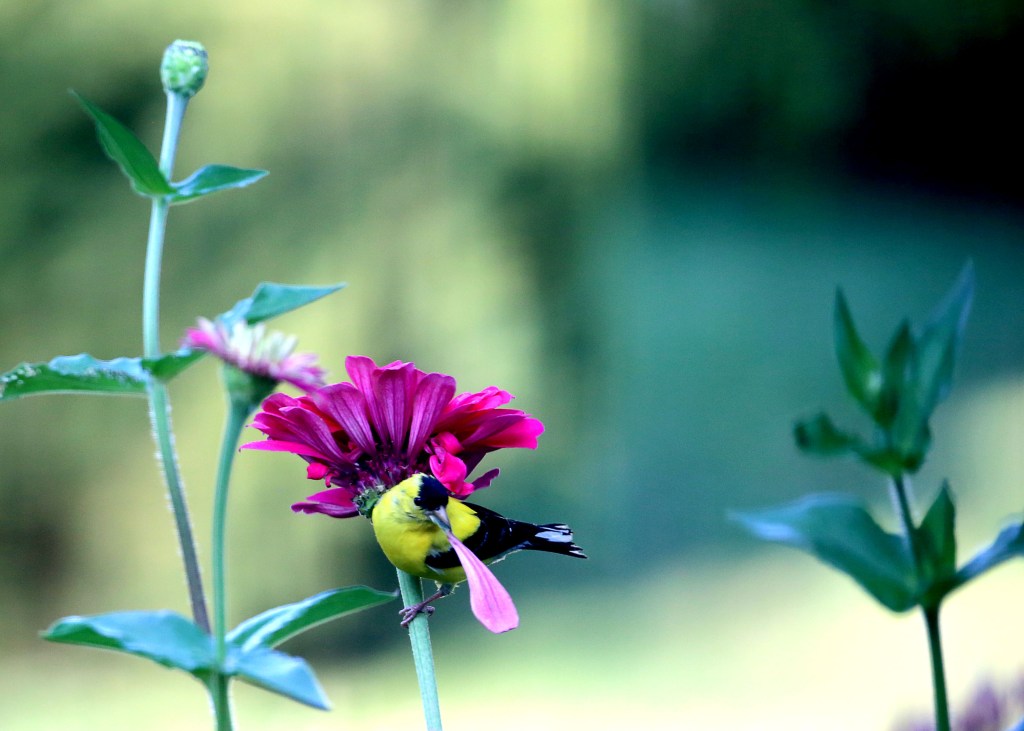
As summer slid into autumn, we watched the goldfinch plucking petals off the zinnia flowers to access the seeds.
We had bid farewell to the Ruby-throated Hummingbird that was with us all summer, and a few weeks ago a juvenile hummingbird passing through on its migration to Southern Mexico and Central America.
We still see Dragonflies, but they too will soon be gone.
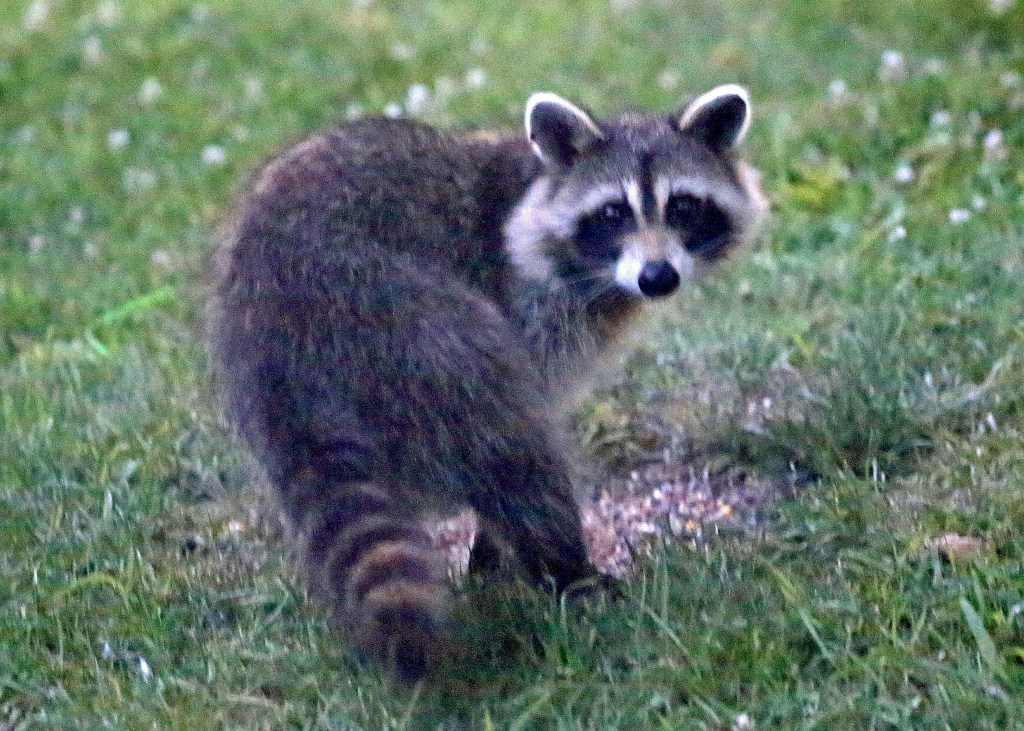
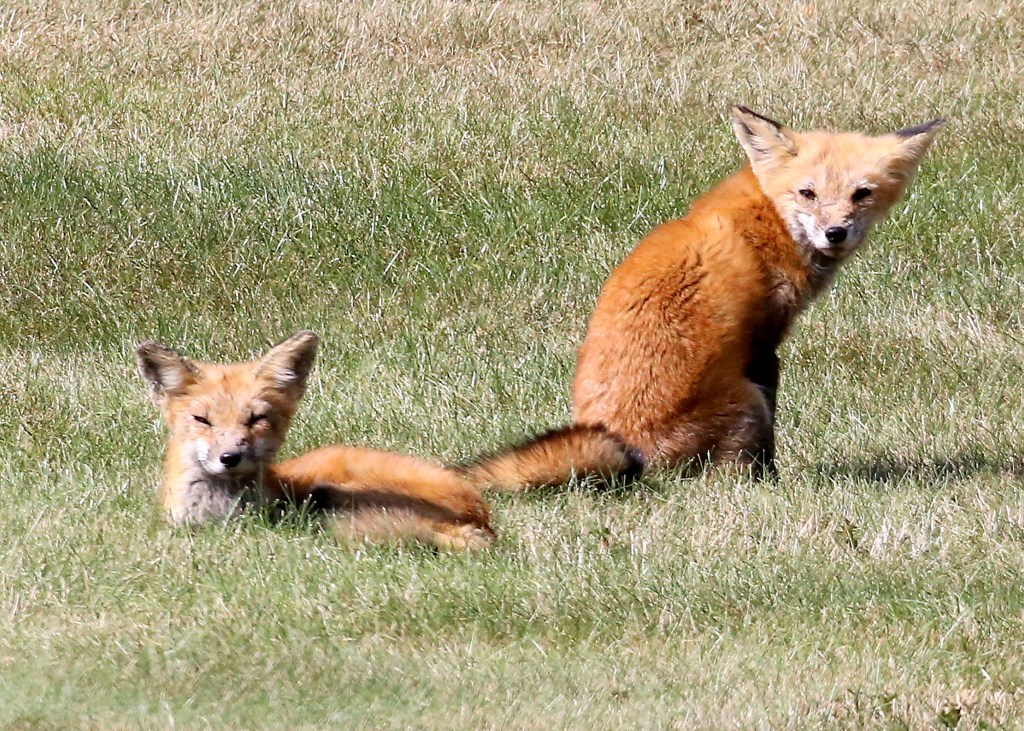
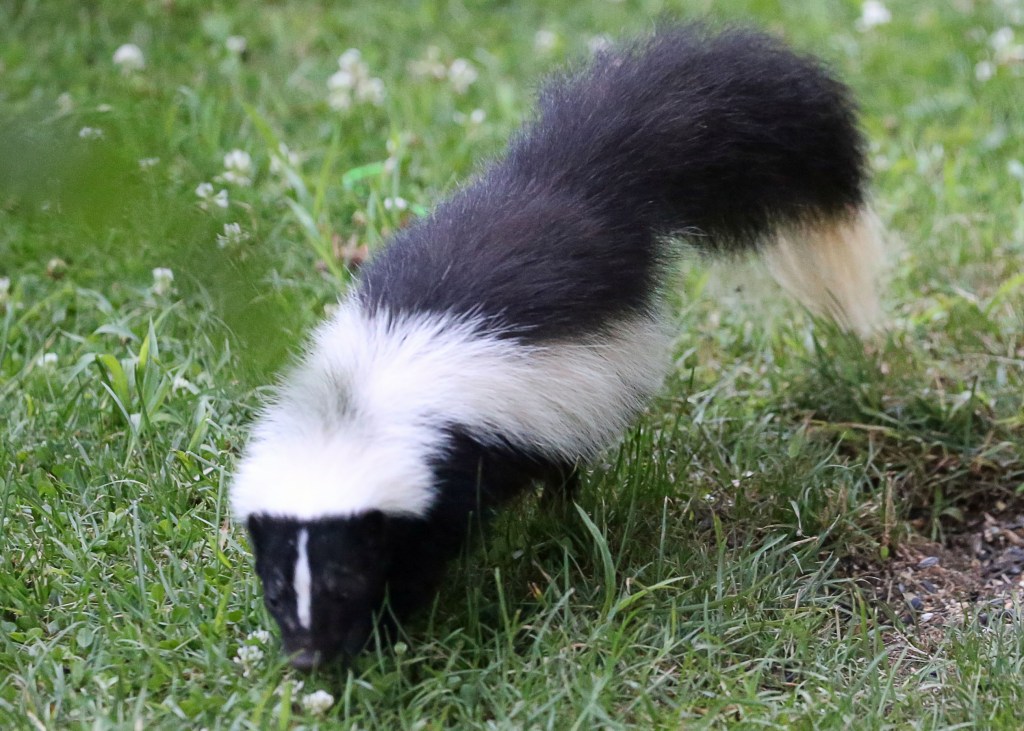
We were fortunate to be able to retire in the country and align ourselves with the changing seasons. At our advanced age we have learned to say goodbye, which we must do every autumn. But we haven’t been completely abandoned. Here are some of our friends who will remain with us over winter
Racoon
Red fox
Skunk
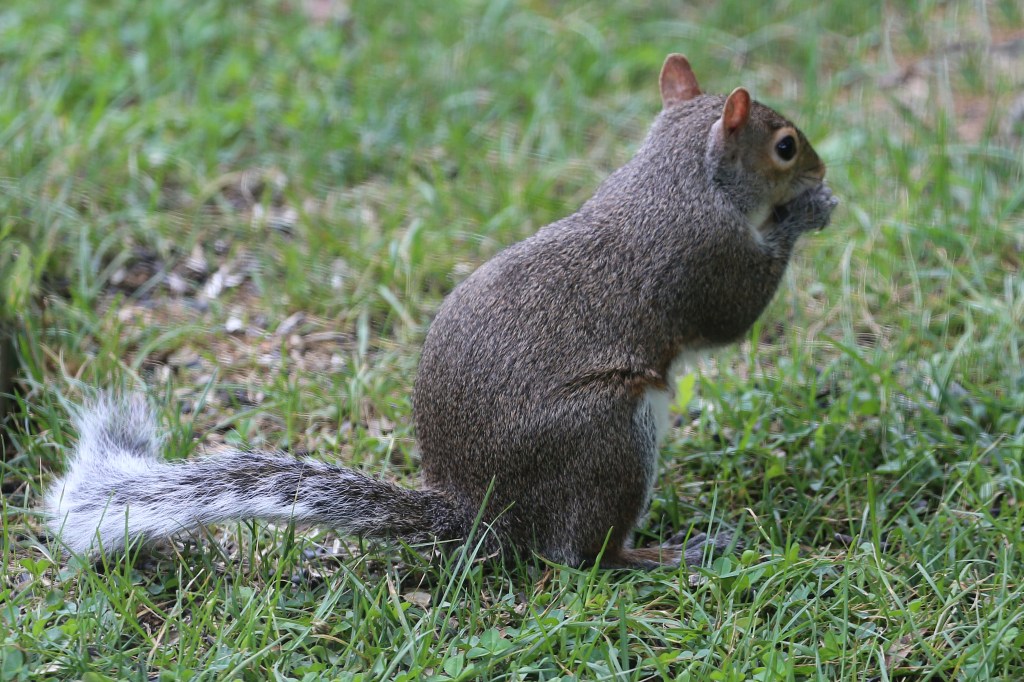
Eastern Grey Squirrel
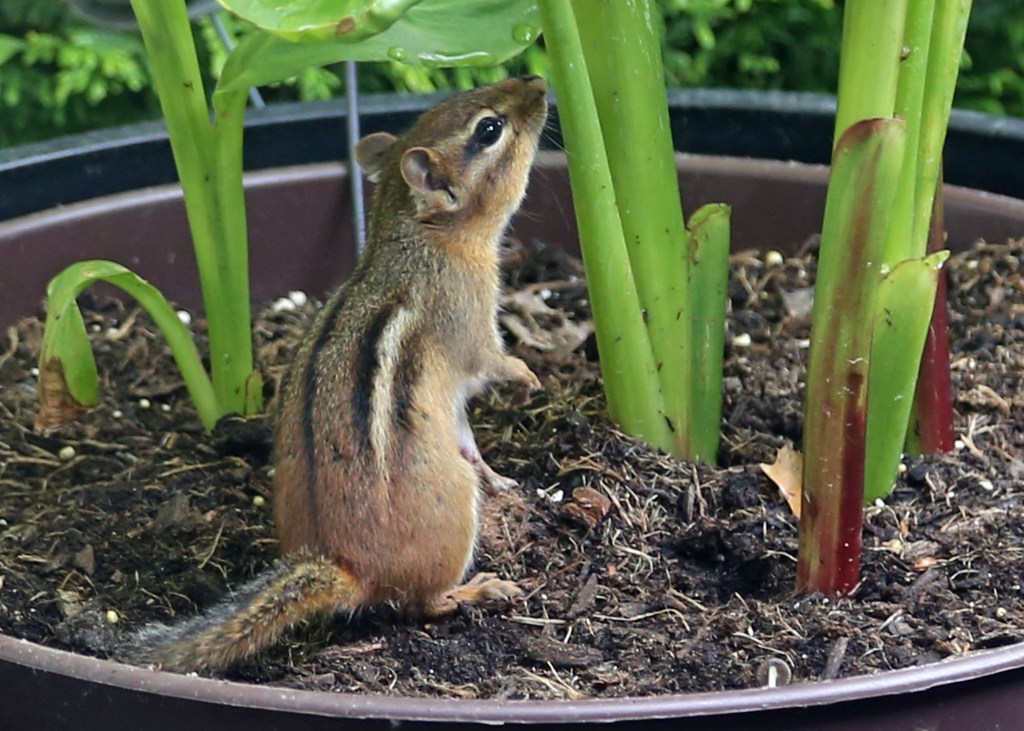
Chipmunk
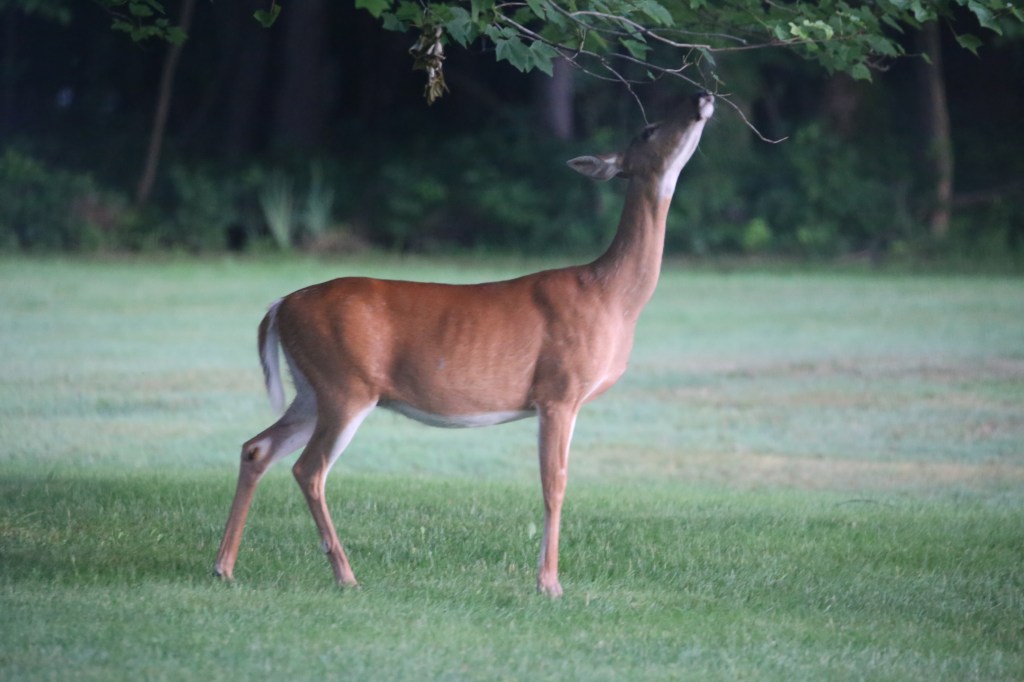
White-tailed deer
The Possums and Groundhogs will be nearby, but underground. We’ll see them in the Spring.
Despite the heat and humidity of the last weeks of summer, we look out at a blaze of color in the gardens surrounding our little sunroom.
Yesterday afternoon, sitting with my camera for less than an hour and, without leaving my chair, I took the following photographs. The quality isn’t great: There were reflections in the windows and several of the pictures were taken through window screens. But I wanted to share the sensibility of being surrounded by nature’s beauty on a hot, muggy day.
There are over twenty species of this perennial. In this blurry image seen through the screen window we have a Heliopsis, Tuscan Sun.
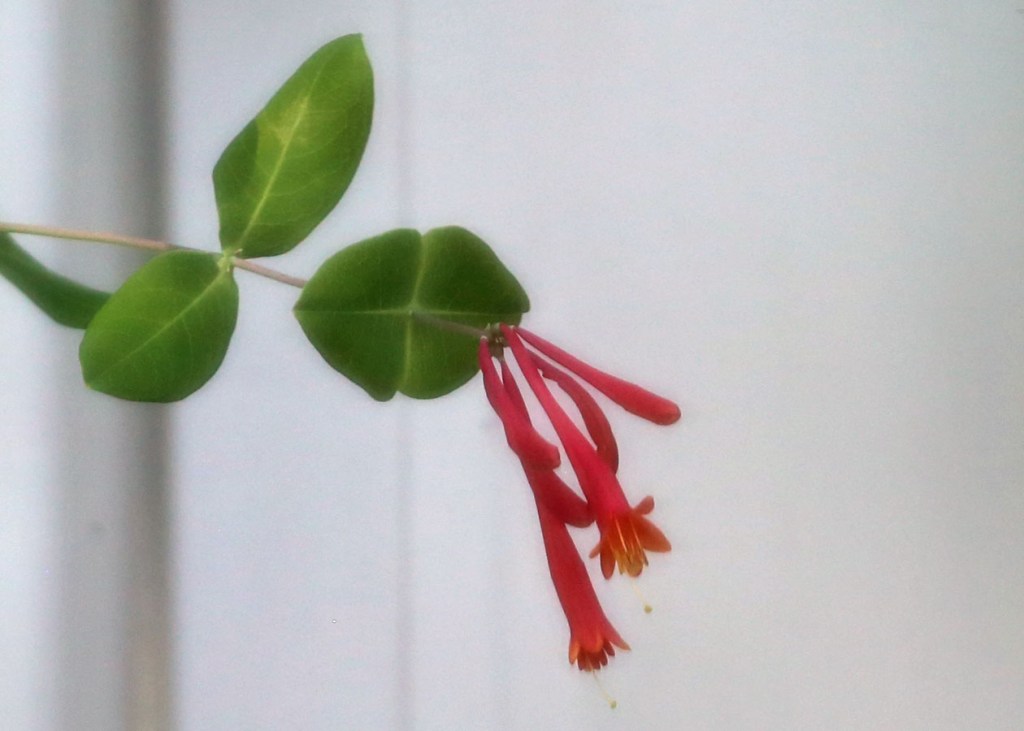
Turning in my chair and looking behind me, I see the Honeysuckle vine against a white wall. Sometimes I may see hummingbirds feasting on the flower’s nectar, but not this afternoon.
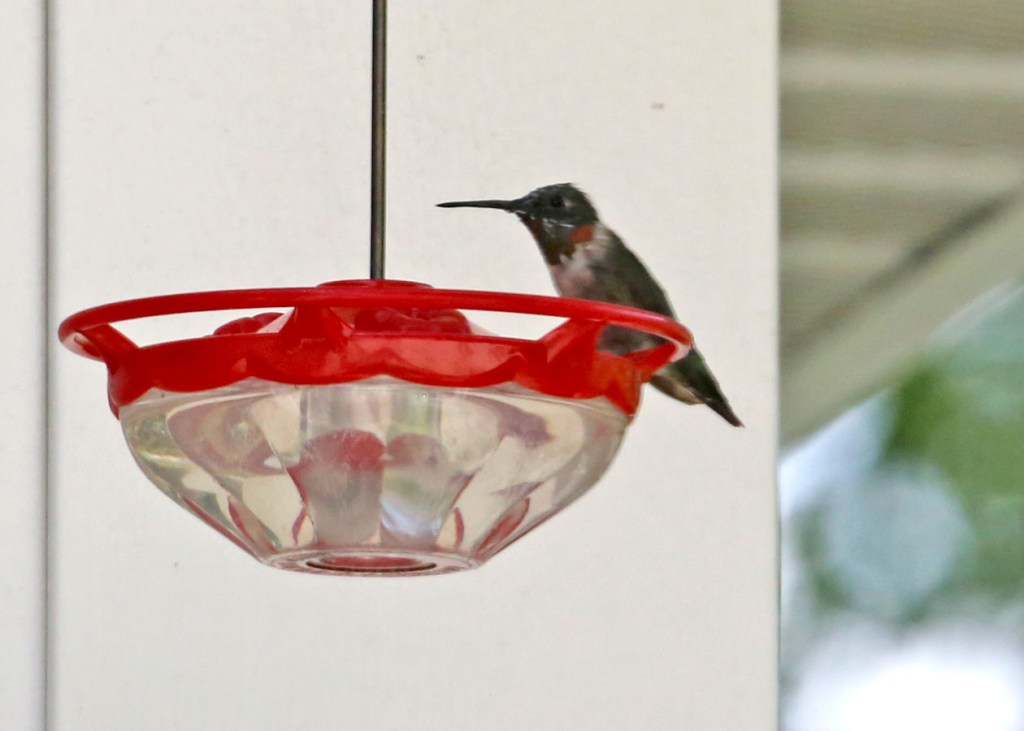
As I look to the front again, I catch a glimpse of the Ruby-throated Hummingbird at our feeder. Even though our garden has honeysuckle, verbena and monarda, our summer visitor will often take the line of least resistance by taking nectar from our feeder. In fact, if the feeder runs low on sugar-water, the hummingbird will sometimes hover just outside the window to remind us to fill it. Like the butterflies, the hummingbirds will soon be flying south.
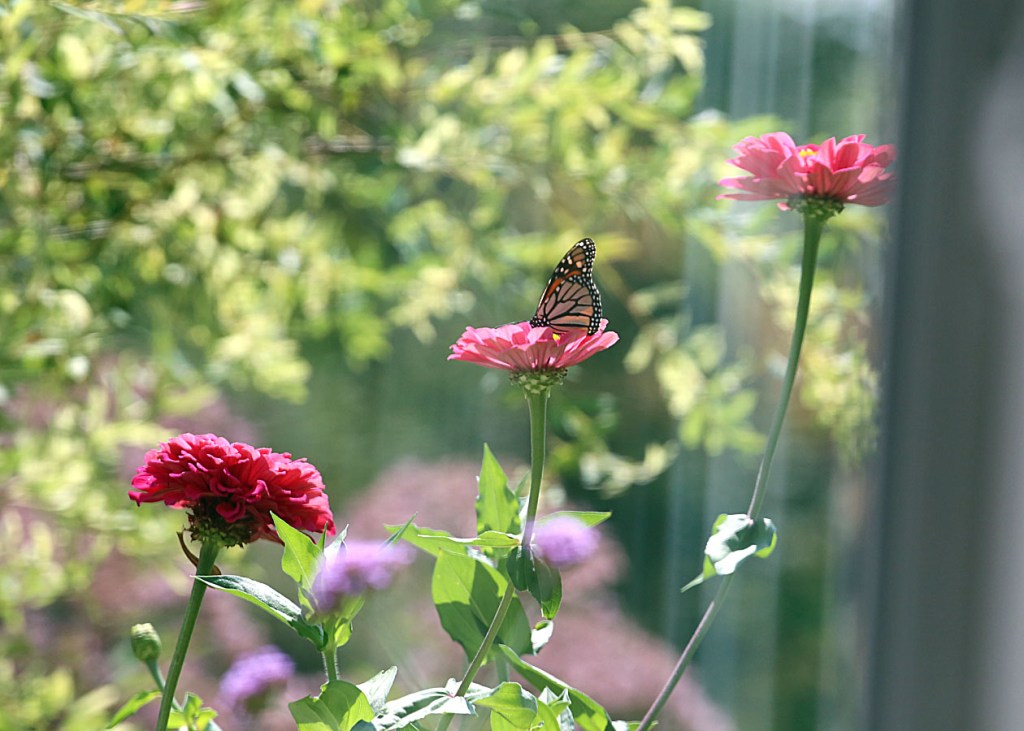
Speaking of butterflies, here is a Monarch settled on a Zinnia flower. Over the past few days, we have noticed lots of activity as the fourth generation of butterflies prepare for their long migration to Mexico.
We planted Zinnia seeds in the house in April, transplanting them to pots in May and taking them out to the patio when the danger of frost had passed. They are a tall-stemmed plant known for their twelve petal flowers.
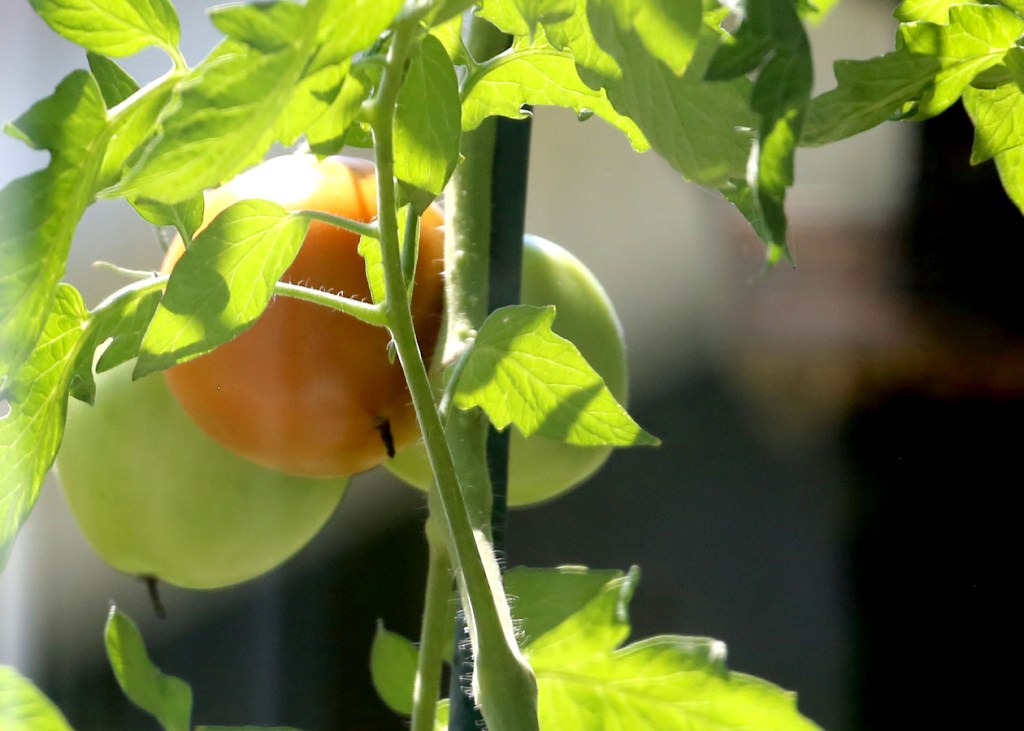
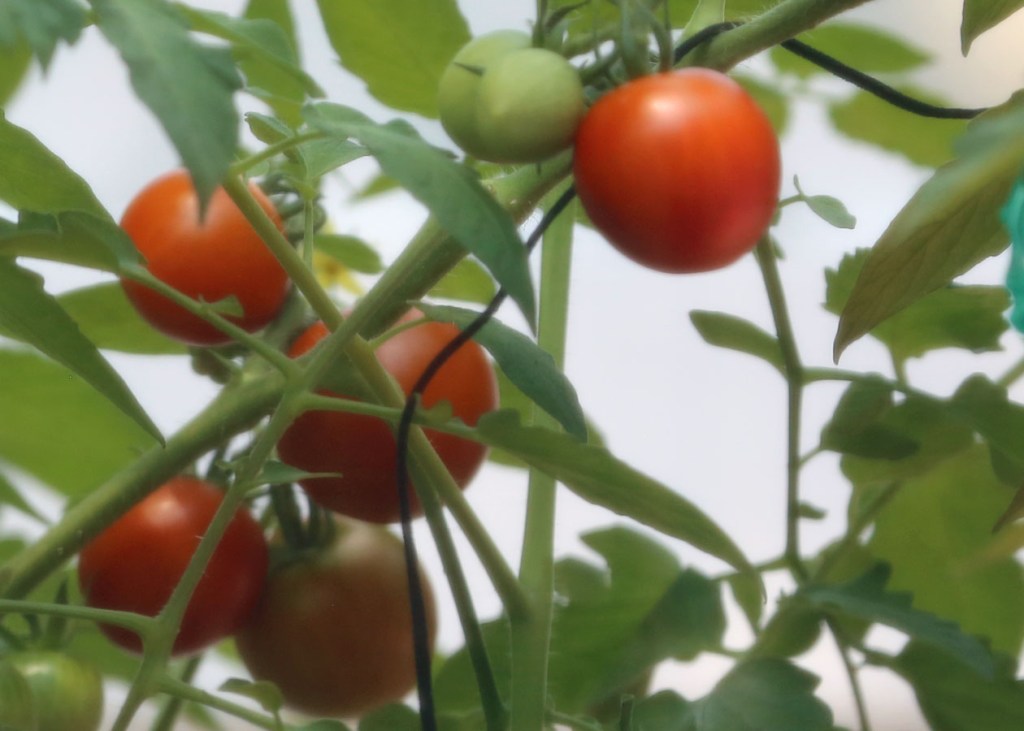
Close up to one of the windows is a tall tomato vine. We planted this several months ago and its fruit is only now ripening. This is the large ‘Beefsteak” tomato, a delicious, juicy, variety that we use for salads and sandwiches.
Turning around in the chair, I look out at another tomato vine. This one produces smaller slicing varieties in abundance
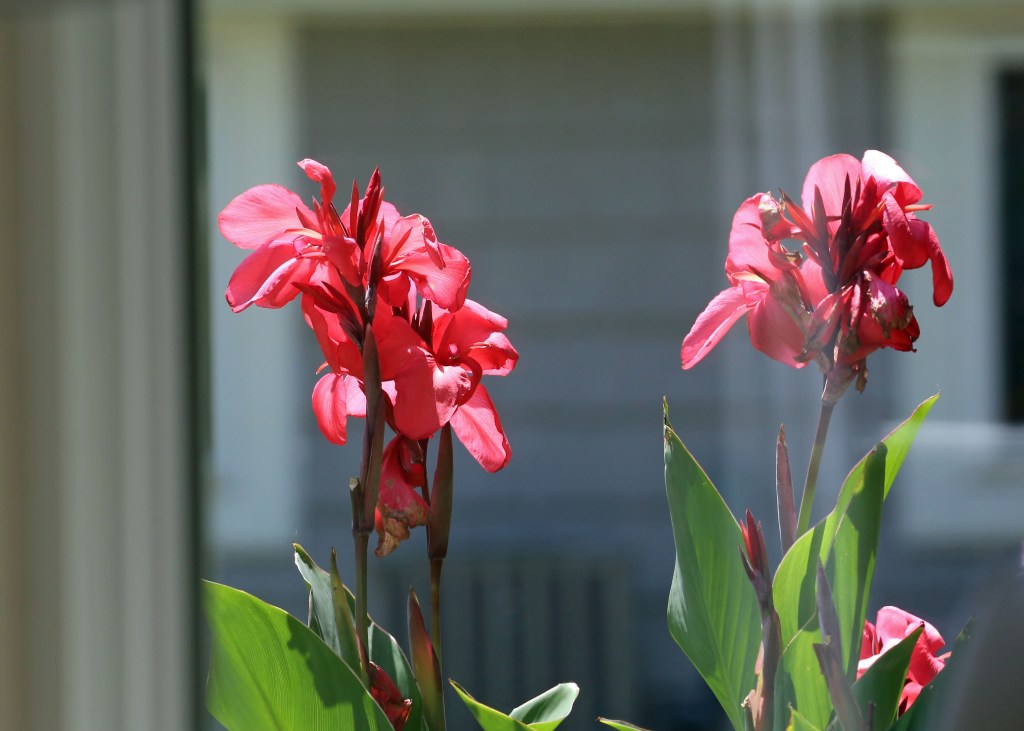
This Cana plant isn’t in the flower bed but in its own pot next to a tomato vine. We planted it in spring and expect it to continue enjoying its tropical-like green foliage and brilliant flowers until the first frost of autumn. Like the tomato vine, the Cana is so close to one of the windows of the sunroom, it could almost be in the room.
There is some shade under the old oak tree behind me where Hosta plants do well. But by this time of year, the flowers begin to wilt, and the leaves are losing their vibrancy. Earlier in the summer the several varieties in our garden created a luxuriant display of different textures, sizes and shades of green.
A variety of miniature Hostas in a blue pot keeps color in the garden.
The birdfeeder to my right attracts several species: chickadees, nuthatches, cardinals, bluejays, sparrows, finch, grossbeak, starlings, blackbirds, tufted titmouse, a variety of woodpeckers, doves, and goldfinch. This afternoon, only a male house finch makes an appearance.
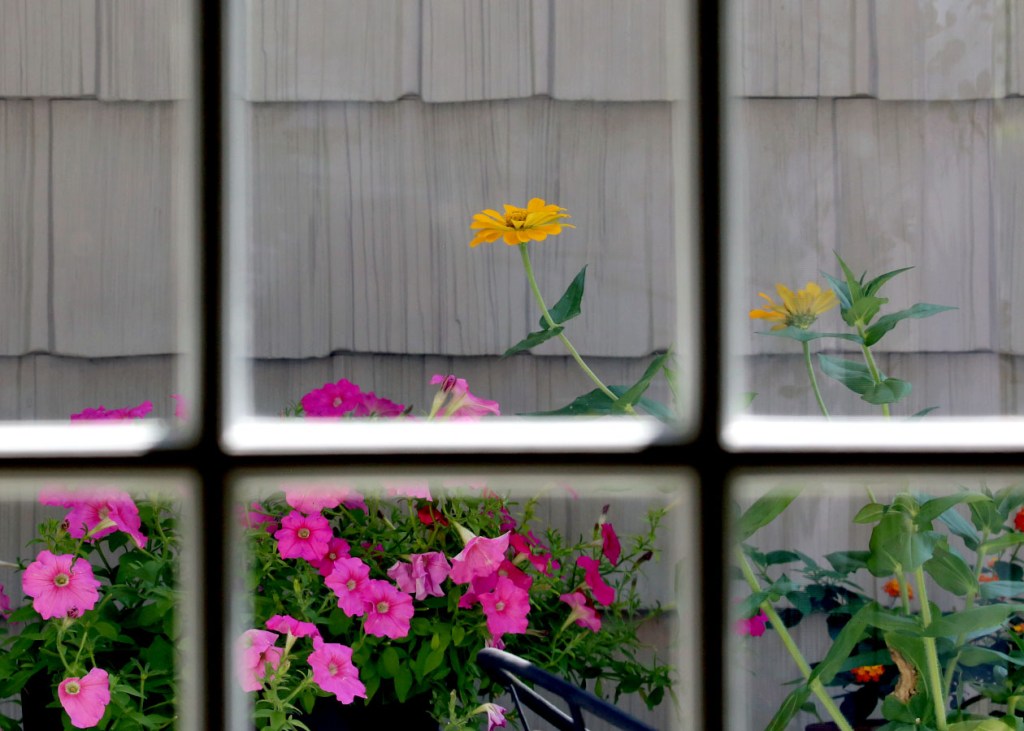
Looking through the glass door, one is struck by the bright yellows and pinks of a Zinnia and a pot of Petunias.
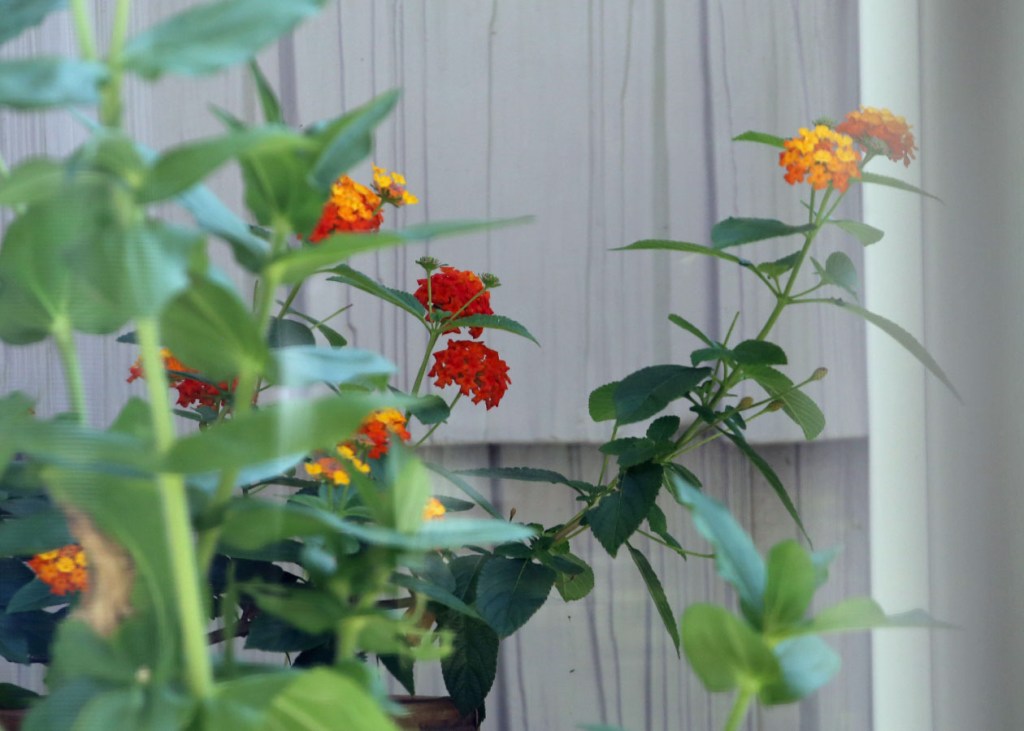
This Lantana plant is a nice addition to our pollinator garden. The species proliferated in our Arizona garden when we lived there but now are confined to a pot for their summer appearance in Ohio.
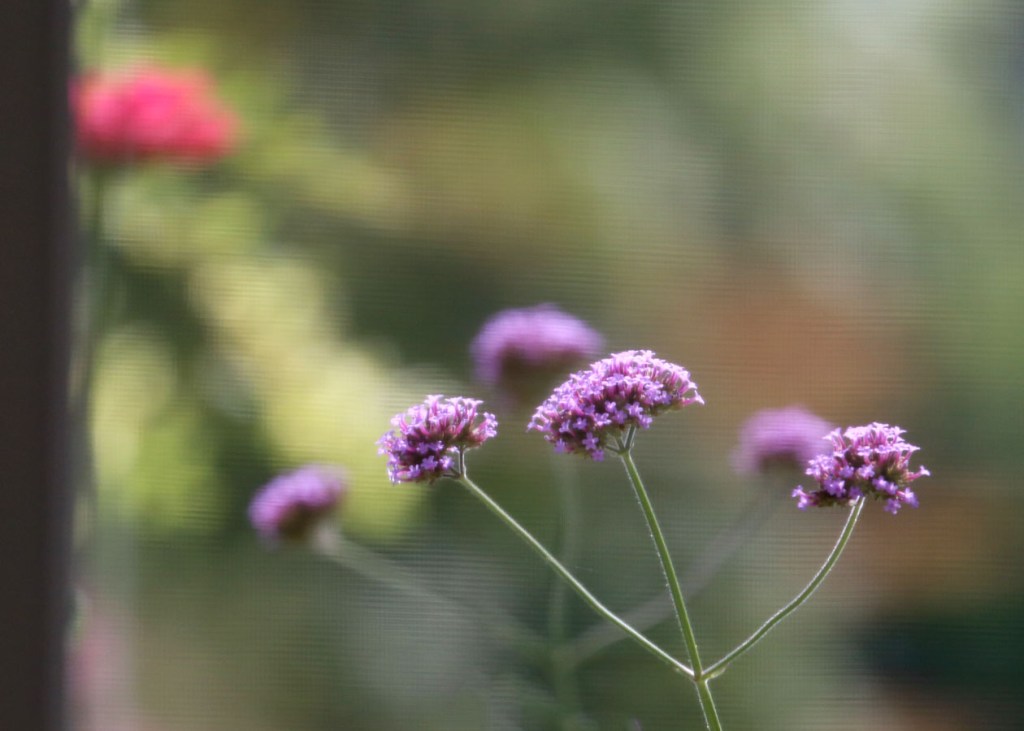
A blurry image through the window-screen of the tall, slender, stems of a Verbena with its cluster of purple flowers. It is a nectar source for butterflies and hummingbirds. A late-summer bloomer, it brings some nice color to the garden as other earlier blooming flowers begin to fade.
The Mandevilla is a subtropical vine native to the Southwestern United States, Mexico, Central America, the West Indies, and South America. We buy a small potted vine each spring and plant it next to an old lattice frame that it quickly covers, producing bright pink flowers. We can see one of its flowers sharing space with a Zinnia
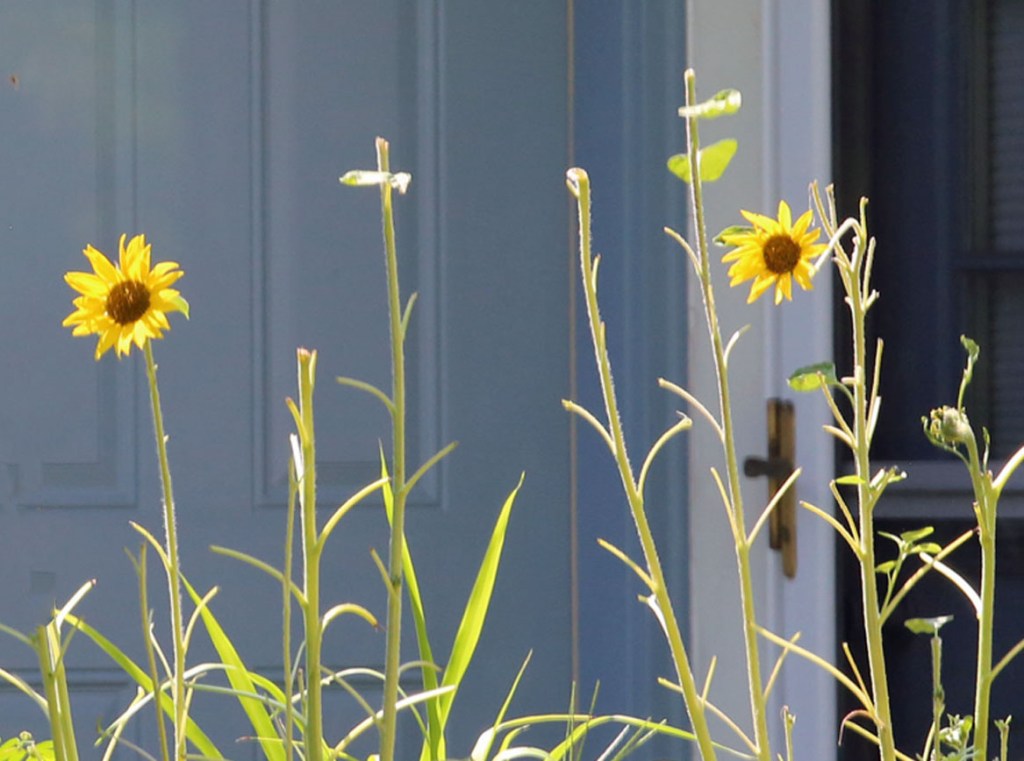
Beyond our own flower garden, a few sunflowers that our neighbor planted in her vegetable bed adds to the color of our surroundings.
This the chair from which all the photographs were taken during an hour on a hot, muggy end-of-summer afternoon
There are philosophers who say that we only know things in their relationship to other things. It is perhaps like this in our awareness of the seasons.
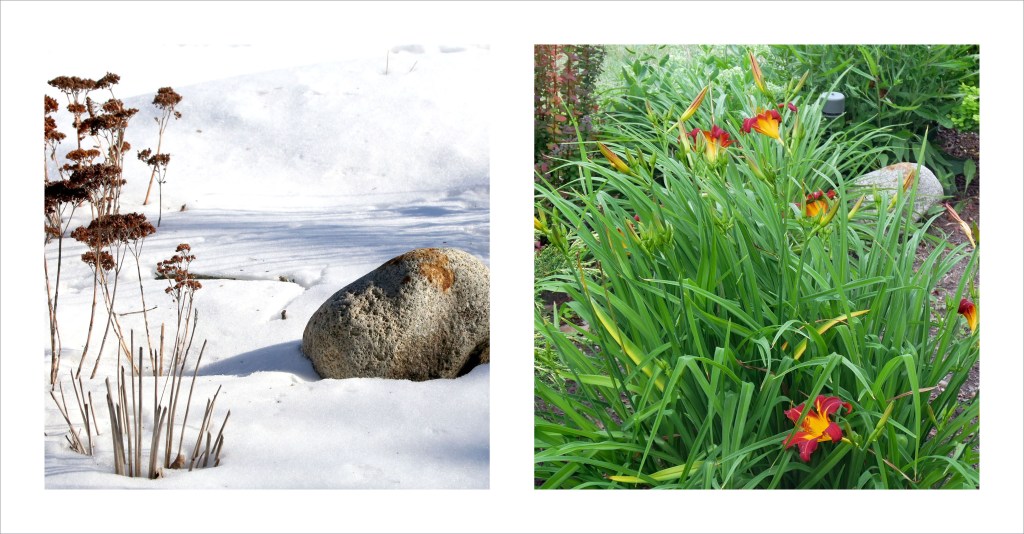
It was like yesterday, looking out the bedroom window: A rock and a few bare stalks in the winter snow. Now, life has returned. The rock is barely visible in the dense overgrown garden behind a clump of day lilies. These flowering plants, native to Asia, aren’t true lilies. They are prolific perennial bulbous plants whose flowers typically last only a day only to be replaced by new ones: Something like our own short lives.
Also like yesterday, I shoveled a path through the snow from the back door. And now, the Clematis flowers have come and gone and the tomato vine I planted in May is nearly 2 meters tall.
One of spring’s seasonal joys is watching the Clematis start to bud on old vines. Here they are. But now, in mid-summer, only the leaves remain.
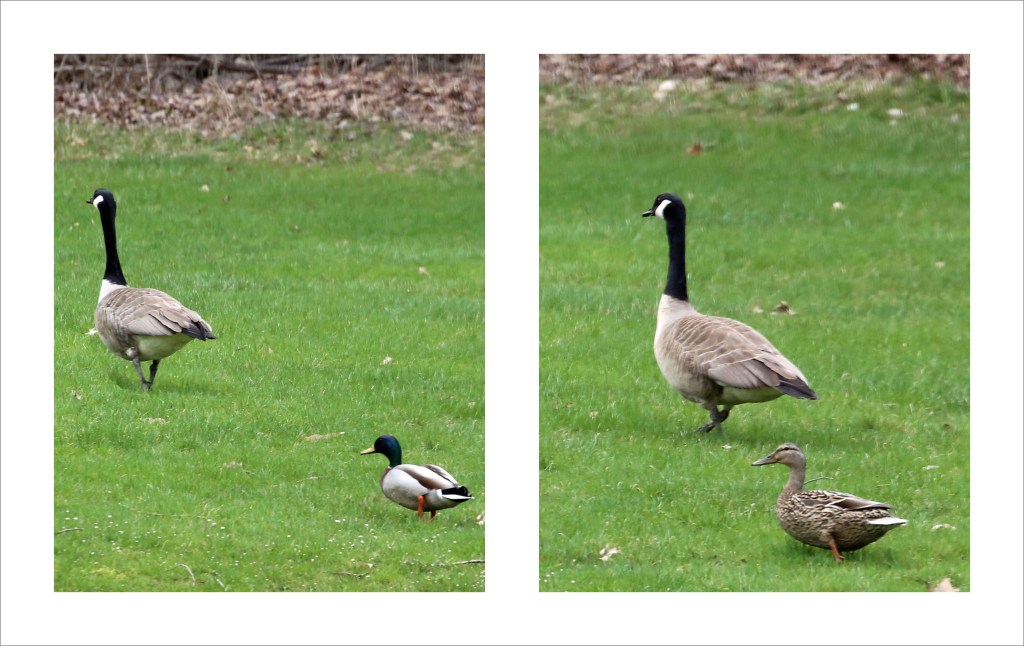
Each spring, a pair of Canada Geese and two Mallards arrive at the back of the house. Even though they are different species (goose and duck) they seem to get along together. The Canada Geese mate for life while the Mallards enjoy a brief liaison during mating season.
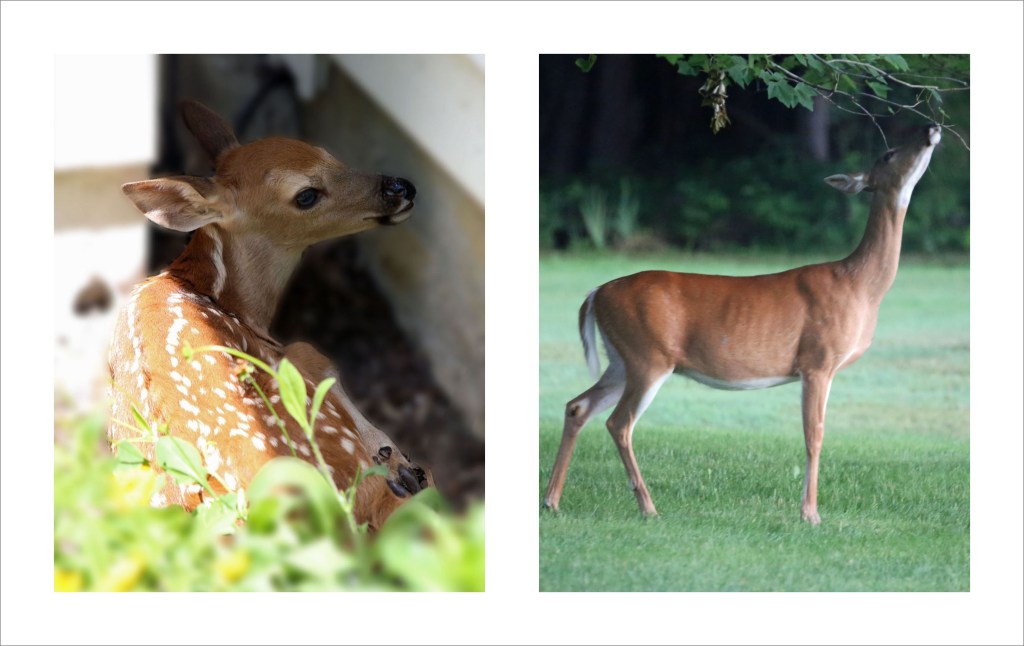
The forest behind our house is home to white-tail deer. In Spring, it’s common for deer to hide their fawns and leave them alone for long stretches of time while they gain the strength needed to run from predators. One of the instinctual gifts fawns have is the ability to stay quiet during the first three weeks of its life. After about a month, the fawn’s legs are strong enough to support running, and it is now able to keep up with the doe while foraging for food. In this image, an adult deer grazes from the low hanging branches of a maple tree. It has already eaten the flower buds of the Stella D’Oro daylilies in our garden!
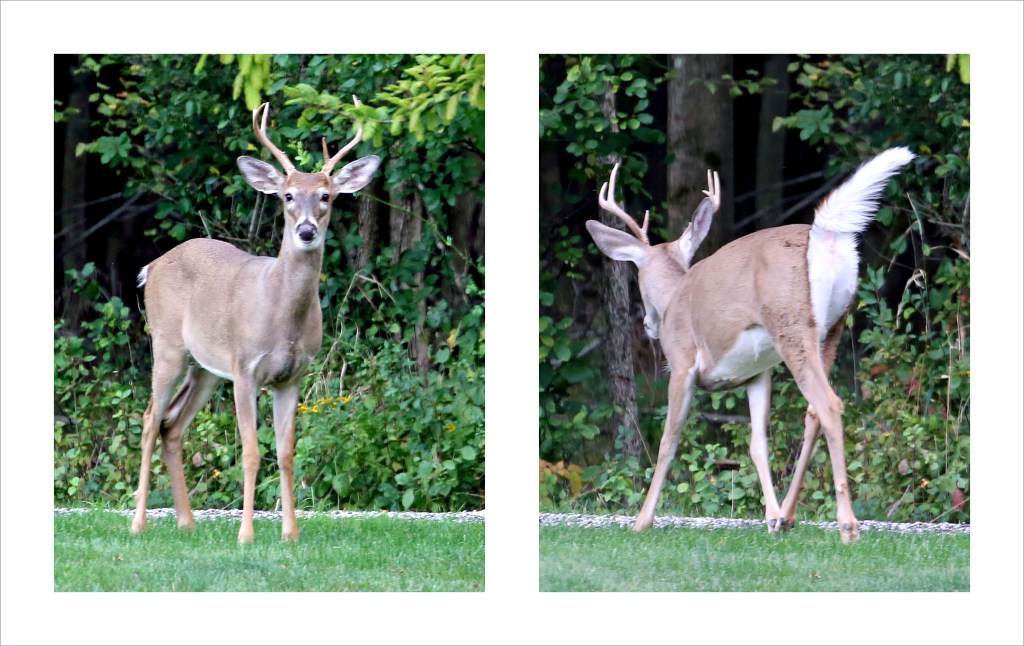
In this image of a young buck, it is easy to see why the species is called ‘White-Tailed’.
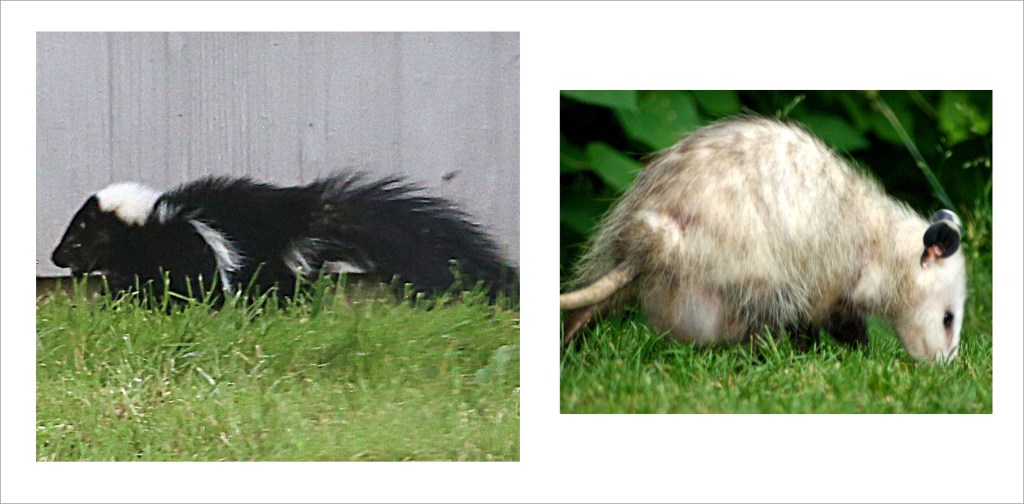
Skunks and Possums are both nocturnal mammals, so we seldom see them, although the skunk can make its presence known by spraying a foul-smelling liquid as a defense mechanism. The possum, on the other hand, will ‘play dead’ when threatened. In this image, one can see that the possum is a female marsupial by the pouch under its stomach in which it is carrying its young.
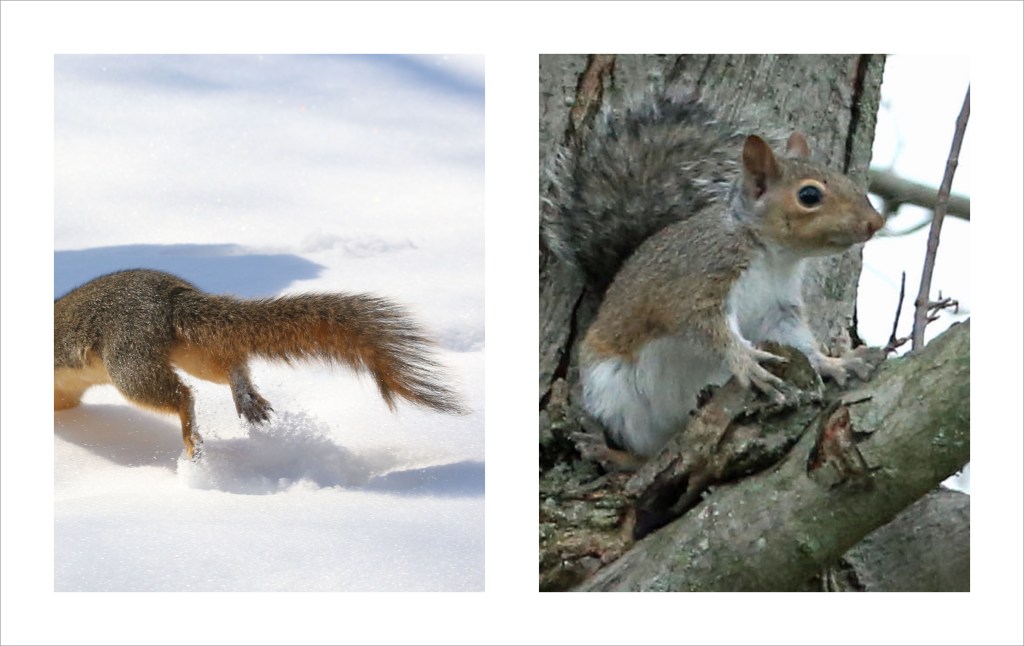
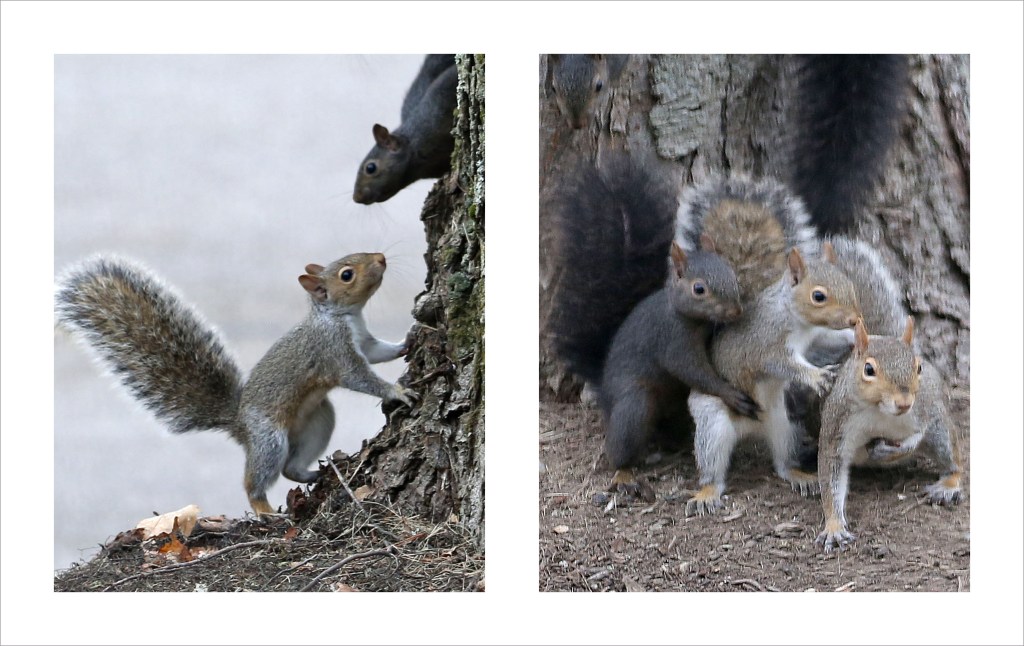
We see squirrels foraging for seed below the birdfeeders in winter. Their nests are often constructed of twigs and leaves in the fork of a tree or, in the case of our squirrel, in a hole in the lower trunk of a large maple tree.
Another diptych. These are young grey squirrels venturing out of their nest as the weather warms up.
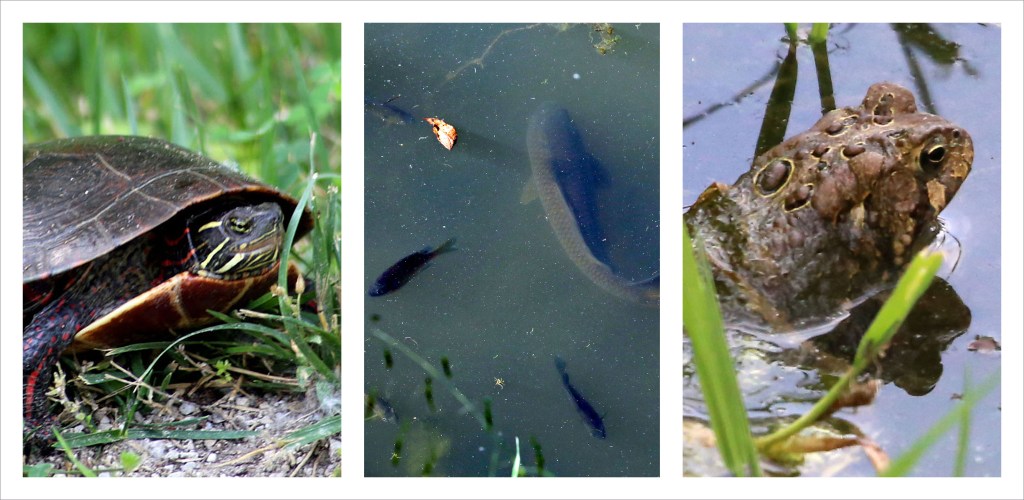
This triptych illustrates some of the aquatic life in the ponds close to our home. The European Carp in the center is one of the most common species in lakes around Ohio. The Midland Painted Turtle on the left is moving towards its primary habitat, the shallows of a quiet pond. The species hibernates in winter, tolerating freezing temperatures for prolonged periods. During hot summers, it will often be seen basking in the sun on a log or on the muddy edge of a pond. The Fowler’s Toad on the right is one of several amphibians in the pond near our house. A female can produce over 10,000 eggs that fertilize externally. The eggs hatch after about a week, giving birth to tiny tadpoles. They have a very high mortality rate with as few as 10 – 12 surviving to become frogs These young creatures go through the process of metamorphosis, changing into baby toads leaving the pond after about sixteen weeks.
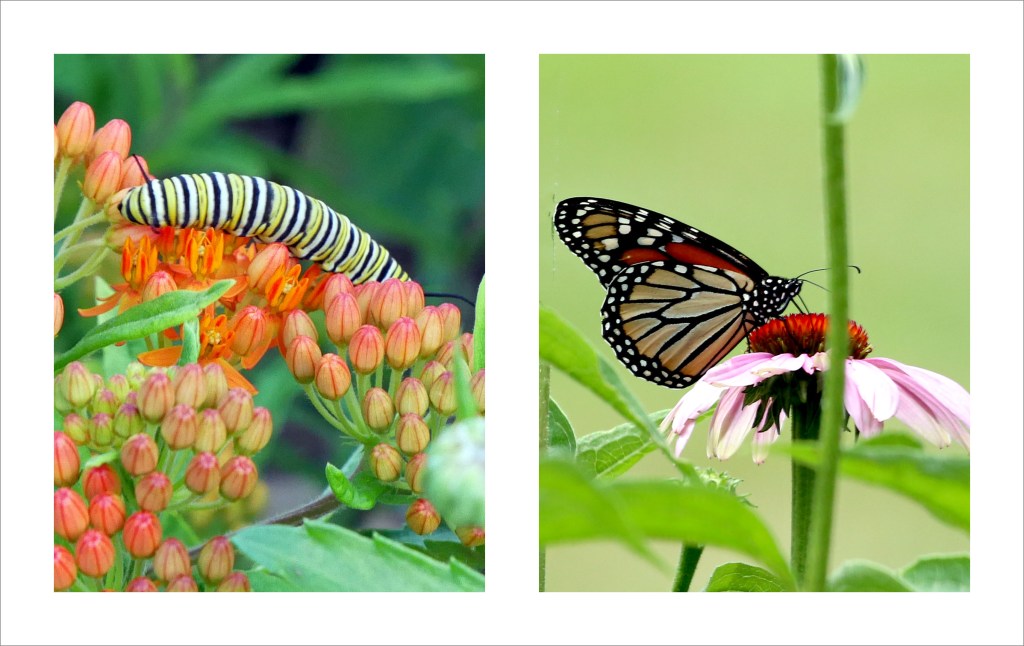
As in summers before, the Monarch caterpillar feeds on the Butterfly Bush and, within a few days, it will leave and look for a place to pupate. Hanging under a leaf, it will shed its skin, appearing as a chrysalis. And ten days later, it will amaze us as it does each summer fluttering upwards in spirals and swoops then diving in a haphazard aerial display that makes photographing them almost impossible.
The Slate Colored Junco on the left is a member of the sparrow family. They are sometimes referred to as snowbirds because they appear to carry gray storm clouds on their backs and white snow on their bellies. They also often fly into many areas just in time to usher in winter snows. On the right, a male Northern Cardinal shares a branch with a female Redwing Blackbird. We marvel at the fact that so many different species of bird come together to visit our feeders.
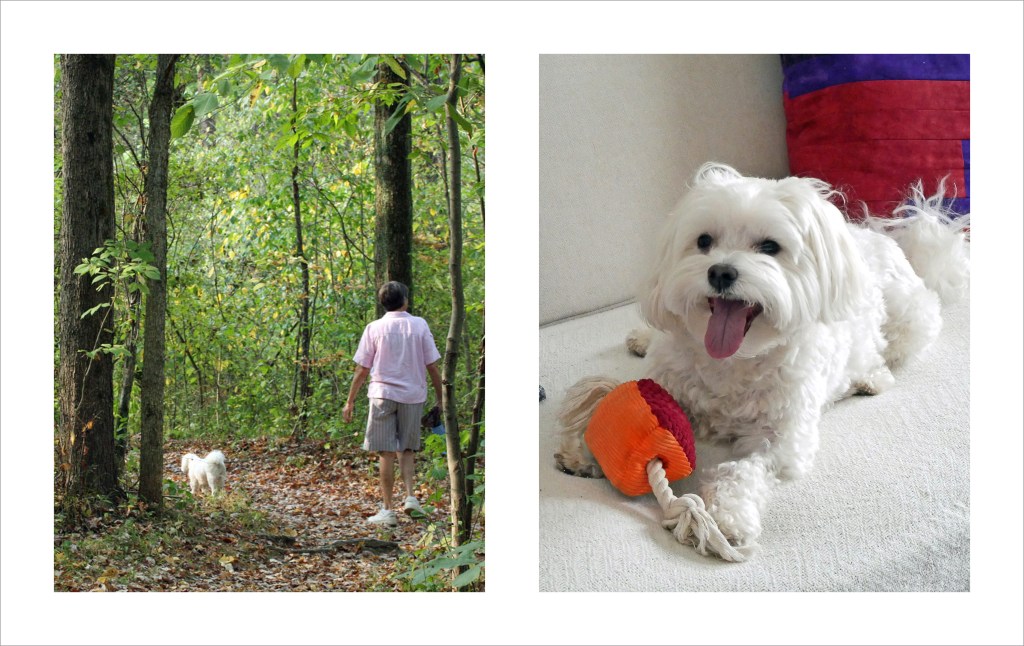
Summer is now in its full glory, The only sadness is our loss of Lucy, in whose memory we add this post.
Without Lucy, the skunks, chipmunks, squirrels, deer, possums, geese, ducks and even wild turkeys no longer have anything to fear as they wander behind our house.
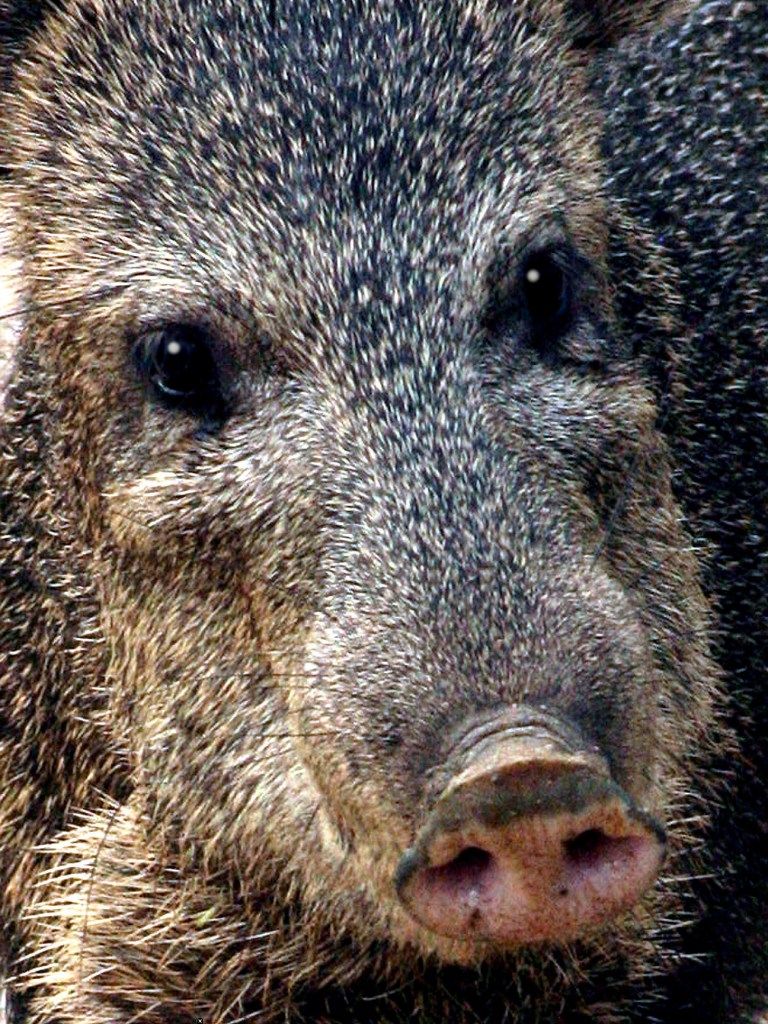
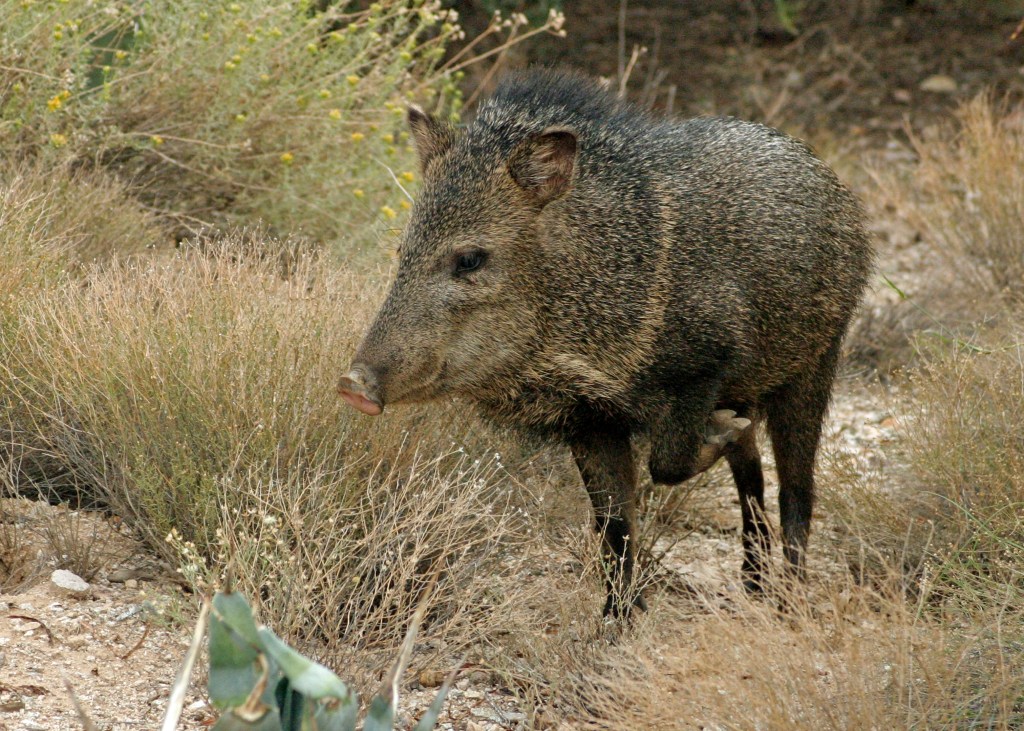
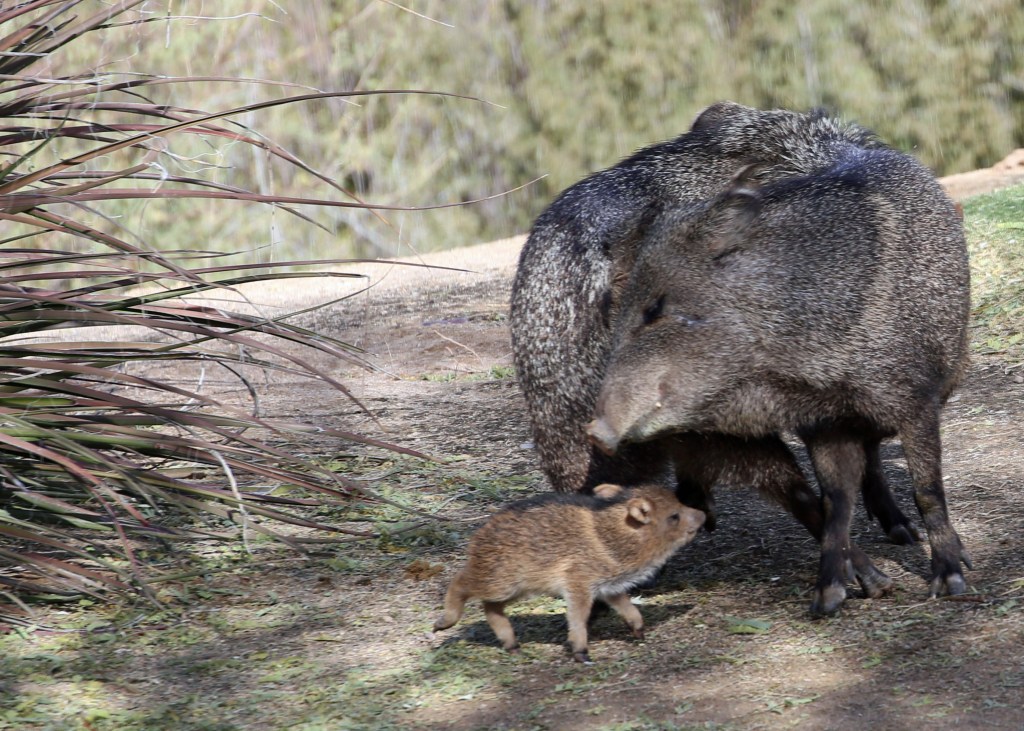
Javelinas were frequent visitors to our home in Southwest Arizona. Some people think them as wild pigs, but they are actually members of the peccary family, a group of hoofed mammals originating from South America. Javelina form herds of up to 20 animals and rely on each other to defend territory. They use dry riverbeds and areas with dense vegetation as travel corridors.
This large male is agitated, perhaps by the presence of the photographer.
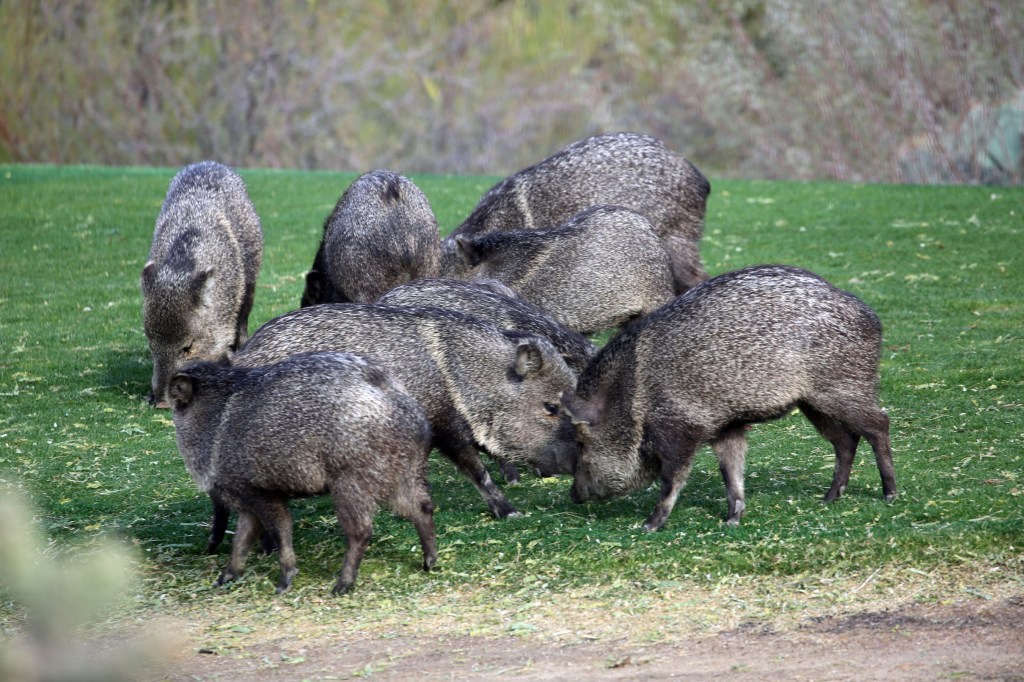
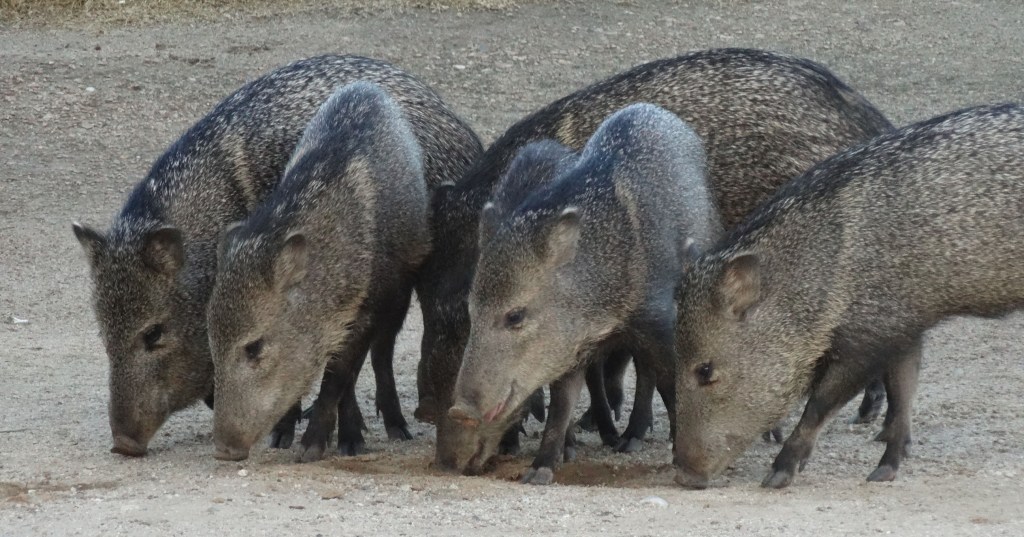
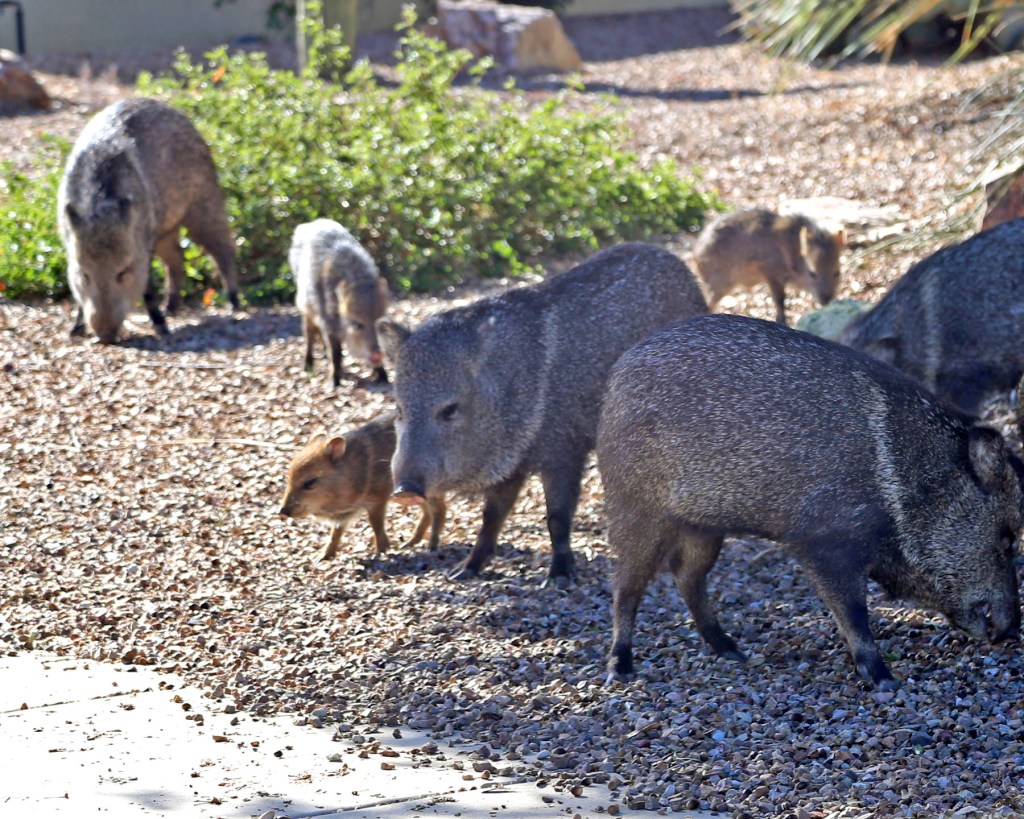
Javelina form herds of up to 20 animals and rely on each other to defend territory. They have a scent gland on their back, and animals from the same herd stand side-by-side and rub each other’s with their heads. Their scent identifies animals from their own and different herds
Newborns up to three months old are red-brown or tan and are called “reds”, live an average of 7.5 years. All Javelinas have very poor eyesight and may appear to be charging when actually trying to escape. They have a keen sense of smell that identifies people and pets. It’s best to keep a safe distance.
They need a water source for drinking and sometimes can be seen scratching for water in a dry river (desert wash). When available, they will roll in water and mud to cool off. During the summer months at our home, temperatures would often exceed 40 C.
Mountain Lion, Sonoran-Arizona Desert Museum
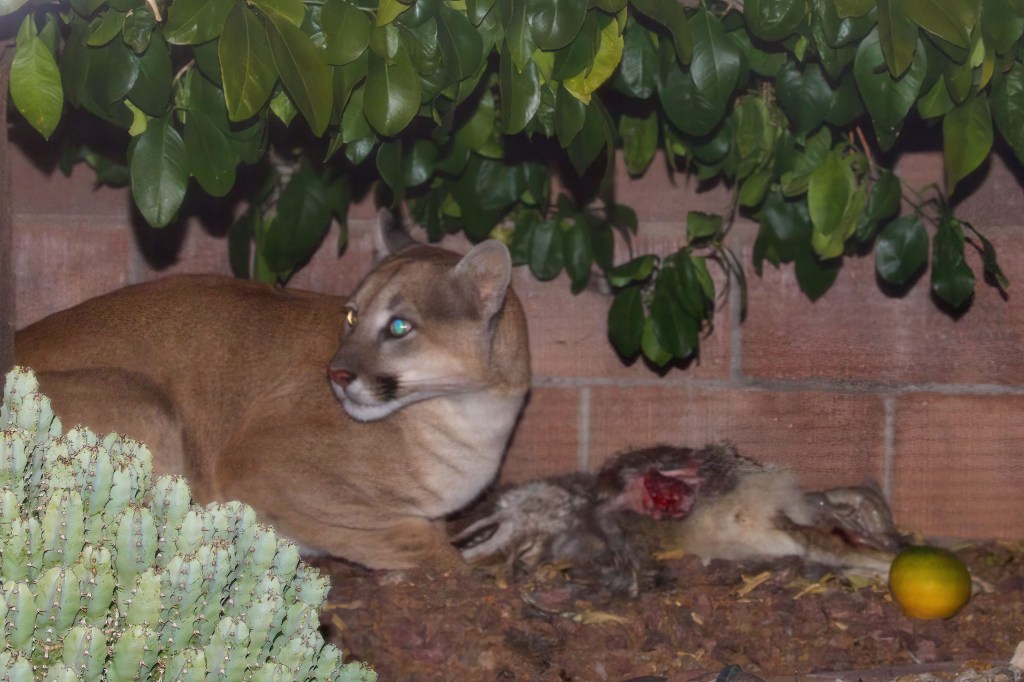
The only predator a large Javelina would fear in our neighborhood was the Mountain Lion.
This nighttime photograph shows a young mountain lion in a neighbor’s property with its prey. In this case it is a Roadrunner.
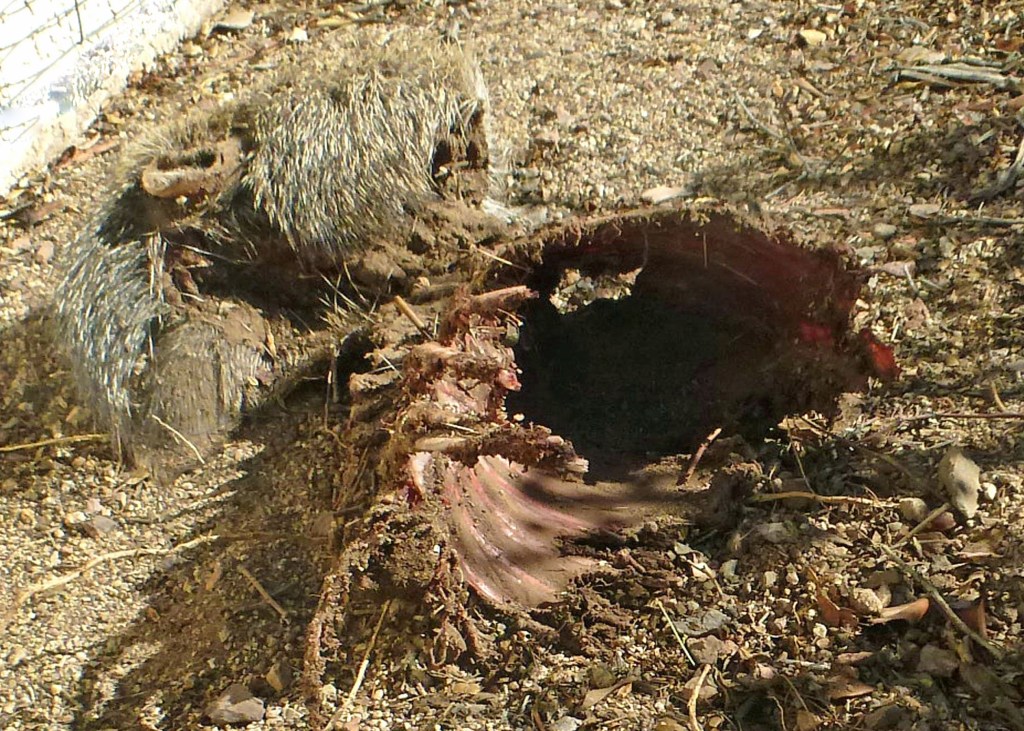
The following images may be gruesome for some. So, be forewarned!
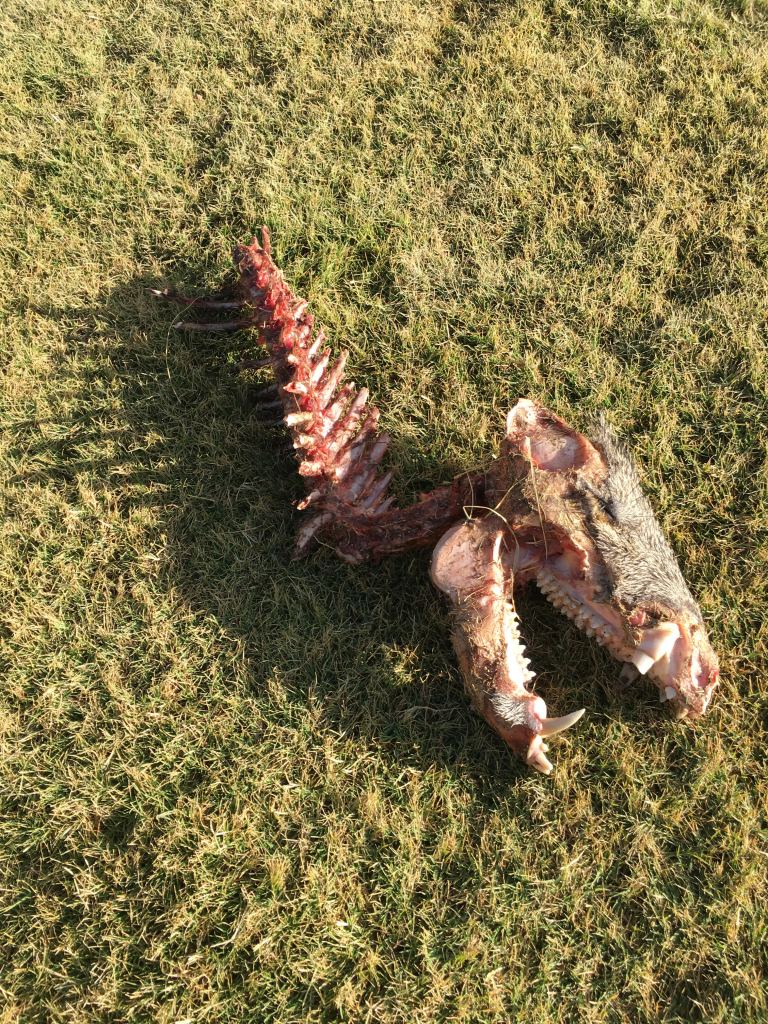
Here is the ribcage and skull of a Javelina that a mountain lion brought onto our property one night. Knowling that the lion may return the next night and fearing for our pet dog, I threw the carcass into a ravine close to our property,
The next morning, I discovered that the remains of the Javelina had been moved from the ravine to a grassy patch near our house, suggesting that some coyotes had found and finished off the creature.
To end on a more palatable note, here is part of a multi-generational herd of Javelinas on a neighbor’s property
















 The Final Stretch