Hiking in the Neighborhood

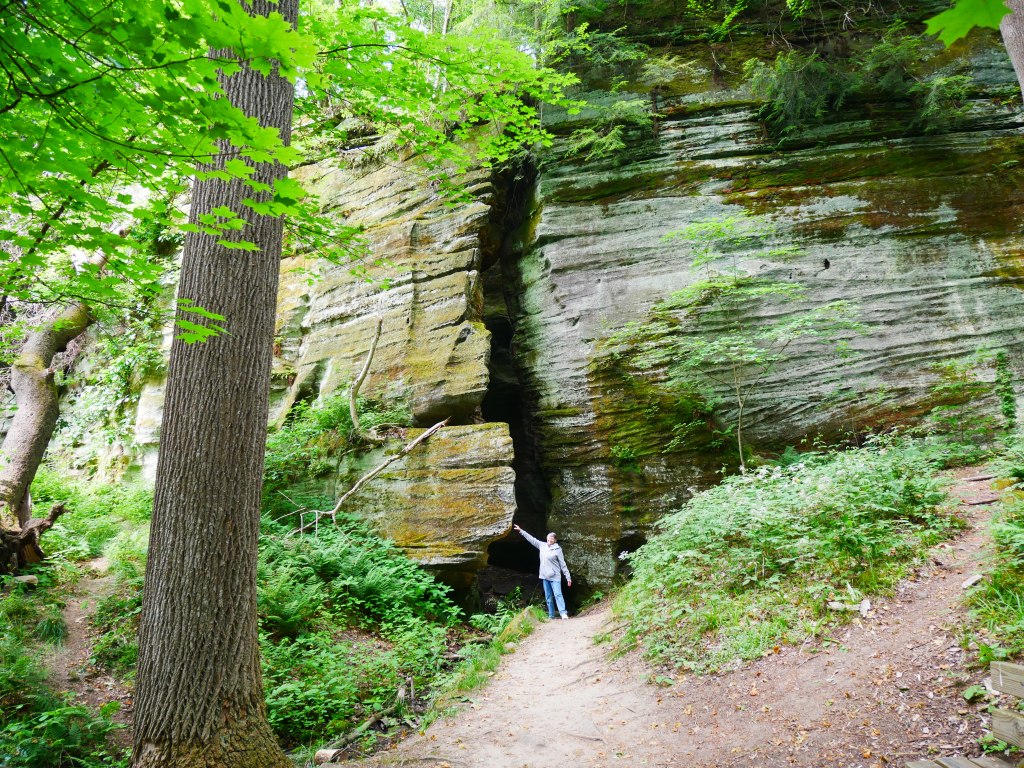
Now that we are in our eighties, and after fifteen years in Southern Arizona, we moved to Ohio to be closer to family . We set out to explore our new surroundings and were surprised to discover some beautiful short hiking trails within fifteen minutes of home. In the photograph above, Lil stands at the entrance to a cave in the sedimentary rock ledges of our local metro-park.
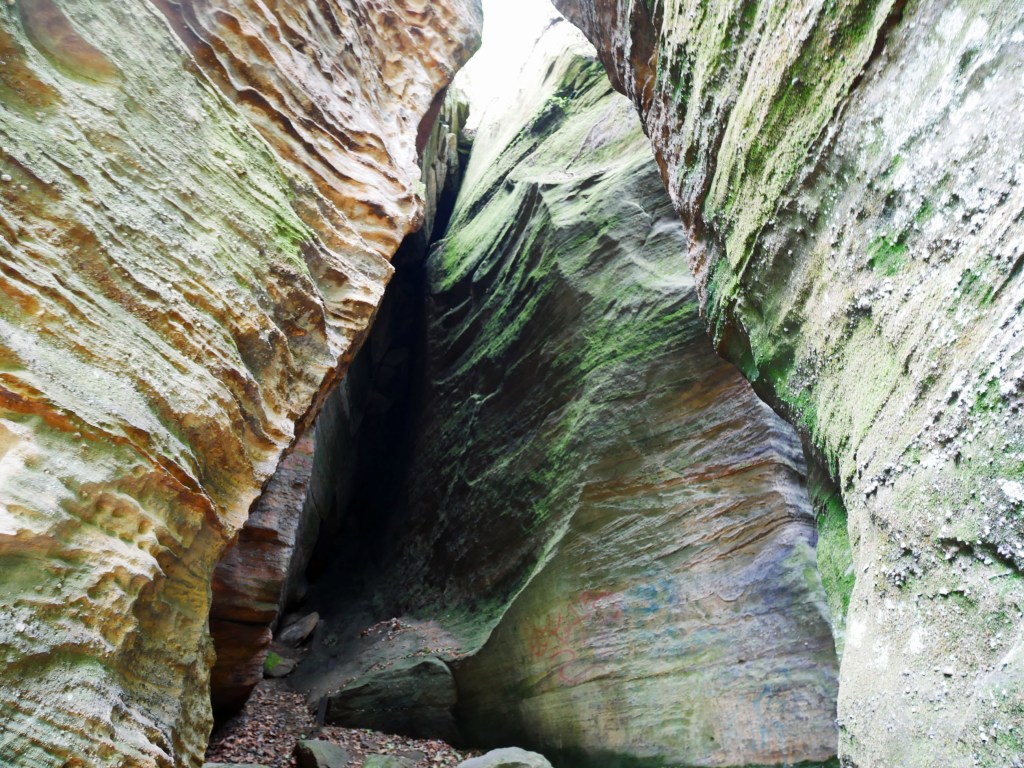
Glacier Cave, Liberty Park

This is one of the many caves that are believed to have been used by American Indians in the area. Ohio’s first people, arrived around 16,000 years ago. They were nomadic hunter-gatherers and chose this area because of its high ground, proximity to water and wetlands and toolmaking resources. Artifacts found in this area indicate that later people used the land for gardening, and frequently changed encampments to precent overhunting and overfishing. Later, fur trade with the French brought the Wyandot, Seneca, and Ottawa Indians to the wetlands in the area to trap beaver and muskrat.
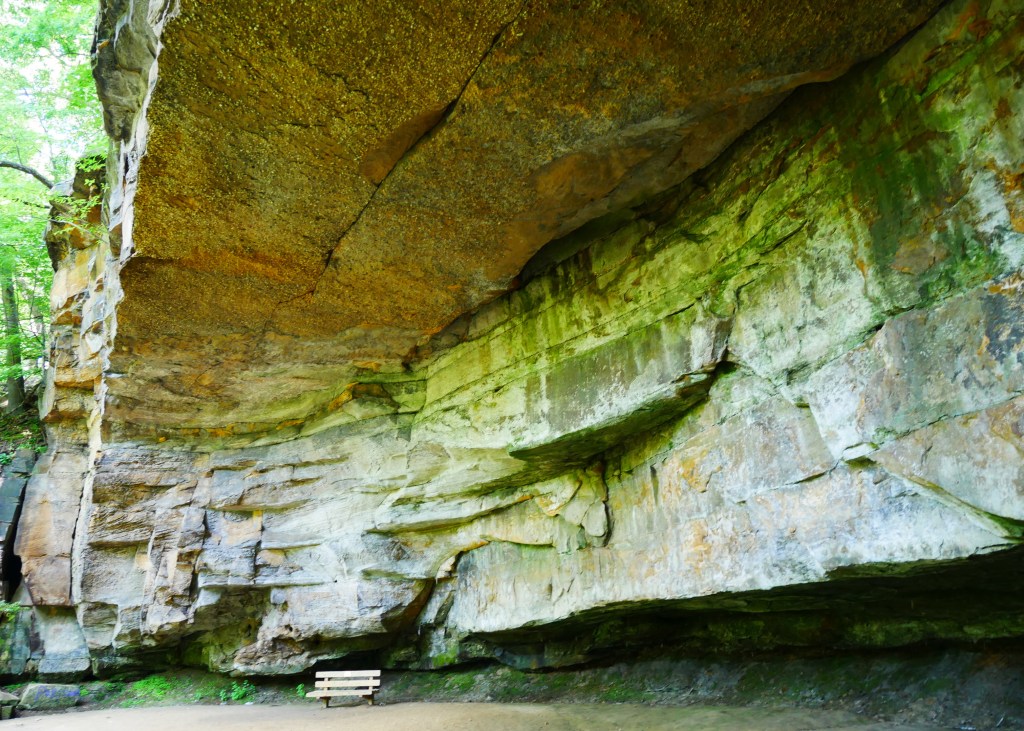
Mary Campbell’s Cave, Grove Trail, Cuyahoga Falls

A plaque nearby reads:

“In Memory of Mary Campbell who in 1759 at the age of twelve years was kidnapped from her home in Western Pennsylvania by Delaware Indians. In the same year these Indians were forced to migrate to this section where they erected their village at the big falls of the Cuyahoga. As a result, Mary Campbell was the first white child on the Western Reserve and this tablet marks the cave where she and the Indian women temporarily lived. Later, in 1764, she was returned to her home.”

While the story of Mary Campbell’s abduction and release some six years later is true, an archeological dig at the cave found no evidence that it had ever been used as a dwelling by American Indians.
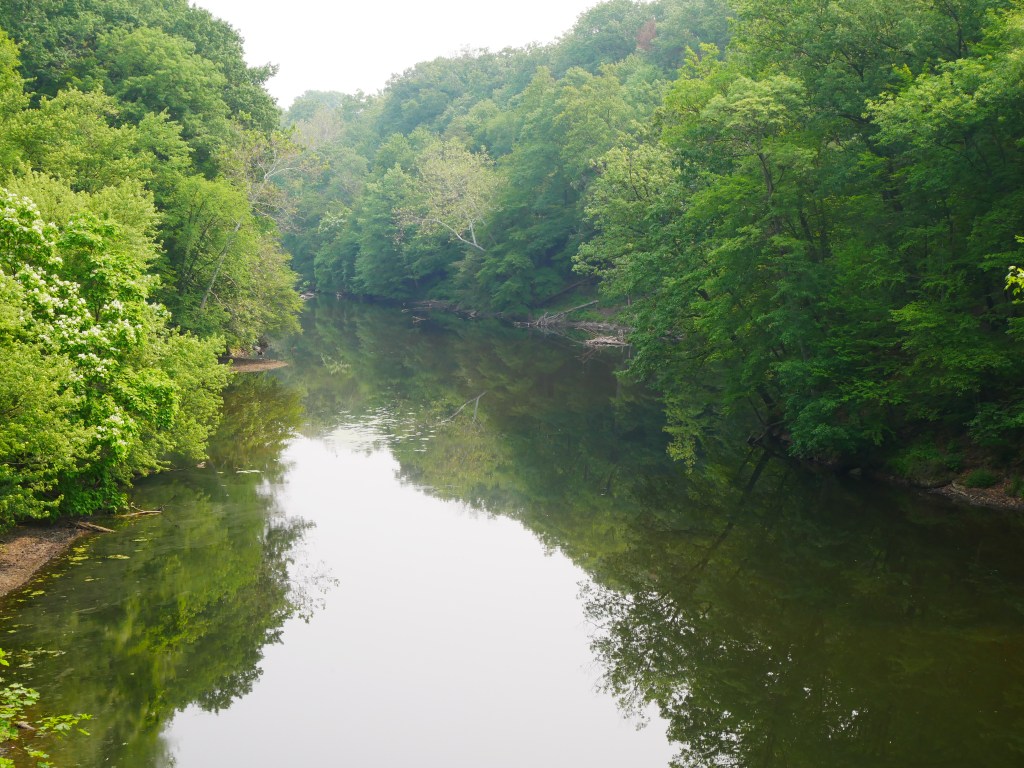
Dammed section of the Cuyahoga River

This view just ustream from Mary Campbell’s Cave won’t last long. The sixty-foot high dam that was constructed a hundred years ago will be demolished this year and the river will return to its normal course and experience improvement in aquatic life.
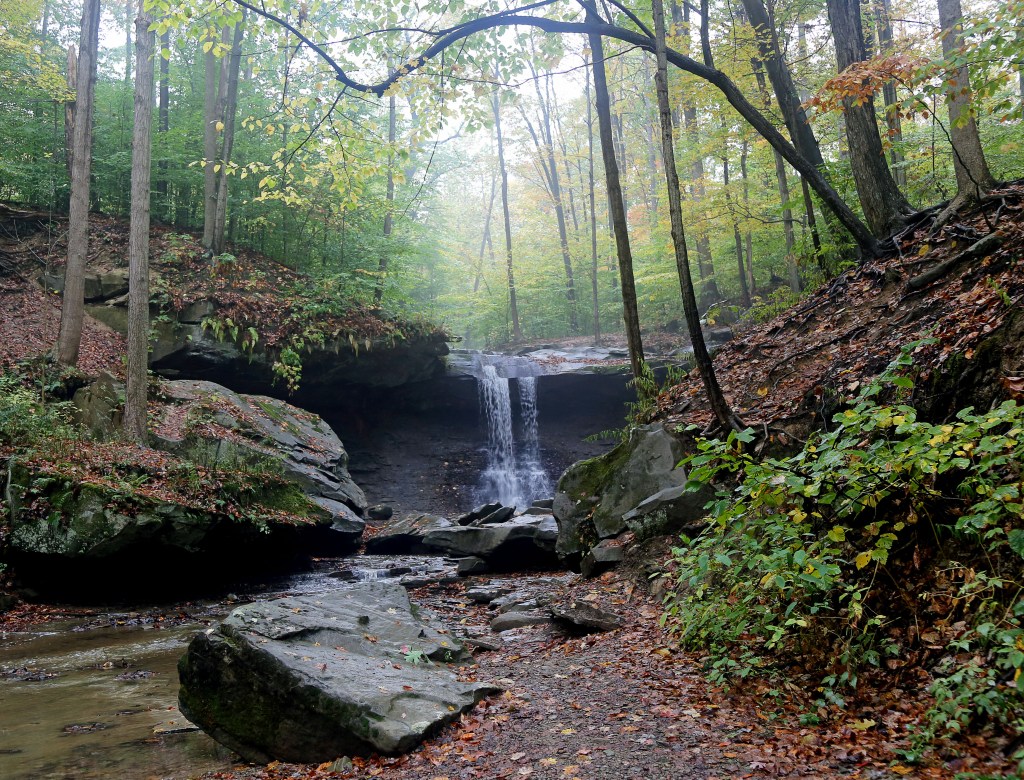
Blue Henn Falls, Cuyahoga Valley National Park

A thirty-minute hike takes us to another beautiful location close to home. The fifteen foot waterfall gets its name from a ferocious bluish chicken that was bred when cock fighting was legal in the US. Legend has it that a local farmer found the carcass of a blue hen in the pool below the falls and named them after it. The Blue Hen chicken is the state bird of Delaware
Breakfast In New Hampshire

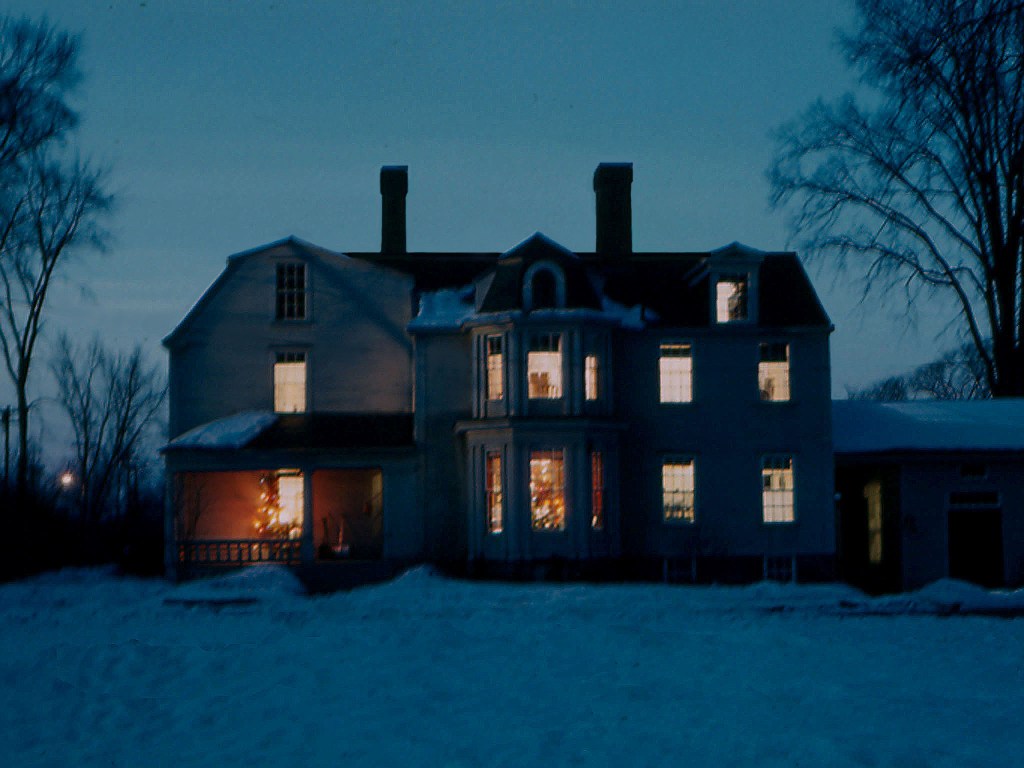
A multiple exposure Christmas photograph I took during a 1960 visit to my grandparents’ home in Concord, NH


Childhood memories
still linger
as family ghosts
at two-seventy-six North Main
where, in the dark half light
of winter’s morning,
a sound awakes me.
Is it the snapping crack
of ice-encrusted elms
or rattle of storm windows
in the wind
or just the creaking floorboards 
as my grandmother descends
the dark back stairs
into the cold kitchen?
I listen carefully now
and hear the poker-prodding sounds
of wood shifting on the andirons
as she stokes last night’s embers
into hopeful flickers
in the old colonial hearth.
The smell of coffee
draws me down,
the first awake,
to join her in the warming kitchen,
my place set with fresh toast,
and with her
catch the sunrise over snow
in this our special time.

Of Mules and Music

Saturday mornings as a kid

I saw him sitting on the sidewalk

in front of Woolworths

with his wind-up record player.

He had no arms.


Today, Moroccan “mule ladies” strain

under loads lashed to their backs

at the barbed wire fence

that separates Europe’s wealth

from Africa’s despair.


He had no arms, but it was amazing

what he could do with his feet and toes.

We watched with fascination

not understanding why mother whispered

‘move on’.


The bundles on their backs

are as big as washing machines

though this they do not know

never having had one

in their five-dollar-a-day world.


He would take a record

his ring toe and his pinky

and place it on the turntable

while with the other foot

he would crank the handle.


“Yes, the bundles they are heavy,

heavier than each woman, 

but to close the border

would leave them destitute.” 

So said the official from Melilla, Spain.


Then he would gently move the arm

with his first toe and the second,

softly settling the needle in the groove,

and the record rasped

as if clearing its throat before the song.


They carry the pain of the world,

bending under its weight

because they have to live. 

And the tears of the white man

are as dry as desert dust.


And the music floated from the gramophone:

Sammy Kaye singing Harbor Lights,

and I nearly wept,

not for the person with no arms,

but for the music, and myself.

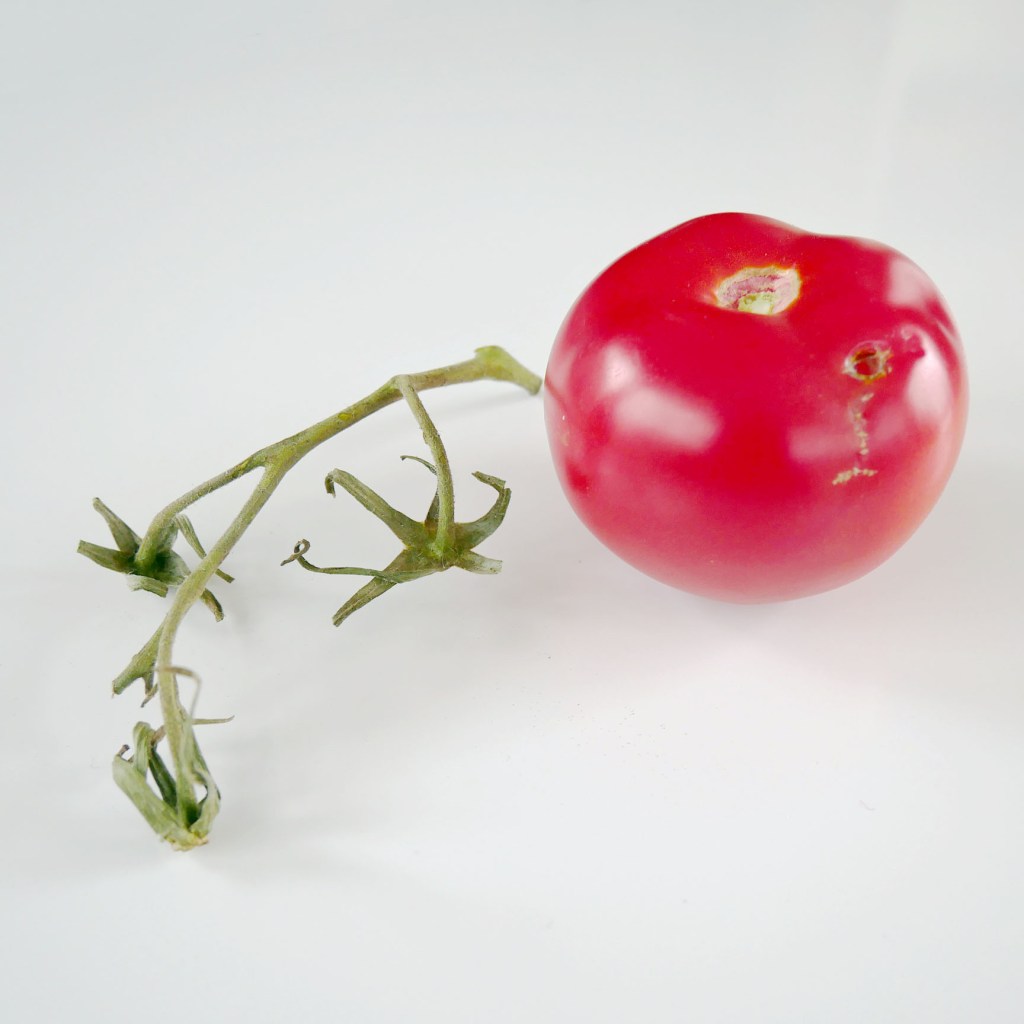
Red Tomato

I can say only what I saw:

A migrant, black, dust-laden,

With a basket in the store.

He’d picked out bread

Then looked at the tomatoes

Ripe, plump and red.

He didn’t take the freshest

From the stack, but reached

Behind the juiciest to the back

For the tomato with a blemish,

A spot of rot where once

A splinter in the wooden box

Had snagged its silk smooth skin.

He turned it over in his hand,

Squeezing gently, then placed it

In his basket with the bread


I watched him at the counter

When his turn came round.

Pointing to the tomato,

As if it were a treasure found,

He asked, “How much?”

The cashier set it on a scale.

“43 cents,” she said, “on sale.”

The laborer checked his change,

Shook his head and mumbled

He’d just take the bread.

I saw him leave the store

With only half-a-loaf

And watched the red tomato

As it was tossed into the trash.

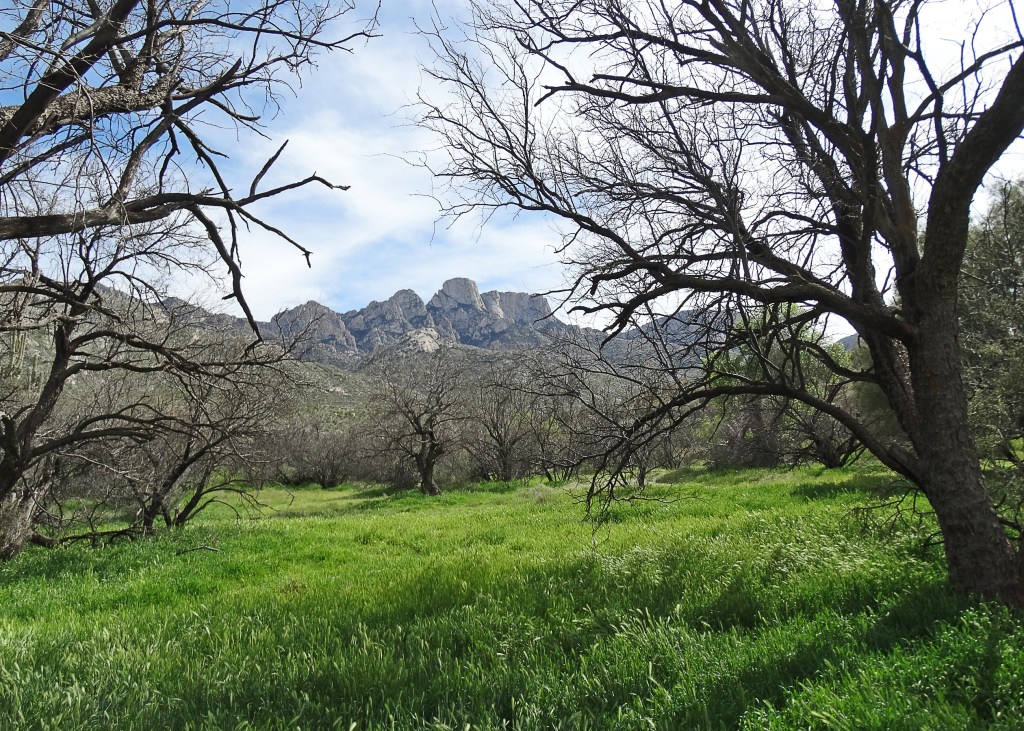
Among the Trees

In the style of Mary Oliver

When I am among the trees
especially the acacia and mesquite,
the cottonwood and willow,
in the bosque beside the desert wash,
silently welcomed home –
a family member after a long absence,
shedding the fictions of my other self,
the painfully sustained deceit…
It has been so long, though only yesterday:
Home again with these old friends,
sharing their breathing space,
standing in the intensity of the moment
beside the softly bending winter grass
under the welcoming arms
of gnarled old branches that reach out
in a gesture of embrace.
Words take flight like the startled hawk
flycatcher, finch, or sparrow,
alarmed at my footfall,
who flutter away leaving a silence
where the giant granite boulder lies,
unmoved for a hundred years or more
since tumbling down the mountainside
to settle in among the agave and saguaro
for me to lean on, rooted as we are
in this place.

Singing in the dark

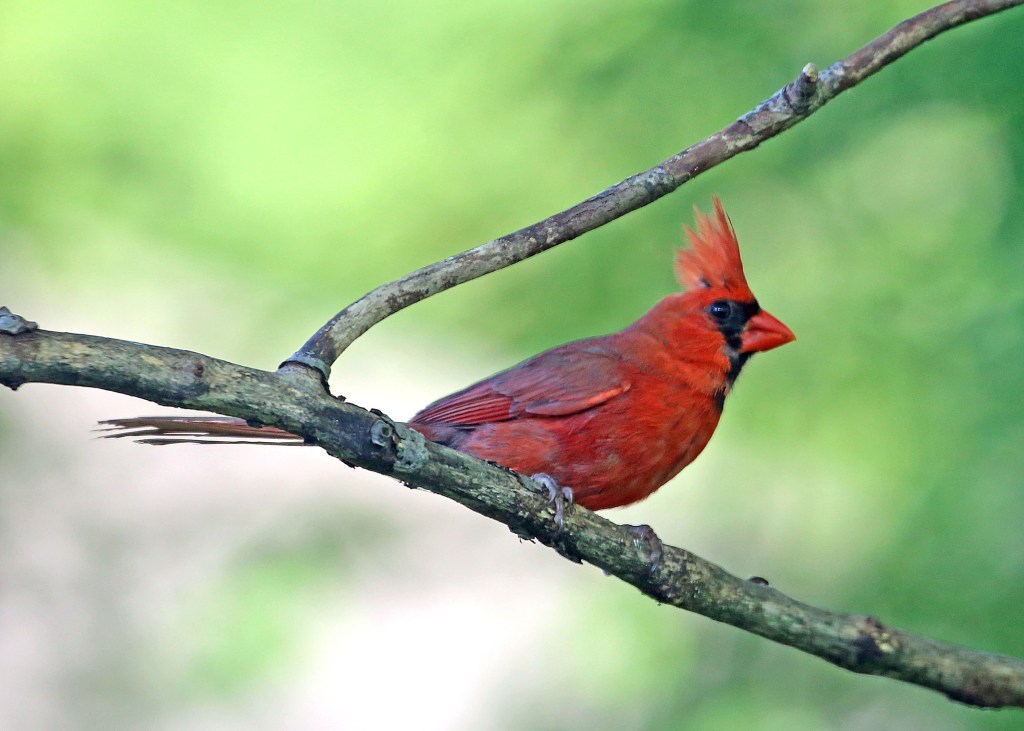
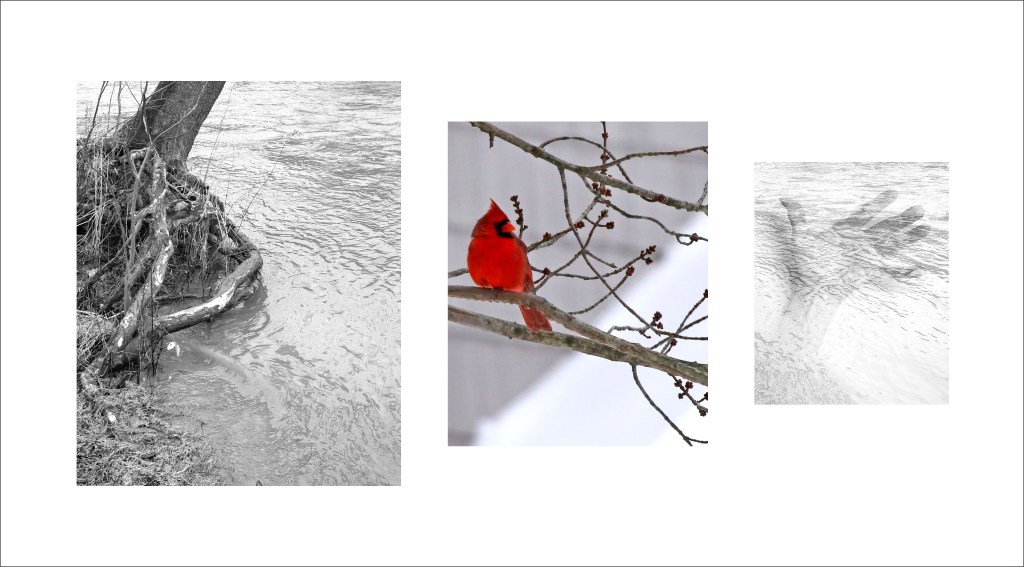
On an icy January morning, during my daily pre-dawn walk to the gym, I heard a cardinal singing from high in the branches of a leafless tree. “That’s strange,” I thought. “Spring is still a long way off in Ohio.” This morning, the same cardinal sits singing in that same tree more than two months later as I walk past at 5:30 am. I’m reminded of the mockingbird that would sing through the night in a tree outside our window in Southern Arizona.

Cardinals were known as Virginia Nightingales in eighteenth-century England or Winter Redbirds because of their stark red contrast against white winter snow. Then, and now, they have had a variety of symbolic meanings, have been named state bird in seven US states, and serve as mascots for many sports teams. For me, the bird conveys the sense of a solitary observer, patiently waiting.

I

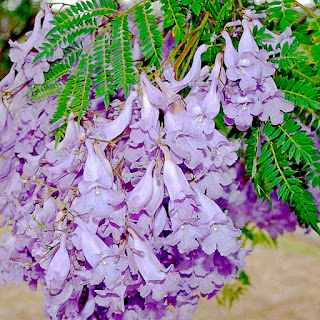
Confucian Poets Never Knew


Confucian poets

never knew the

gentle jacaranda

never basked

in the amethyst shade

of its springtime

branches

never sang of its

fragrant blossoms

soft as mulberry silk

floating in the breeze

never tried to capture

its illusive hue                                    

purple gently poised               

somewhere between               

violet and magenta                             

not quite blue.

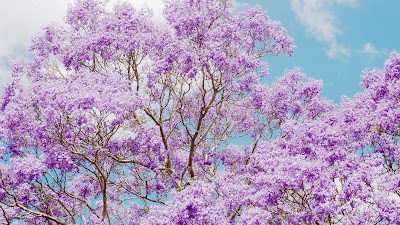
You Should Sit Under A Jacaranda

You should sit
under a jacaranda tree
in late spring
when dappled light
dances on bare arms
and the violet mantilla
draped loosely overhead
ripples softly in the breeze
shaking off spent blossoms
that float down
covering the earth
in a miracle sprinkling 
like spring-time snow             
indigo-tinged flakes
bathed in hues of twilight blue
flowers even as they die
holding us in their clasp
pungent as damp moss
and sweetly fragrant
sweet as honey from the bees
that in the lattice lace overhead
still buzz vibrato
their universal hum.
In this place where you sit
suspended between effulgence and decay
patiently between birth and death
there is for this moment
no space for fear regret or pain

Daybreak in December

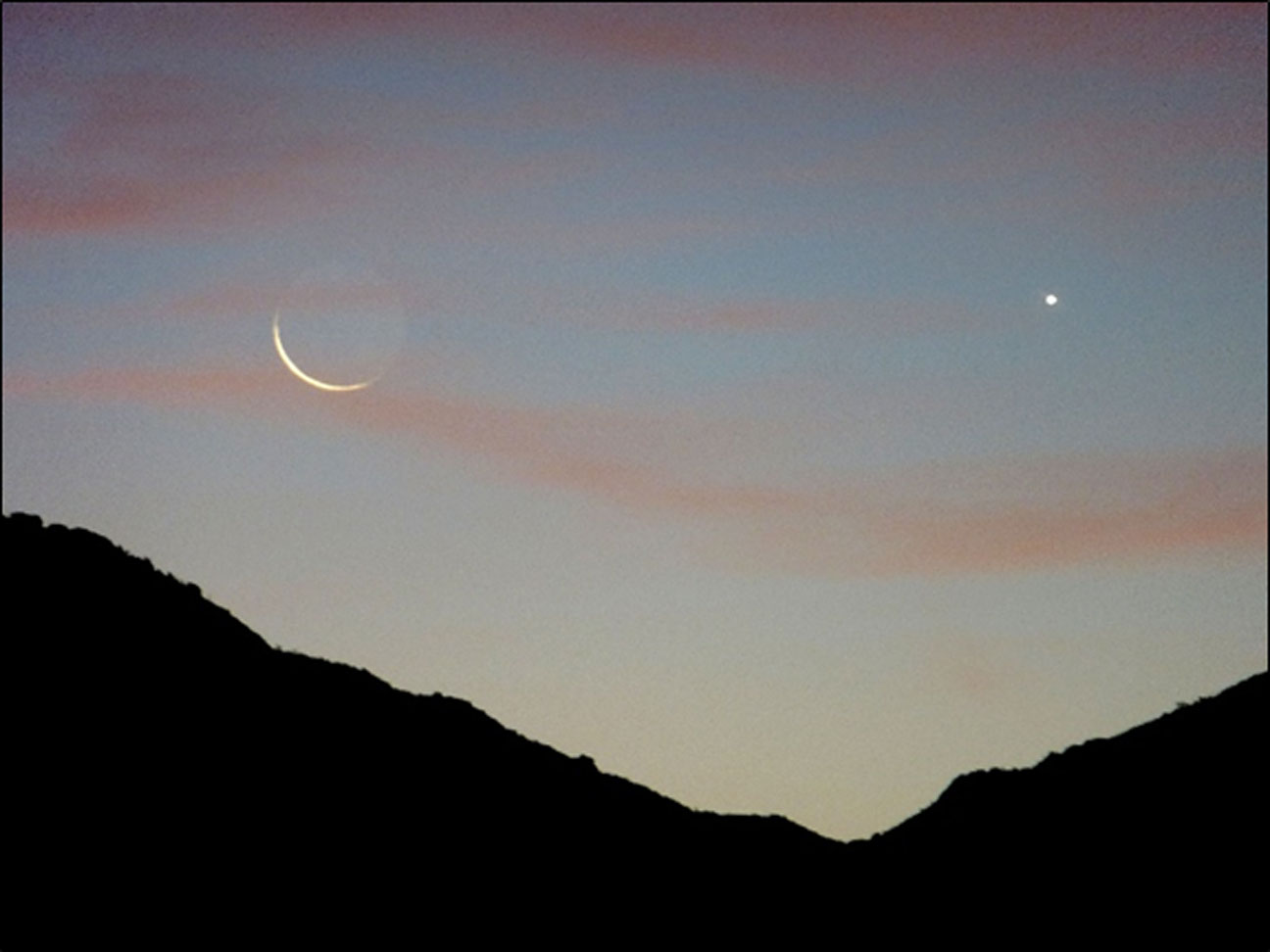
Many mornings are the same:  A hint of light behind the black silhouette of the Catalinas and, higher, Venus suspended brightly in the dark clear sky just before daybreak.  But some mornings are different this December.  One morning the sky behind the still dark mountains seemed cloudless but in the half-light before sunrise it glowed with an almost fluorescent sheen, an amalgam of silver, salmon, champagne and light lavender, suggesting the thin transparent veil of cirrostratus cloud.  There are also the few times altocumulus clouds make their appearance like ploughed fields rippling across the sky, glowing orange, red and pink at sunrise.  This month we had storms rolling in from California.  They brought lenticular clouds, wave crests stacked one upon the other, breaking over the mountain peaks. One morning I was up a little earlier than usual; just after 5:00am.  Standing in the driveway where I had just picked up the morning paper I looked out across the dark sky enjoying the morning stillness before the start of another day, when a meteor, suddenly appeared, tracing a long arc down towards the north-west horizon:  One of the Geminids no doubt, offspring of the 3200 Phaethon Comet but, for me, a shooting star, a spark of the divine.