Like it or not, the color red makes its presence felt. Associated with love or anger, pain or pleasure, it evokes an emotional response.
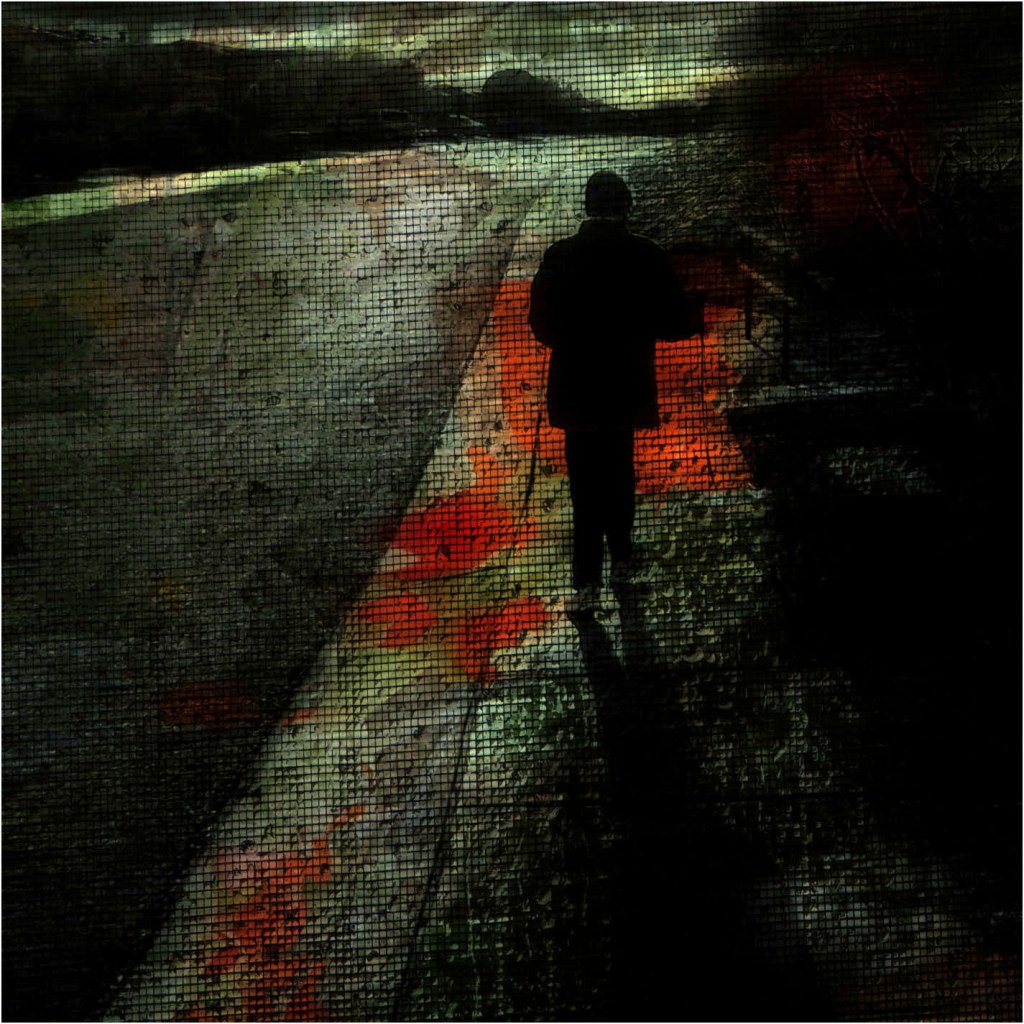
Here, after a fourth spine surgery, Lilian walks towards the setting Arizona sun. There is very little red in this image but, against the darkness of the photograph, it draws our attention to her pain.
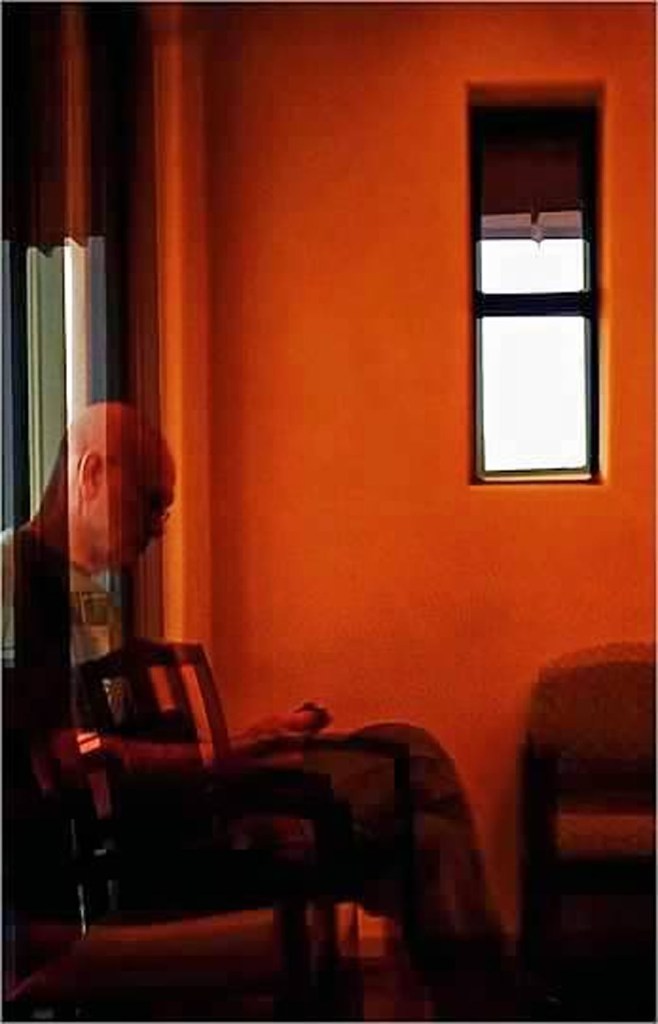
Pain clinics are quite places.
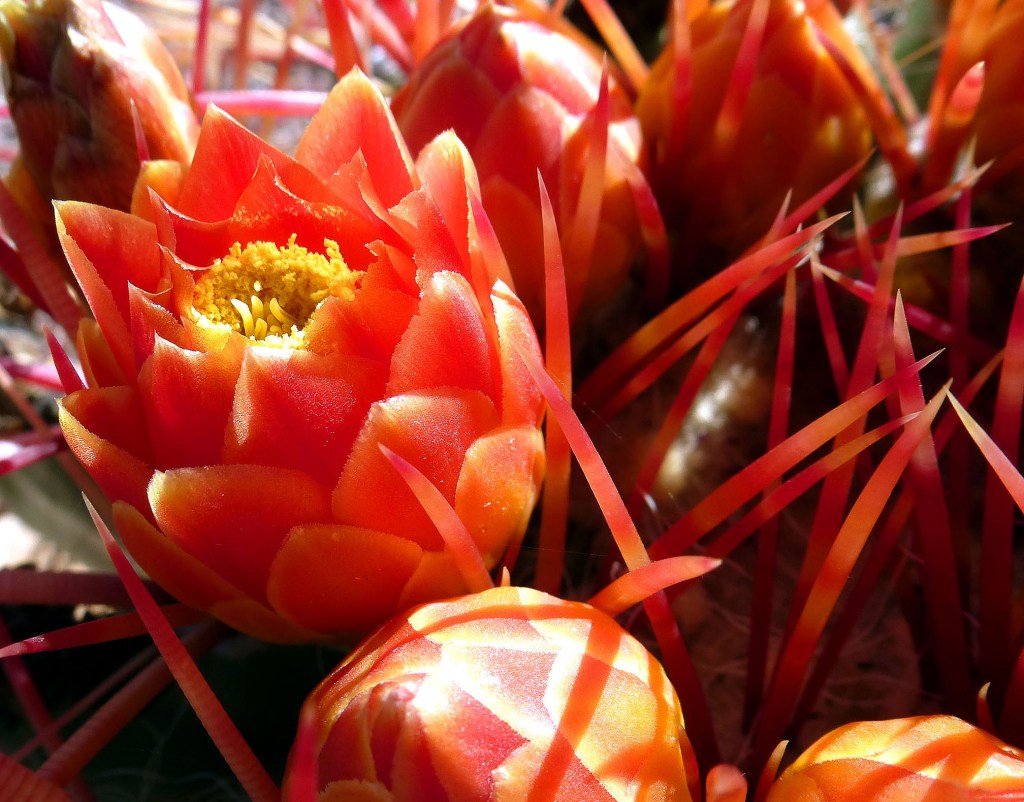
In the desiccating heat of the Sonoran Desert, a Barrel Cactus blooms.
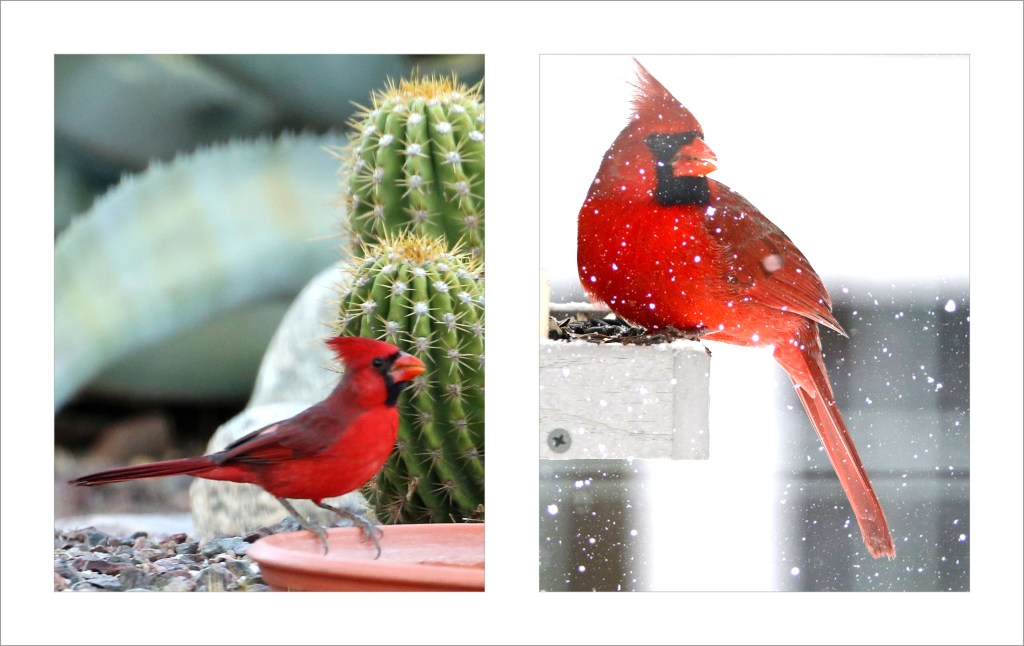
In the desert, we provide water. In the snowy north we fill the feeder with sunflower seed. The cardinal comes to us, a red reward: A living valentine’s card, if you will.
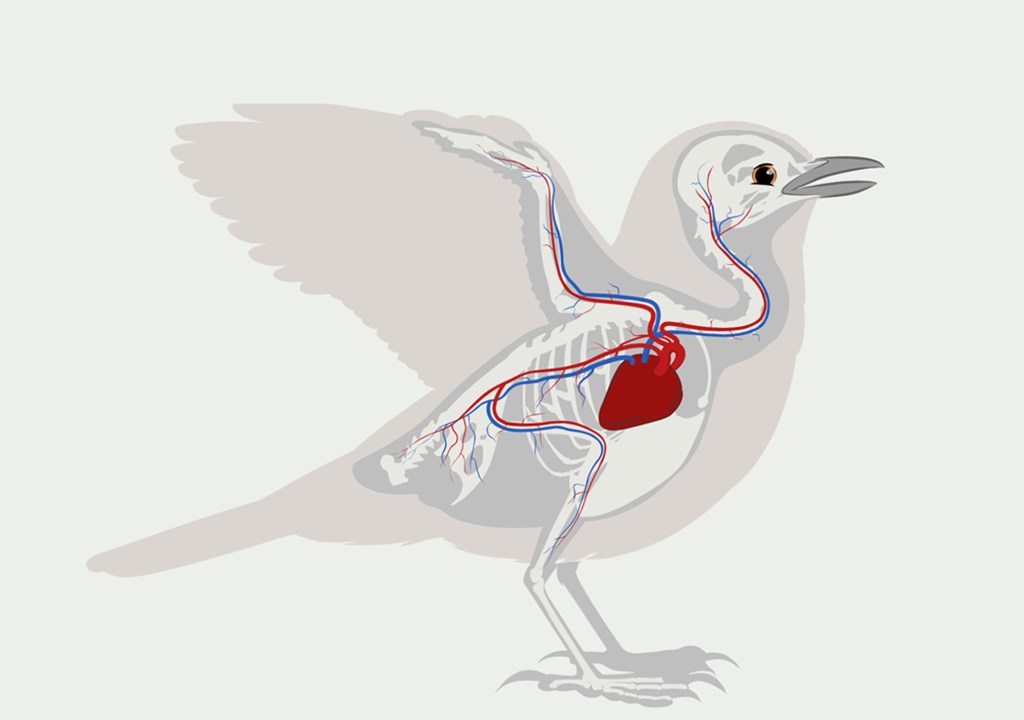
Cornell Lab of Ornithology
Each heart inside each bird, though smaller and faster beating, is similar to ours. And we share in the electro-chemical miracle that produces an electrical current from the movement of sodium, potassium and calcium ions through the heart cells. And these electrical signals keep us alive and keep the birds flying. All of us.
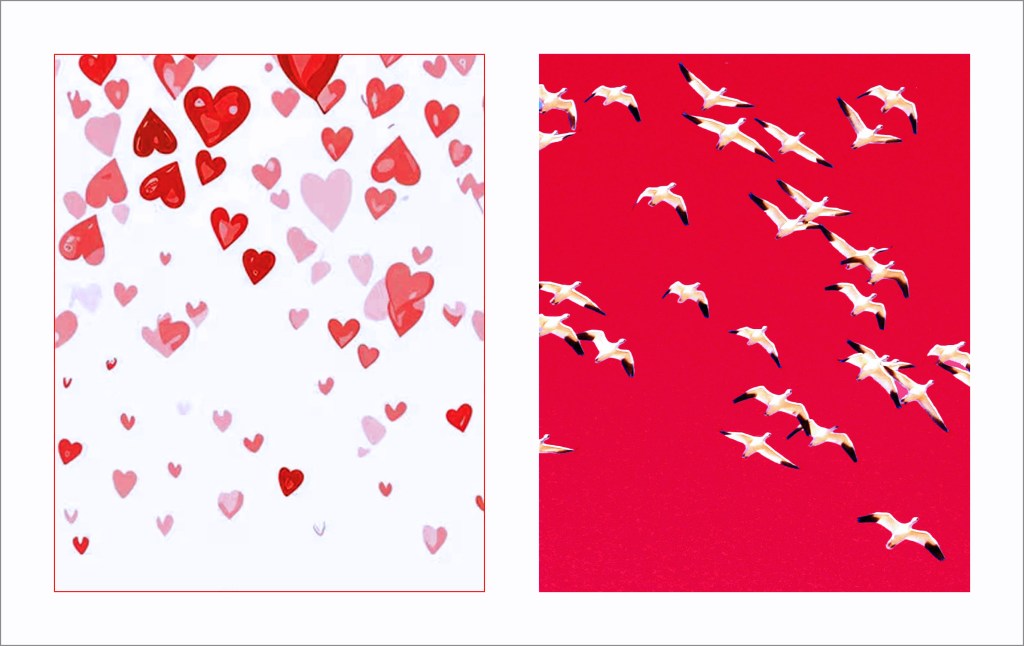
In the image below, there are several colors, black, green and red, but the red stands out.
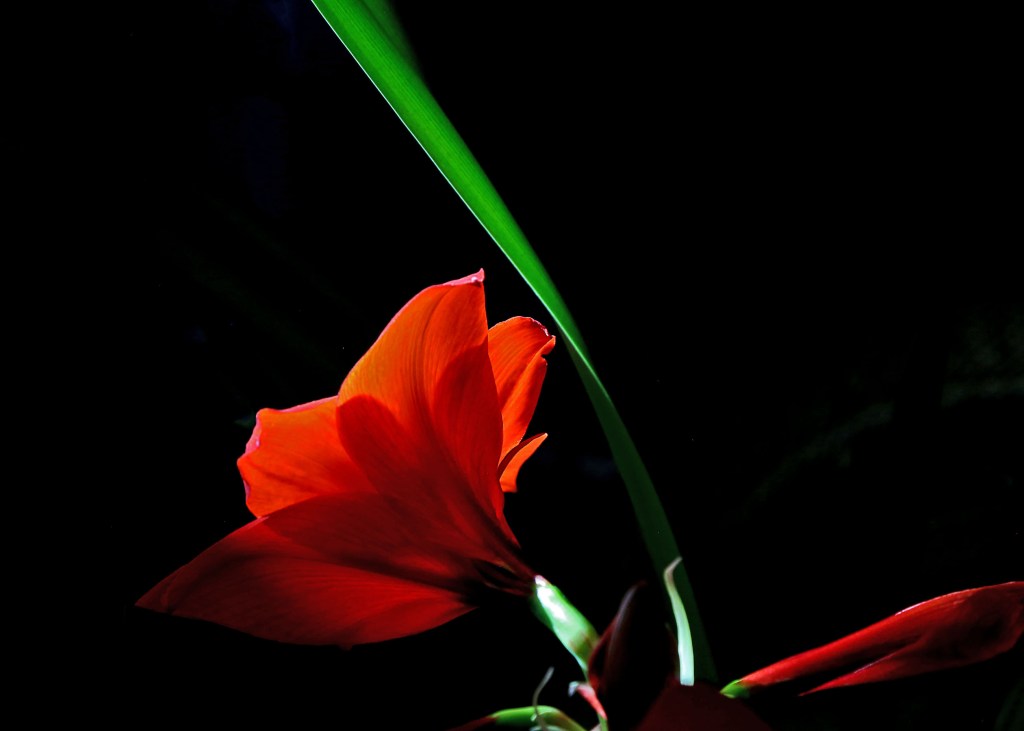
Josef Albers (1888 – 1976) was a prominent figure in color theory and art education. He is most well-known for his work on color perception and interaction. He emphasized that color is a relative medium, influenced by context, light, and surrounding colors as is the case in this image of a red amaryllis.
This amaryllis was a gift in 2025, a bulb in a pot. It flowered in January. In the spring, we planted the bulb the garden then brought it back inside in September. In January 2026 it was in full flower again. Today the flowers are gone and the plant is patiently waiting to be planted back in the garden again when the danger of frost is past.
What do you see in the image below?
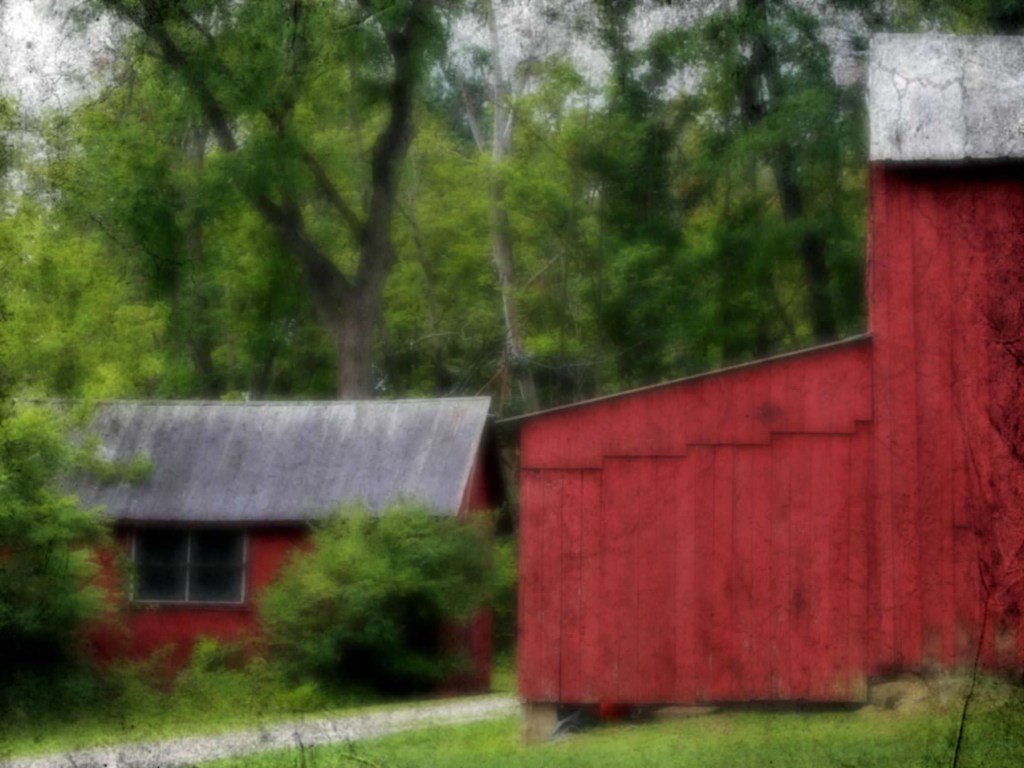
Yes, a red barn and a red shed. Even though there is as much green, we see the red. If a three-month-old infant looked at the scene, what would he or she see? Certainly not a red barn but rather shapes and colors. Perhaps the child would be attracted by the red, as we are. It is sometimes good to imagine seeing in the way of a child.
n the early nineteenth century, a non-objective art form emerged, art that does not attempt to accurately represent a visual reality. It is characterized by the absence of recognizable objects or figures, focusing instead on elements such as color, shape, line, and form to create a purely visual experience for the viewer. Pioneered by artists like Kandinsky and Malevich, the objective of non-objective art was to evoke emotions, sensations, or ideas, independently of the constraint of representational art.
Mark Rothko and Donal Jud are just two contemporary non-objective artists who make frequent use of the color red. It is unsurprising that they and other artists, who goal is to provoke an emotional response to their non-objective work, would work in red.
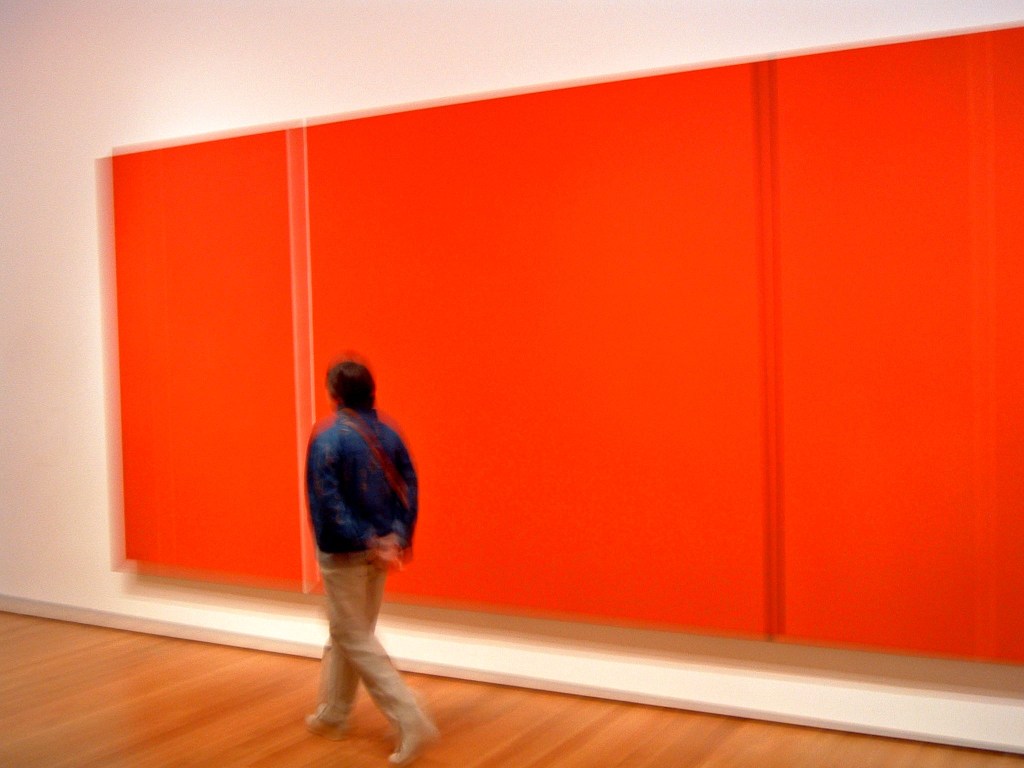
Vir Heroicus Sublimis Museum of Modern Art in New York.
Here is Lil walking past Barnett Newman’s (1950-1951) work at the Museum of Modern Art in New York. Because this work falls into the category of non-objective painting, some would say that it should not be judged but only experienced subjectively. This raises the interesting question of how a museum decides what paintings to add to its collection.

Off the cost of Quepos, Costa Rica
Red sky at night, sailor’s delight.
Red sky in the morning, sailor’s warning
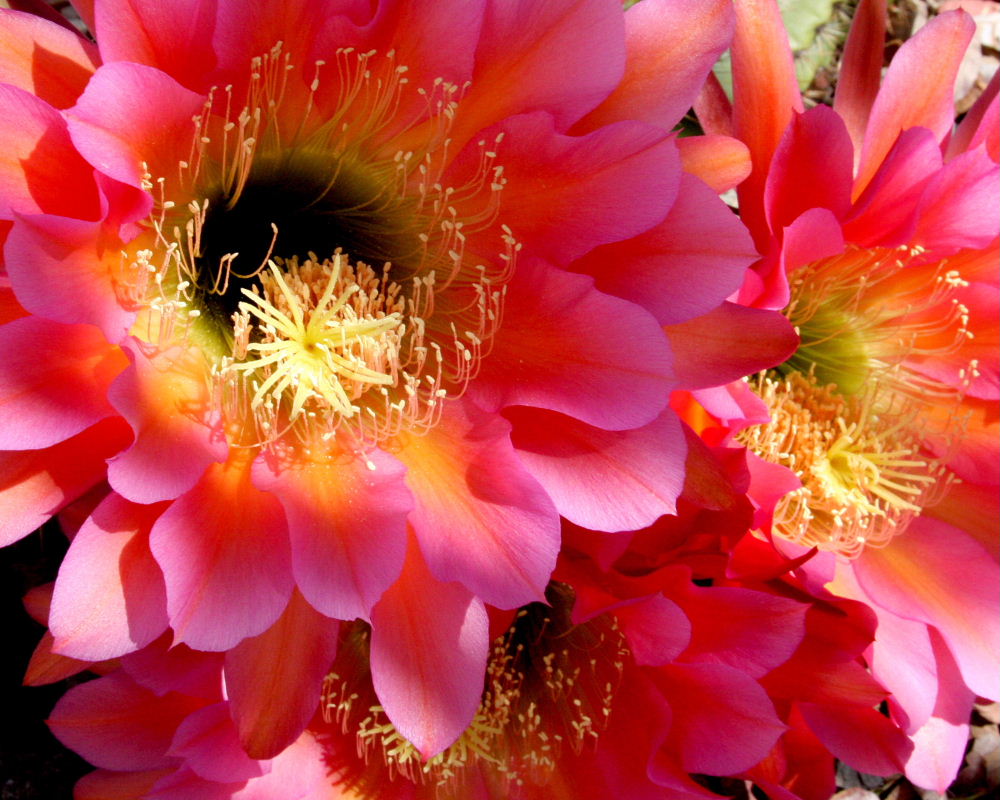
A red flower in the desert blooms.
It blooms for just a day or two.
It blooms for you the passerby
So, pause and look while on the path.
You’ll both be leaving soon.





 The Final Stretch