Something Red

Like it or not, the color red makes its presence felt. Associated with love or anger, pain or pleasure, it evokes an emotional response.
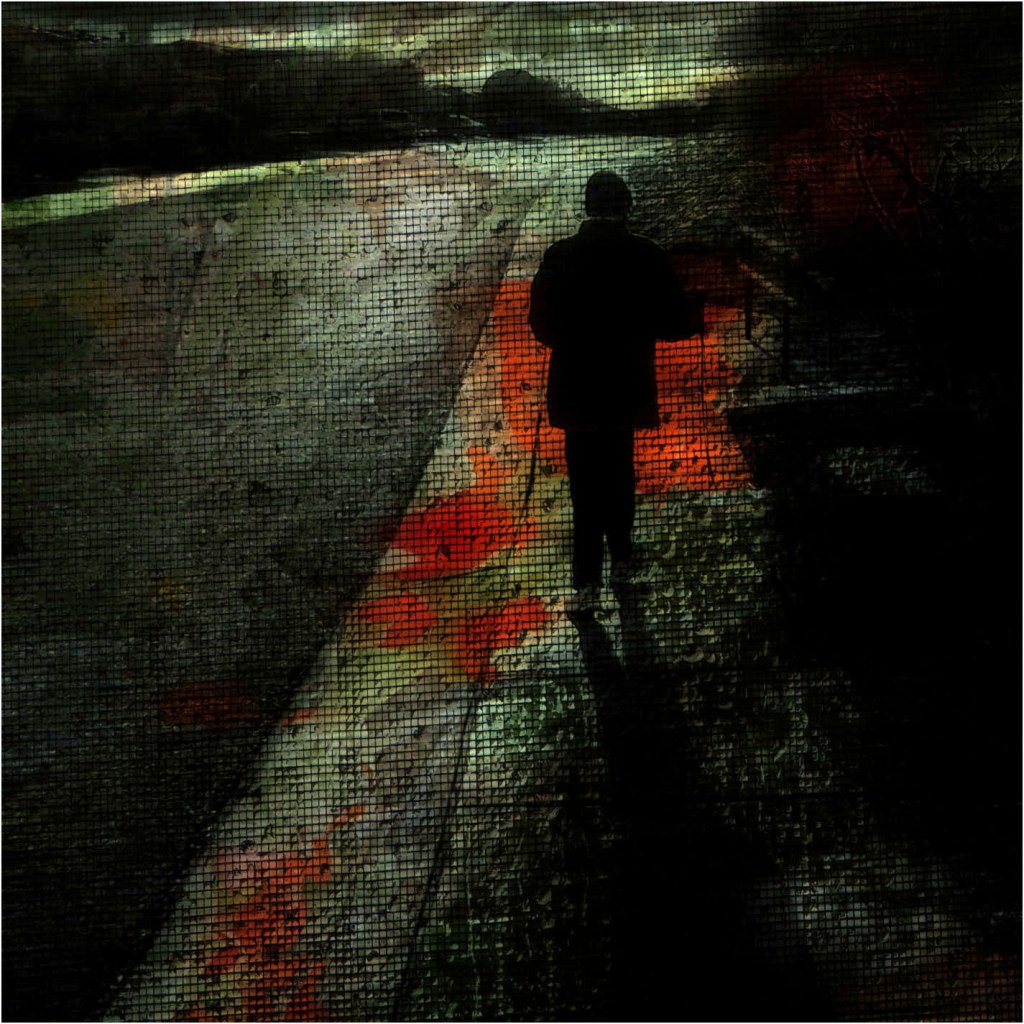
Here, after a fourth spine surgery, Lilian walks towards the setting Arizona sun. There is very little red in this image but, against the darkness of the photograph, it draws our attention to her pain.
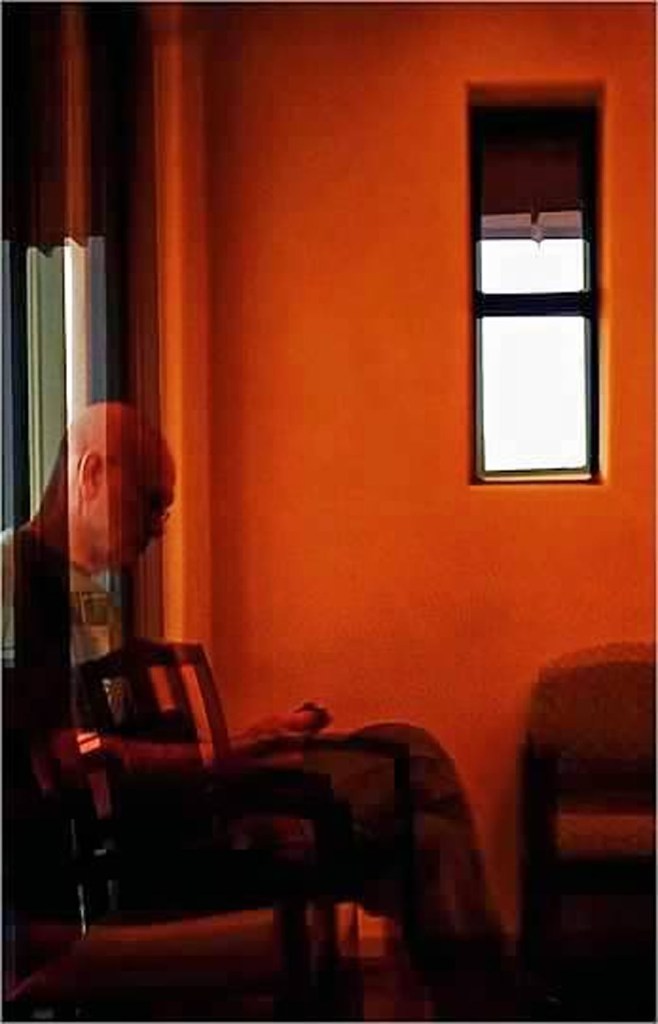
Pain clinics are quite places.
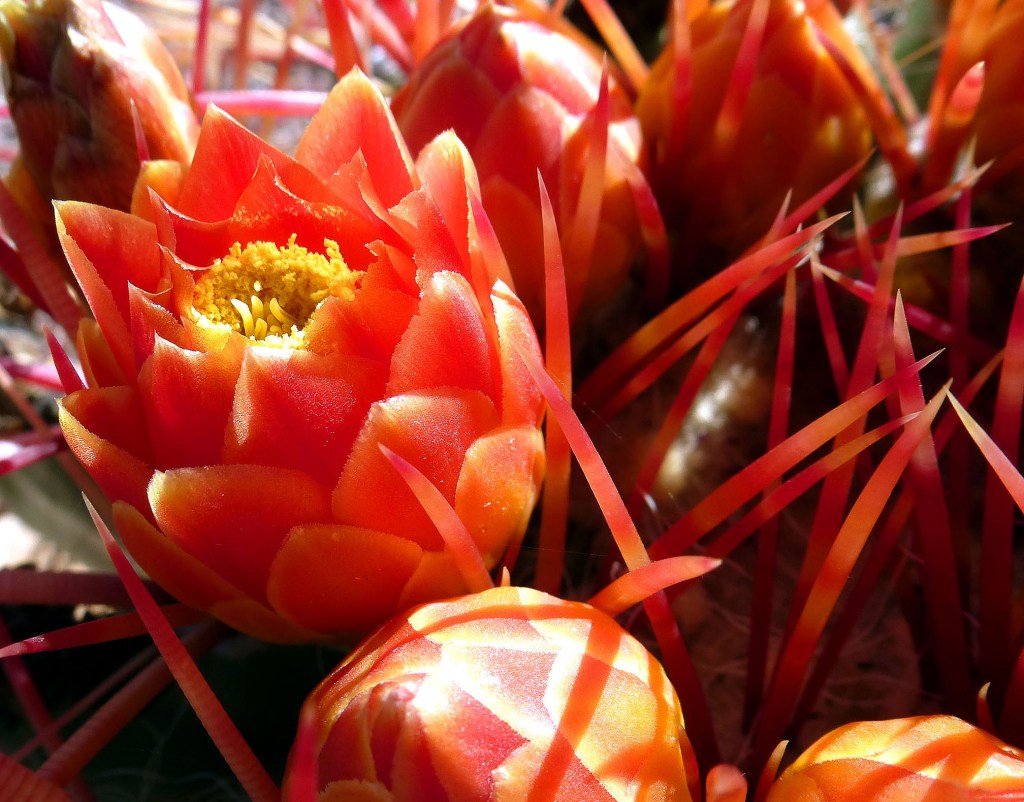
In the desiccating heat of the Sonoran Desert, a Barrel Cactus blooms.

In the desert, we provide water. In the snowy north we fill the feeder with sunflower seed. The cardinal comes to us, a red reward: A living valentine’s card, if you will.
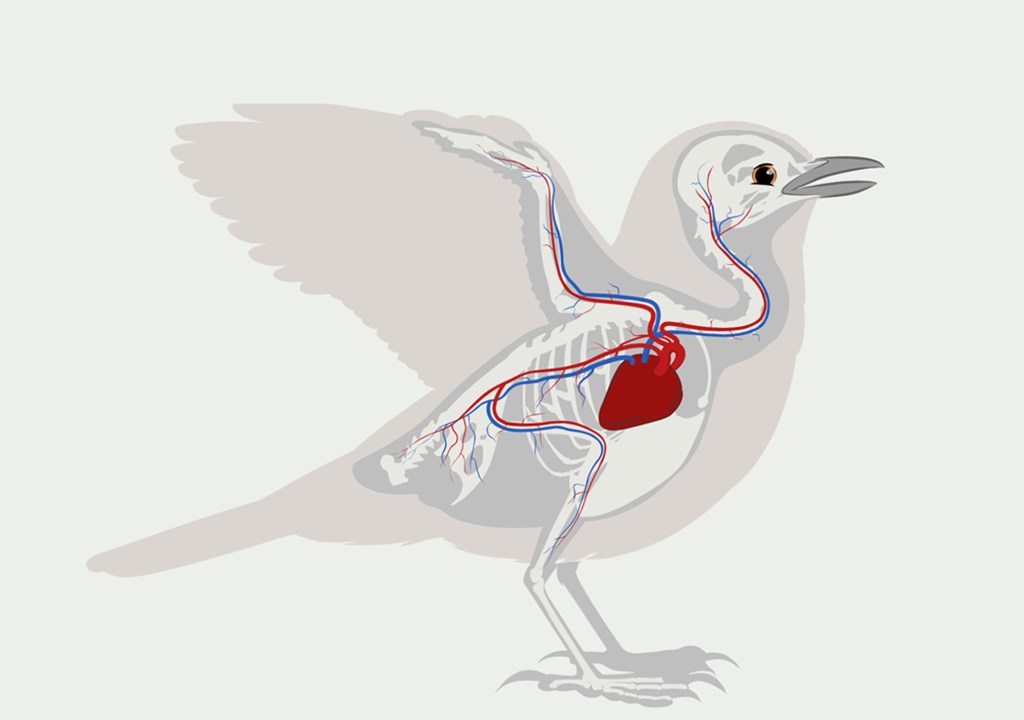
Cornell Lab of Ornithology

Each heart inside each bird, though smaller and faster beating, is similar to ours. And we share in the electro-chemical miracle that produces an electrical current from the movement of sodium, potassium and calcium ions through the heart cells. And these electrical signals keep us alive and keep the birds flying. All of us.
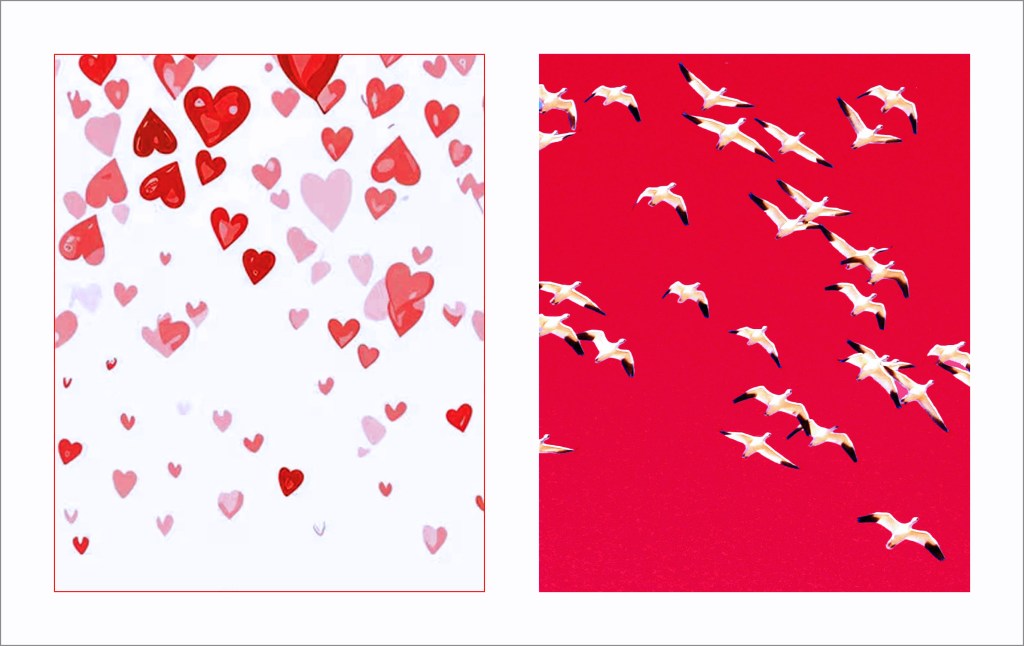
In the image below, there are several colors, black, green and red, but the red stands out.
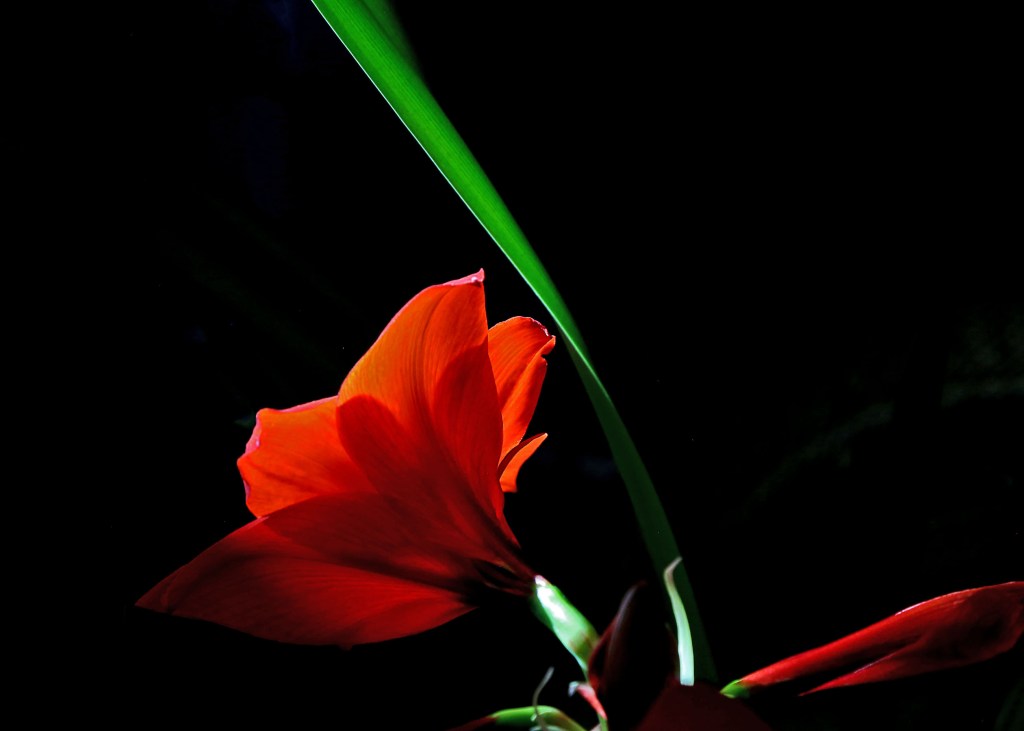
Josef Albers (1888 – 1976) was a prominent figure in color theory and art education. He is most well-known for his work on color perception and interaction. He emphasized that color is a relative medium, influenced by context, light, and surrounding colors as is the case in this image of a red amaryllis.

This amaryllis was a gift in 2025, a bulb in a pot. It flowered in January. In the spring, we planted the bulb the garden then brought it back inside in September. In January 2026 it was in full flower again. Today the flowers are gone and the plant is patiently waiting to be planted back in the garden again when the danger of frost is past.

What do you see in the image below?
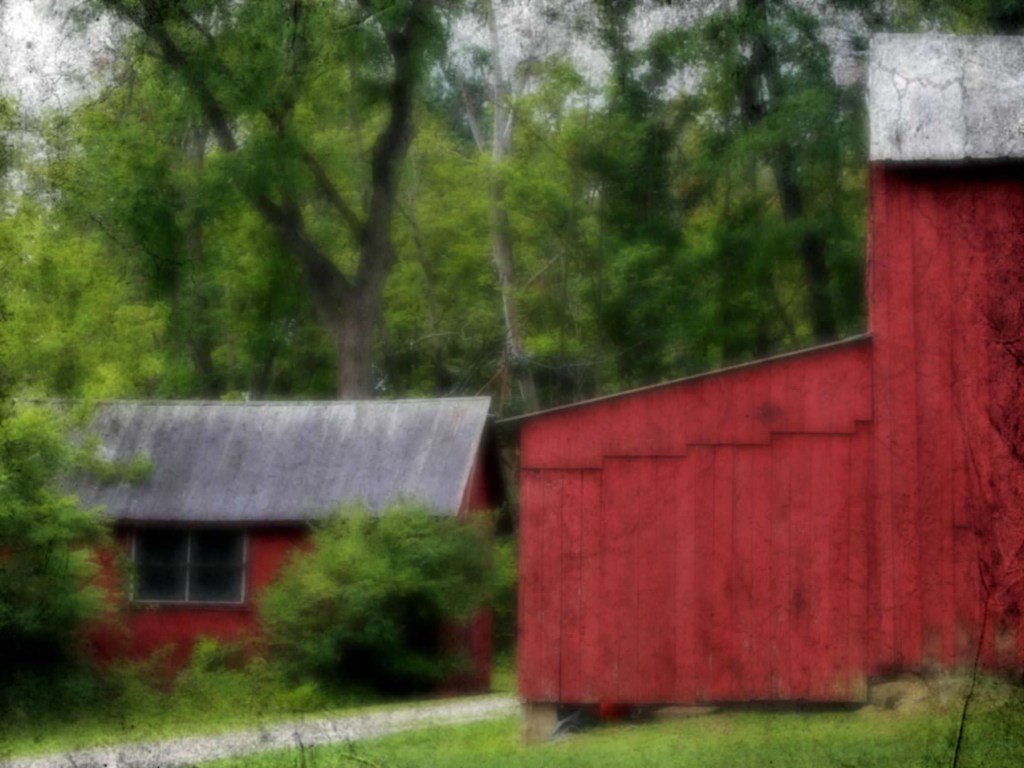
Yes, a red barn and a red shed. Even though there is as much green, we see the red. If a three-month-old infant looked at the scene, what would he or she see? Certainly not a red barn but rather shapes and colors. Perhaps the child would be attracted by the red, as we are. It is sometimes good to imagine seeing in the way of a child.

n the early nineteenth century, a non-objective art form emerged, art that does not attempt to accurately represent a visual reality. It is characterized by the absence of recognizable objects or figures, focusing instead on elements such as color, shape, line, and form to create a purely visual experience for the viewer. Pioneered by artists like Kandinsky and Malevich, the objective of non-objective art was to evoke emotions, sensations, or ideas, independently of the constraint of representational art.


Mark Rothko and Donal Jud are just two contemporary non-objective artists who make frequent use of the color red. It is unsurprising that they and other artists, who goal is to provoke an emotional response to their non-objective work, would work in red.
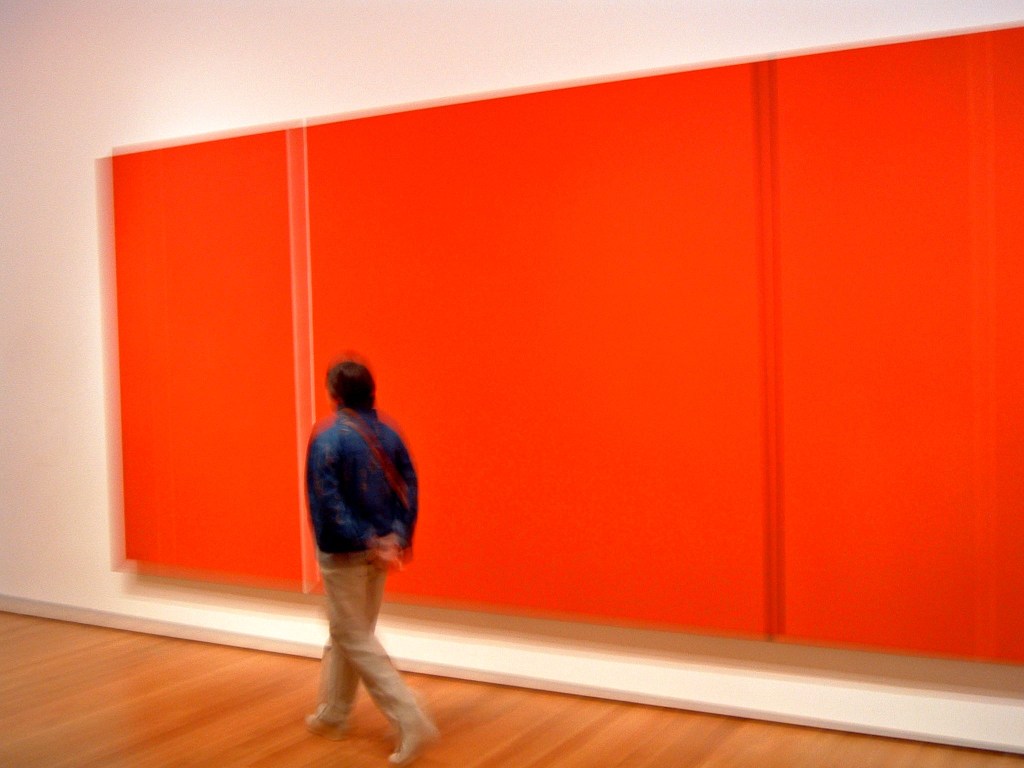
Vir Heroicus Sublimis Museum of Modern Art in New York.

Here is Lil walking past Barnett Newman’s (1950-1951) work at the Museum of Modern Art in New York. Because this work falls into the category of non-objective painting, some would say that it should not be judged but only experienced subjectively. This raises the interesting question of how a museum decides what paintings to add to its collection.

Off the cost of Quepos, Costa Rica

Red sky at night, sailor’s delight.
Red sky in the morning, sailor’s warning
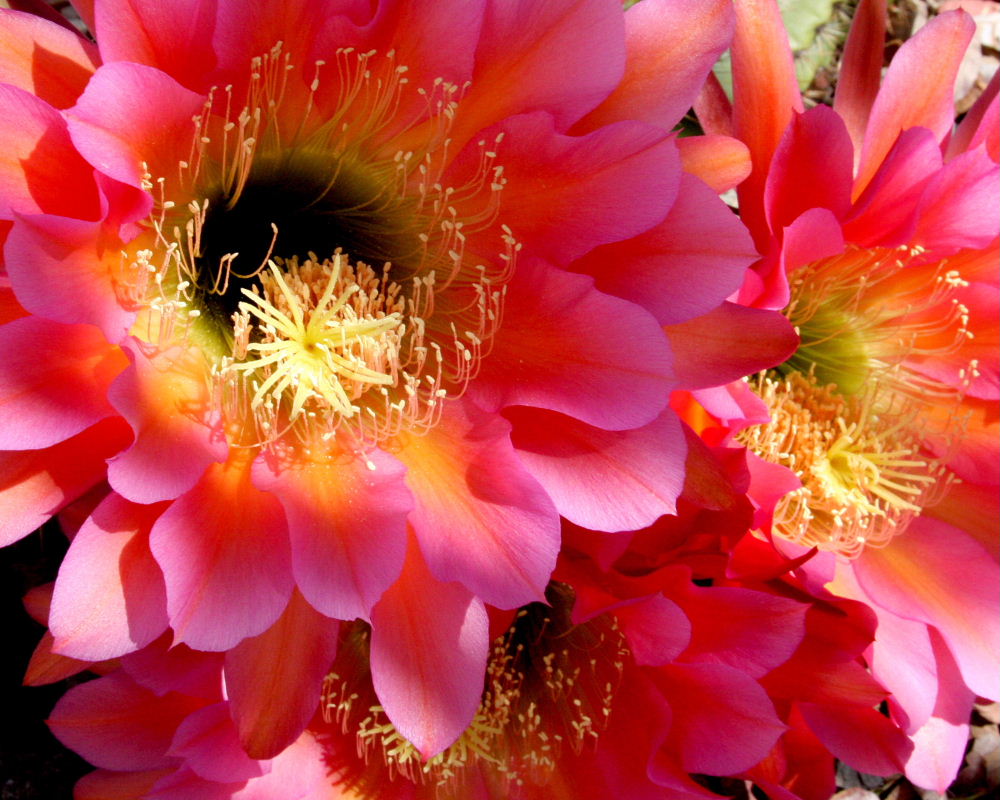
A red flower in the desert blooms.
It blooms for just a day or two.
It blooms for you the passerby
So, pause and look while on the path.
You’ll both be leaving soon.

Art and Artifacts at Home

I noticed this little wood carving in my grandfather’s home in South Africa in the late 1940’s. He told me that it had been carved by a prisoner in a concentration camp. I didn’t know what he meant, but I thought the carving was beautiful. The figure was originally holding a long-stemmed pipe, possibly a meerschaum that, together with the apron, suggested a European artisan.

I wondered if the little figure had been carved by an Afrikaner prisoner during the Anglo-Boer War when the British interned 40,000 Boers in 45 tented camps for Afrikaners and 64 camps for Black Africans. About 25,000 detainees, mainly women and children, died of disease and malnutrition. I wondered if something as beautiful as the small carving could come from such harsh conditions.

Then I remembered that during World War I, South African troops invaded neighboring German South-West Africa where German settlers were rounded up and sent to concentration camps in Pretoria. Perhaps the carving had been done by a German settler thinking of home in Europe.

And then I remembered reading how, during World War II, the battles of North Africa resulted in about 93,000 Italian Prisoners of War being brought to South Africa. Arriving in 1942, they were employed in the local farming communities as laborers, builders, gardeners, and mechanics. Although they weren’t imprisoned and they worked collaboratively with South Africans, they were far from home and, perhaps, one of these Italians carved the little figure.

One will probably never know the truth behind the carving, but it doesn’t really matter. It is a continuing memento of a beating heart in a foreign land far from home. A memory carved in wood.

There are other carvings in our home and, only now do I see some common themes: Here are two pieces of Navajo folk art created by Dorothy V. Wilson in the style of Antonio Johnson in that part of New Mexico that was the home of the ancestral pueblo people in the seventh century. The figures are carved from cottonwood, using an axe to form a rough shape, and a pocketknife to create the detail. The surface is painted with house paint, watercolors, and a fragile white clay used by the Navajos to paint their bodies.

The Navajo people had been forcibly removed from their homes in Arizona and New Mexico in 1864 and sent on the “Long Walk”, an effort to “civilize” them and assimilate the Navajo into white American culture. The “Walk” was a series of forced marches that included the capture of thousands of Navajos and involved the destruction of crops and the killing of animals. It resulted in hundreds of deaths from exposure and starvation.

And here we have direct descendants of those persecuted people producing something beautiful claiming a long-denied respect.

Another example of recent indigenous art, but with brighter colors and certainly more whimsical designs are carvings by the Zapotec people concentrated in Oaxaca in Southern Mexico.

Known as “ Alebrije”, the carvings they are made from locally sourced copal wood. They are carved using hand tools – machetes, chisels, and knives. The works above are those of Juan Carlos Santiago of Arrazola, a small village in Oaxaca, Mexico. Most Zapotec Indians still speak their own dialect, and many don’t speak Spanish. Their life is agriculture based with some hunting, fishing, and gathering of wild foods.

In a future posting I’ll share a few ceramic, pottery and woven works of art that we’ve collected on our journey over the years.

Art and Artifacts at Home

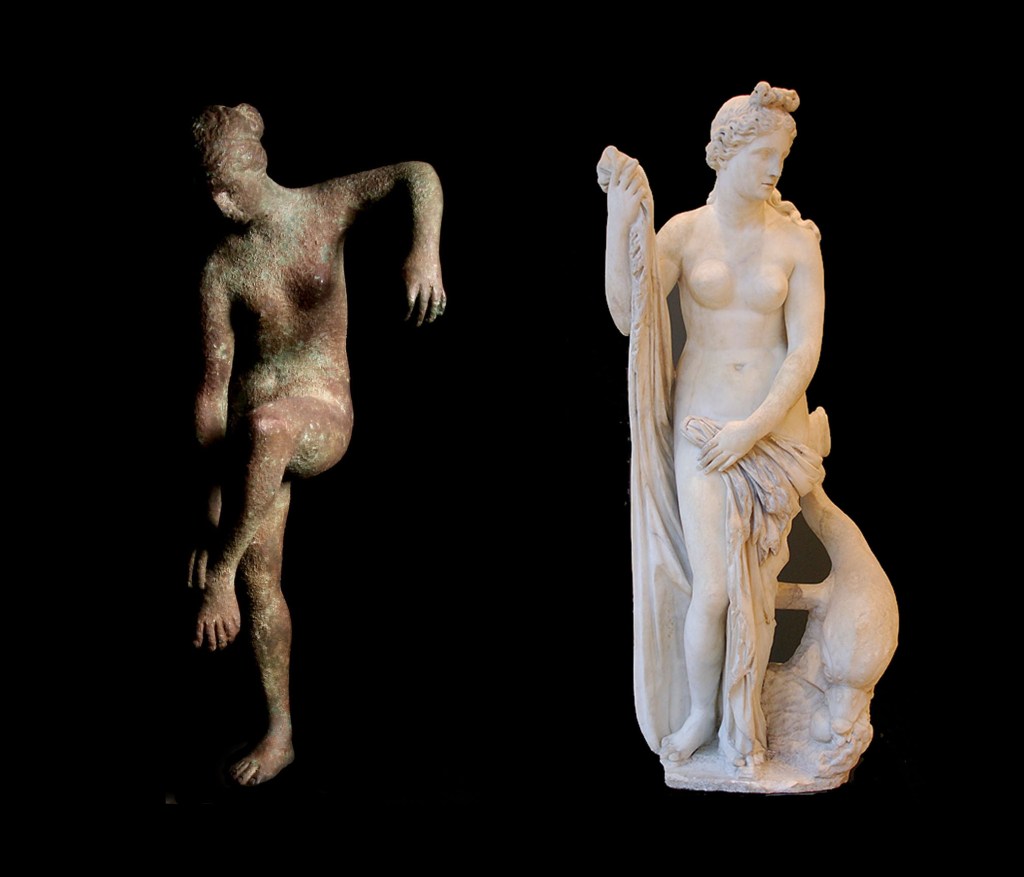
Aphrodite in our home – Venus in the Getty Museum

Aphrodite is the ancient Greek goddess of love and beauty whose Roman doppelganger is Venus.

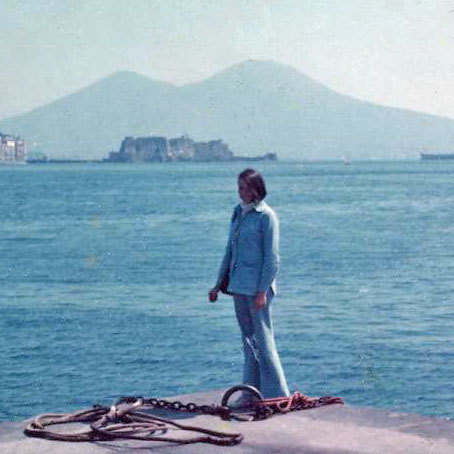
In Naples en route from South Africa to Canada in 1974

In the background of this picture is Vesuvius, and it was in Pompeii where we went without lunch to buy our little statue at the start of our married life together.

The word aphros means “foam” which, according to the Greek poet Hesiod in 700 BC, was produced by the severed genitals of Uranus after his son Cronus threw them into the ocean, and from which Aphrodite was born.

The castration of Uranus, Palazzo Vecchio, Florence, Italy

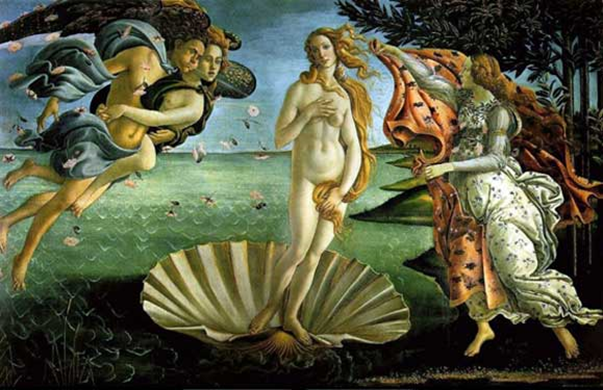
The birth of Venus, Boticelli, 1496

Ten years later, when Lil and I gazed at the well-known Birth of Venus at the Uffizi in 1984, we were oblivious of her gruesome origin and countless affairs with both gods and mortals. For us, Aphrodite (Venus) was simply the goddess of love.

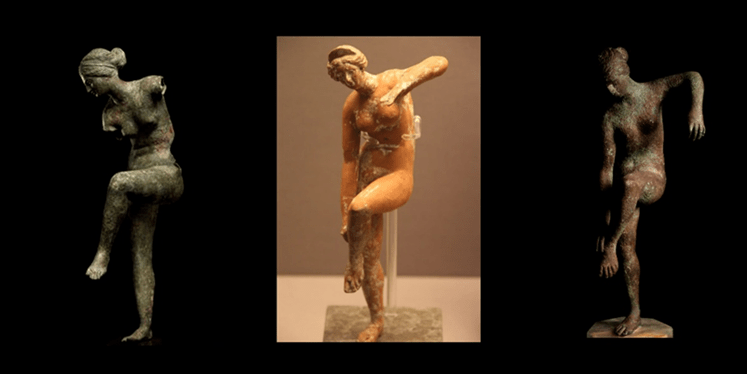
These three very similar statuettes portray Aphrodite. The original was probably the small terracotta sculpture in the center that is now in the British Museum and dates back more than 2200 years. The bronze on the left, also in the British Museum, is an equally old copy. Our little statue is a fine art reproduction and, although there must have been hundreds produced around the time we bought it, the beauty of the original is faithfully conveyed.

Aphrodite was the only beautiful presence in the scrubby little furnished apartment above a convenience store that was our first rented home upon arriving in Canada.
She was wrapped, packed, transported and unpackaged fourteen or fifteen times as we moved from apartment to house, from city to city in Canada and later to Jamaica where she watched our armed robbery but was herself left unscathed. Then to the United States to watch the children grow. Then back to Ontario followed by Quebec, only to return to Ohio followed by Arizona, then back to Ohio where Aphrodite, now fifty years old, is quite at home in our retirement community.

Is love ever out of place?

Art and Artifacts at Home

The third in a series looking around our home at the paintings and objects we have picked up over the years, not because they are of any particular value other than that we enjoy them.

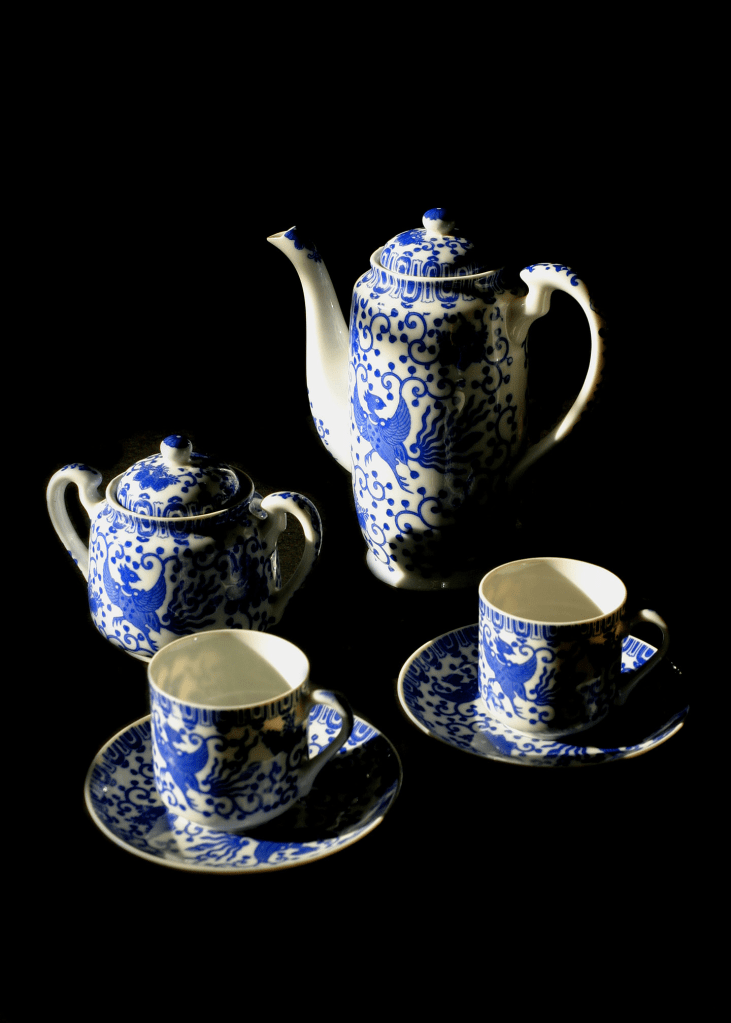
This is the inside of a Japanese made demitasse revealing the image of a geisha. The effect is achieved by different thicknesses of porcelain That allow different amounts of light to pass through the base. The process was invented in France in the 1820s. Lithophanes soon became very popular, and were used for decorative purposes on lampshades, or as panels that were hung on windows.

In Germany, many beer steins were made with lithophanes in the base and, as one finished drinking, lovely images would appear in the bottom of the mug. Later, twentieth- century Japanese potteries began to produce lavishly decorated tea sets using lithophanes. Molds were used to create the different thickness levels and the process of removing the thin moist panels from the molds required a high degree of skill to avoid damaging the intricate details in the image. In addition, any slight impurity in the porcelain clay body showed up when light shone through the material. The number of acceptable finished pieces to come out of the kilns has always been far less than the number that went in. Sometimes, only about 40 percent of the panels survived this process. Production of these teacups which peaked after World War II in Occupied Japan, tapered off in the 1950’s, and few are still being made today.

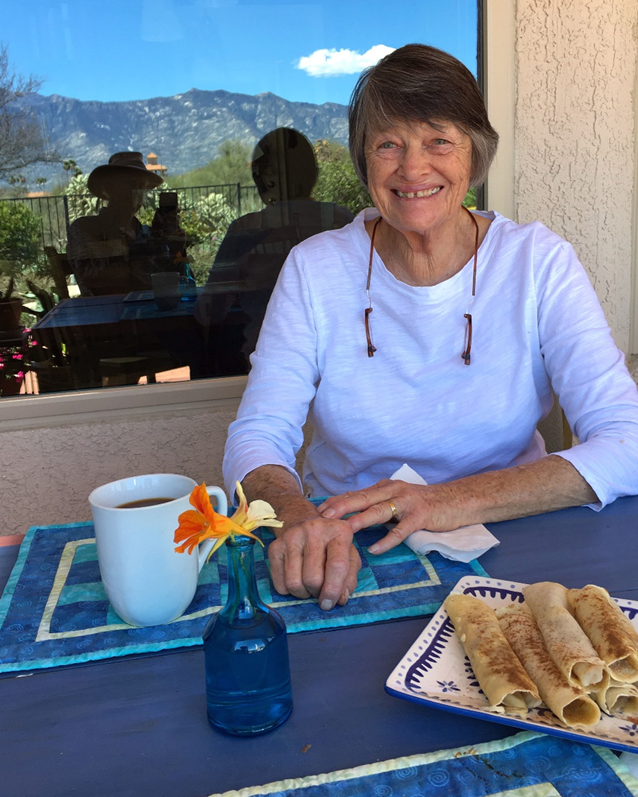
Today, one can buy vintage lithophane tea sets for less than the price of a bottle of mediocre wine. Yet, we have always valued ours. It was a gift from a patient in the neurological ward of a hospital in South Africa, a gift to Lilian when she worked there in the mid nineteen-sixties. Here’s a photo of her from that time.

Sixty years later, a tea set like this has no monetary value, is not rare, and certainly is no longer in fashion. But it reminds Lilian of a hospital patient, and it reminds me of a time when this set was the most beautiful thing we owned. Although now out of date, it has an intrinsic beauty waiting to be appreciated by someone in the next generation.

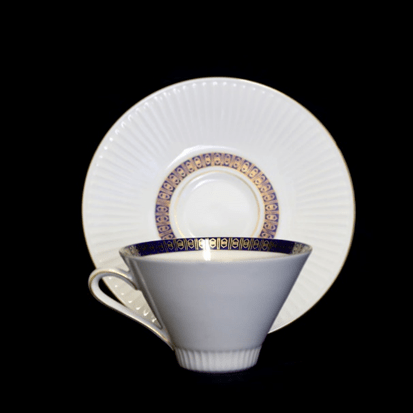
In the early 1970’s when, as newly-weds, we arrived in America, my grandmother welcomed her new granddaughter-in-law with another porcelain tea-set, this one made in Germany. And here is the end of her note to Lilian:

“Will you have a cup of tea with me? Love Grandma”.

Art and Artifacts at Home

The second in a series looking around our home at the paintings and objects we have picked up over the years, not because they are of any particular value other than that we enjoy them.

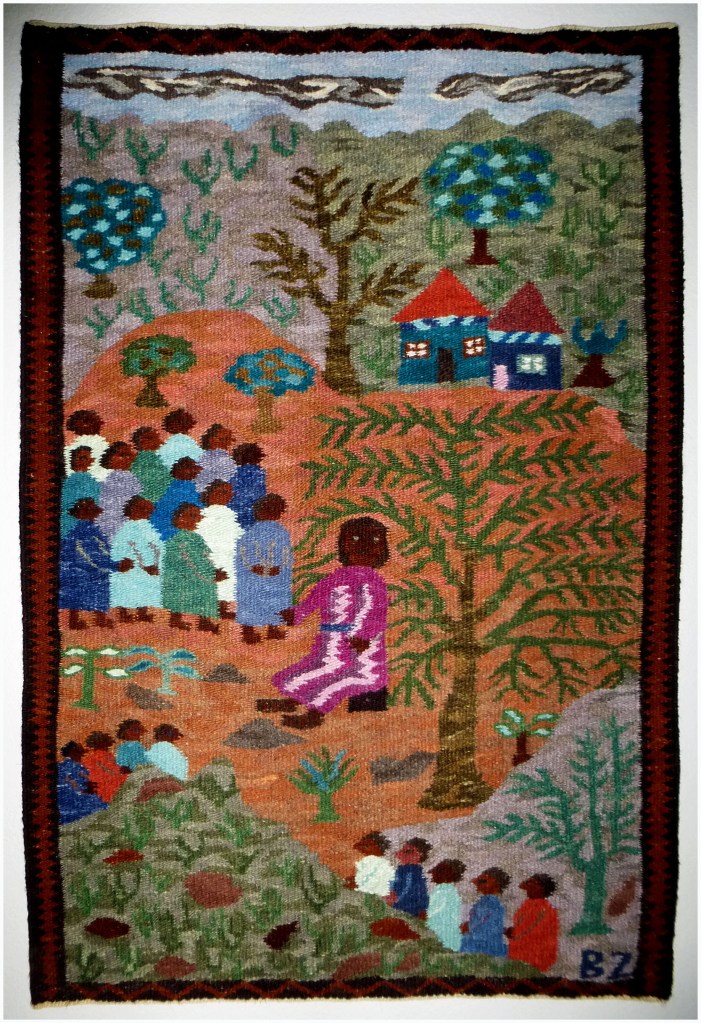
Jesus and His Disciples, Karakul wool, 165cm x 106 cm, Beatrice Zwane 1988 (est)

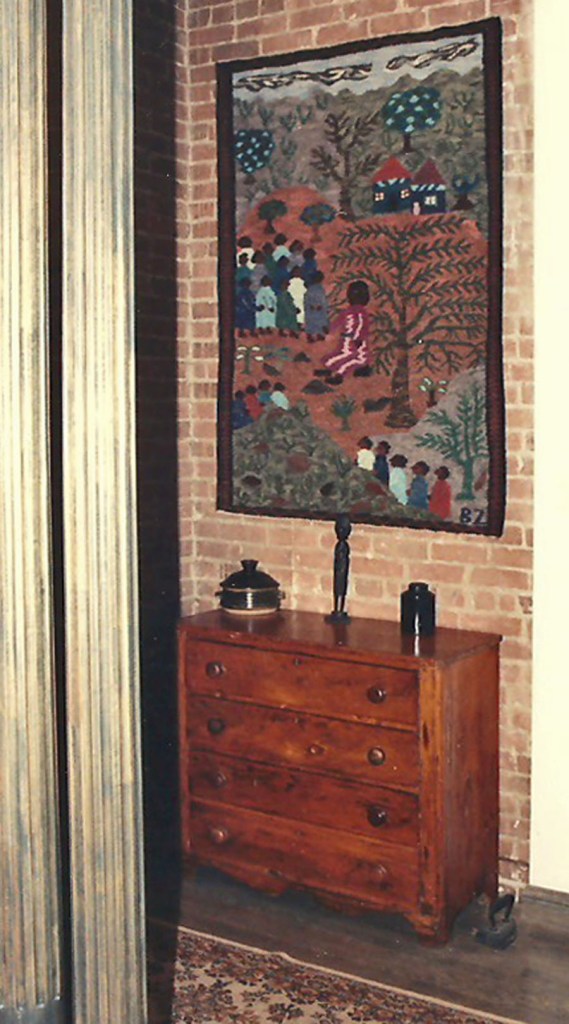
We bought this large tapestry in South Africa in 2002. All that we knew about the artist was that her name was Beatrice Zwane and that the weaving had been created at the Evangelical Lutheran Church Art and Craft Centre in Rorke’s Drift, South Africa, a place where a battle between British forces and Zulu warriors had taken place in 1879.


The tapestry has hung in our homes over twenty-two years, first in Montreal as seen in the photograph below, then in Arizona and later in Ohio.

The Evangelical Lutheran Church Art and Craft Centre at Rorke’s Drift, Natal, was established in 1962 and had a significant impact on the development of South African art and craft in the 1960s and 1970s. The Centre, a result of a unique and successful venture in cross-cultural art and craft production, combined Swedish technical assistance with traditional African design and skill. Yet, when the works by marginalized women artists in Africa were exhibited at the National Museum in Stockholm in 1970, they were dismissed as the fruits of Swedish cultural imperialism and naive artistic minds. The woven tapestries are now little known in South Africa and largely forgotten in Sweden. It is not surprising, then, that I wasn’t able to find any substantive information about Beatrice Zwane on the internet.

The above image of an attachment to the back of Zwane’s tapestry tells one as much as there is to know about this or any other of her works.

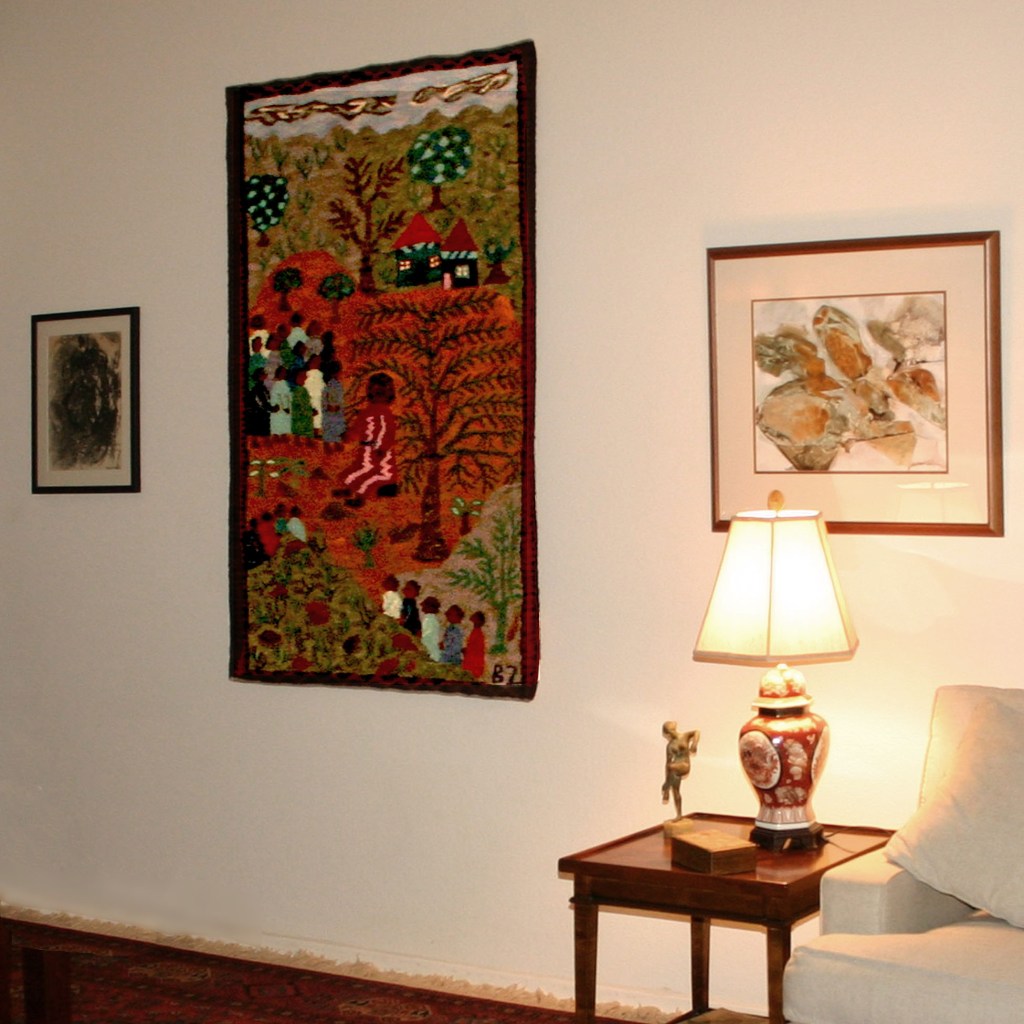
In the following photograph of the tapestry hanging in our Arizona home several years ago, there is a strange coincidence:

The blurry image in a black frame to the left of the tapestry is the work of another artist who studied at the Rorke’s Drift Art and Craft Center, George Msimang.

Untitled ink & charcoal, George Msimang, circa 1965

George Msimang was born in Durban, South Africa in 1948. Like Beatrice Zwane, he studied at the Evangelical Lutheran Art and Craft Centre, Rorke’s Drift. Afterwards, he was offered a study grant by the Italian government. He went to Rome twice, once to the Accademia di Belle Arti where he spent a period from 1971 to 1975 and another year in 1986 at the Accademia di Belle Arte, Perugia. His work challenged the social and economic imbalances in the Apartheid system. He died of pneumonia at age fifty-six.

Thanks to the Art and Craft Center at Rorke’s Drift, both George and Beatrice were given the opportunity to develop and express their artistic talent when South Africa’s education policies under Apartheid denied them the opportunity to advance their craft. It is debatable whether or not their talent is appreciated to the extent that it should be. Certainly, neither artist would be able to earn a living wage if one looks at current valuations of their work. But we are grateful.