The third in a series looking around our home at the paintings and objects we have picked up over the years, not because they are of any particular value other than that we enjoy them.

This is the inside of a Japanese made demitasse revealing the image of a geisha. The effect is achieved by different thicknesses of porcelain That allow different amounts of light to pass through the base. The process was invented in France in the 1820s. Lithophanes soon became very popular, and were used for decorative purposes on lampshades, or as panels that were hung on windows.
In Germany, many beer steins were made with lithophanes in the base and, as one finished drinking, lovely images would appear in the bottom of the mug. Later, twentieth- century Japanese potteries began to produce lavishly decorated tea sets using lithophanes. Molds were used to create the different thickness levels and the process of removing the thin moist panels from the molds required a high degree of skill to avoid damaging the intricate details in the image. In addition, any slight impurity in the porcelain clay body showed up when light shone through the material. The number of acceptable finished pieces to come out of the kilns has always been far less than the number that went in. Sometimes, only about 40 percent of the panels survived this process. Production of these teacups which peaked after World War II in Occupied Japan, tapered off in the 1950’s, and few are still being made today.
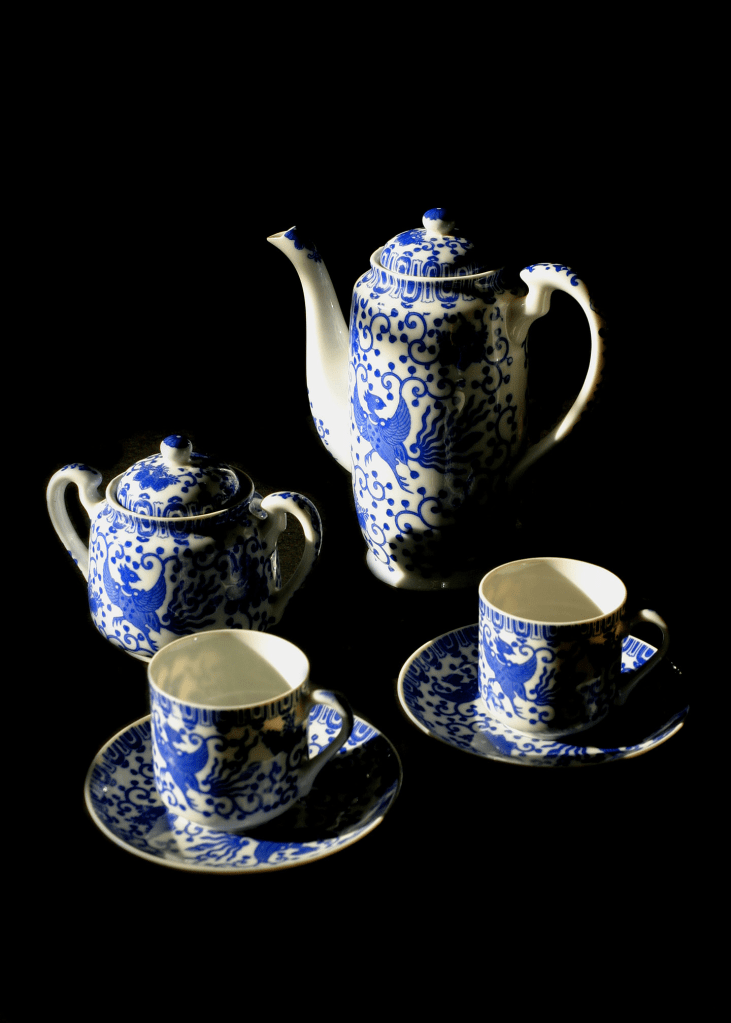
Today, one can buy vintage lithophane tea sets for less than the price of a bottle of mediocre wine. Yet, we have always valued ours. It was a gift from a patient in the neurological ward of a hospital in South Africa, a gift to Lilian when she worked there in the mid nineteen-sixties. Here’s a photo of her from that time.

Sixty years later, a tea set like this has no monetary value, is not rare, and certainly is no longer in fashion. But it reminds Lilian of a hospital patient, and it reminds me of a time when this set was the most beautiful thing we owned. Although now out of date, it has an intrinsic beauty waiting to be appreciated by someone in the next generation.
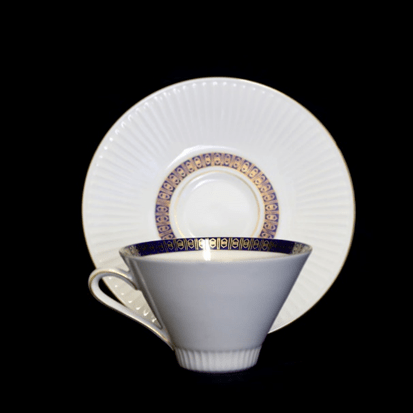
In the early 1970’s when, as newly-weds, we arrived in America, my grandmother welcomed her new granddaughter-in-law with another porcelain tea-set, this one made in Germany. And here is the end of her note to Lilian:
“Will you have a cup of tea with me? Love Grandma”.
 The Final Stretch